
Last updated November 14, 2026
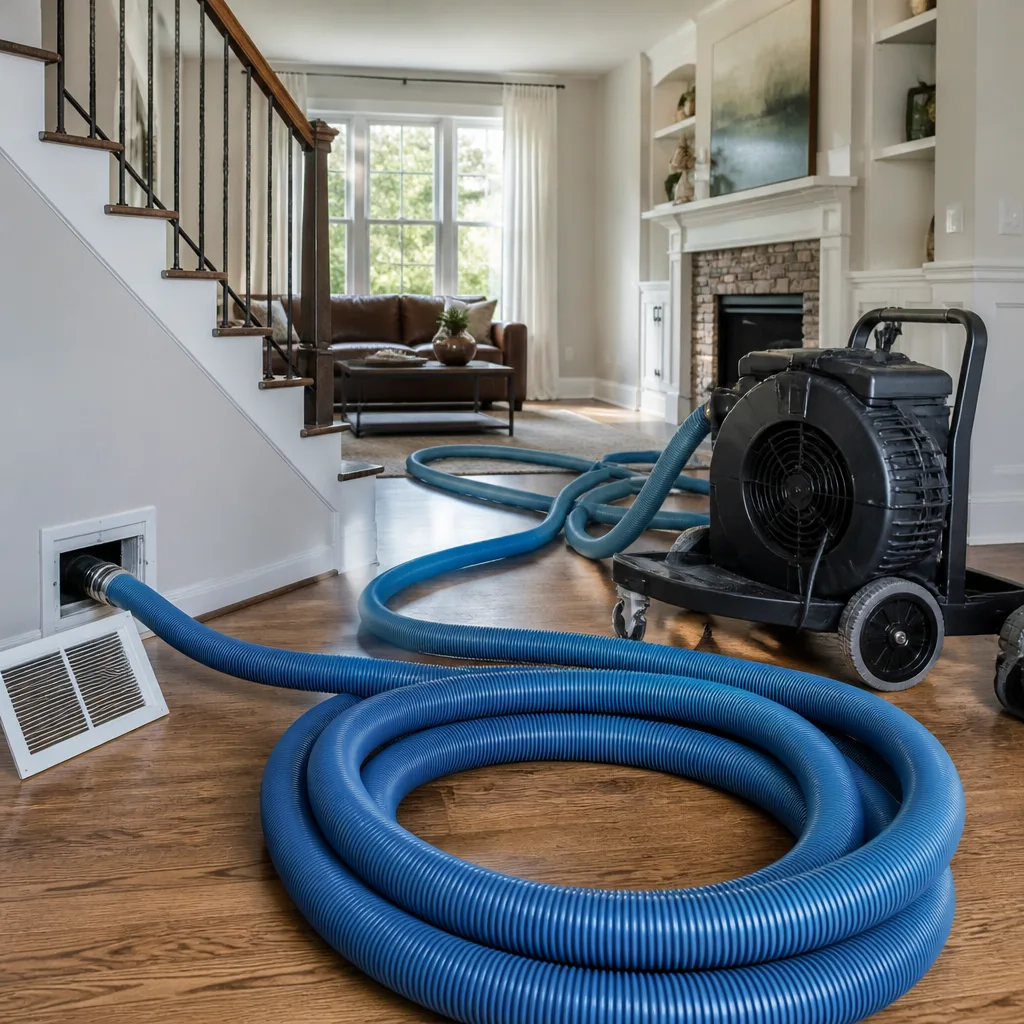 Whole-home duct cleaning
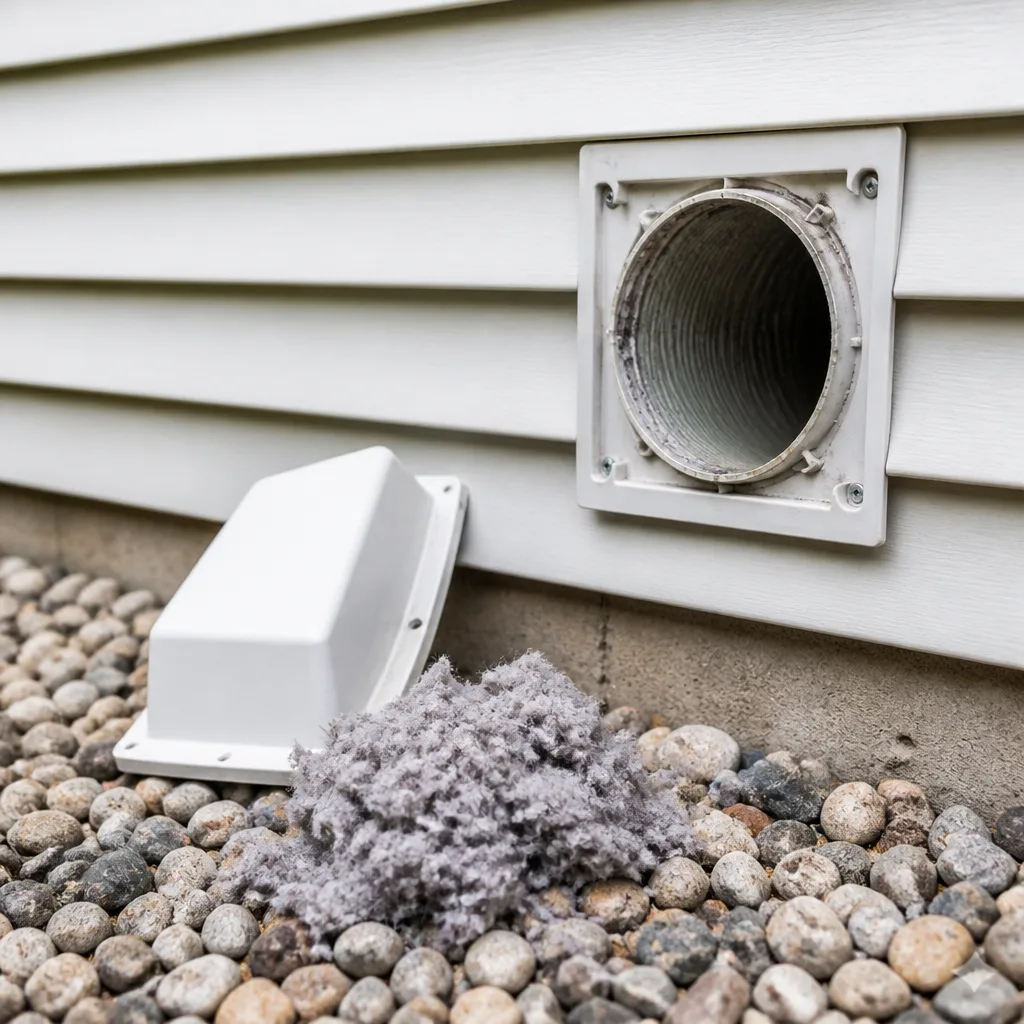 Dryer vent cleaning
 Camera inspection
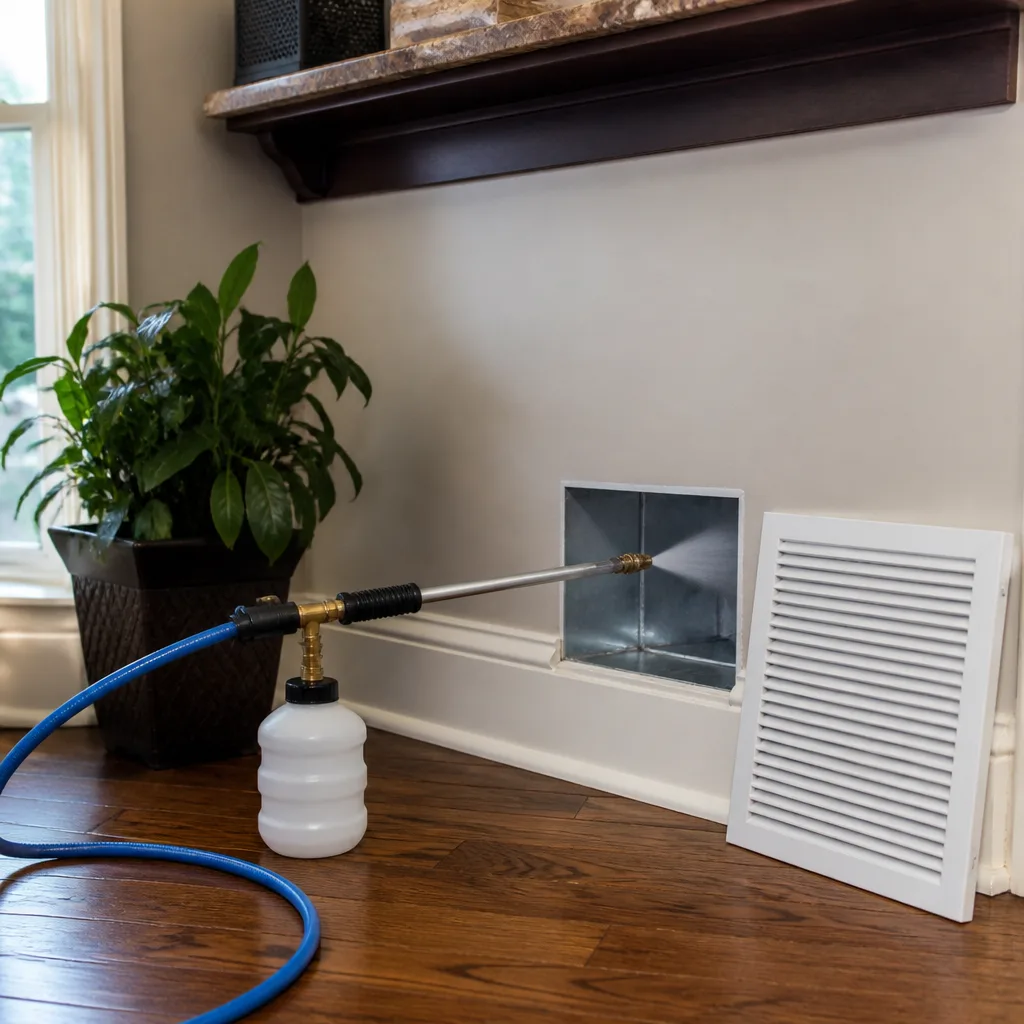 Sanitizing & deodorizing
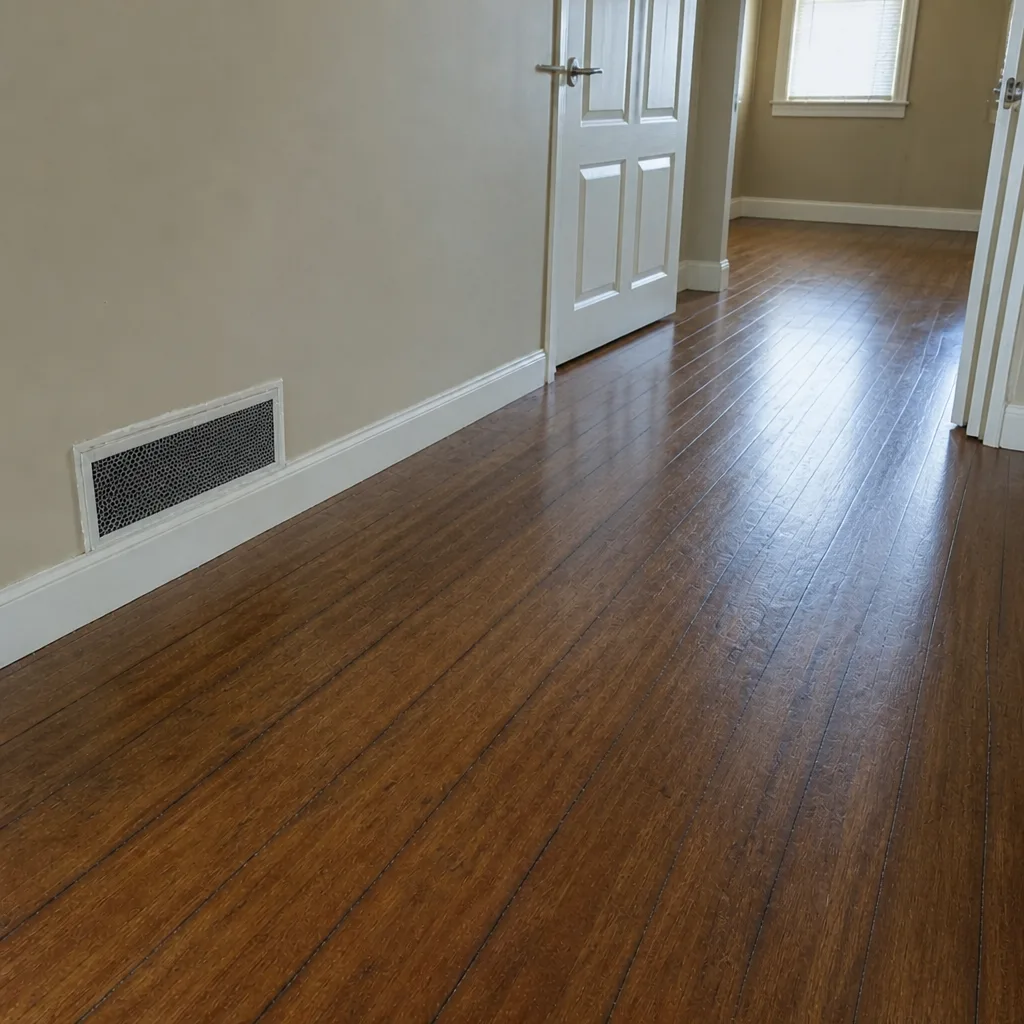
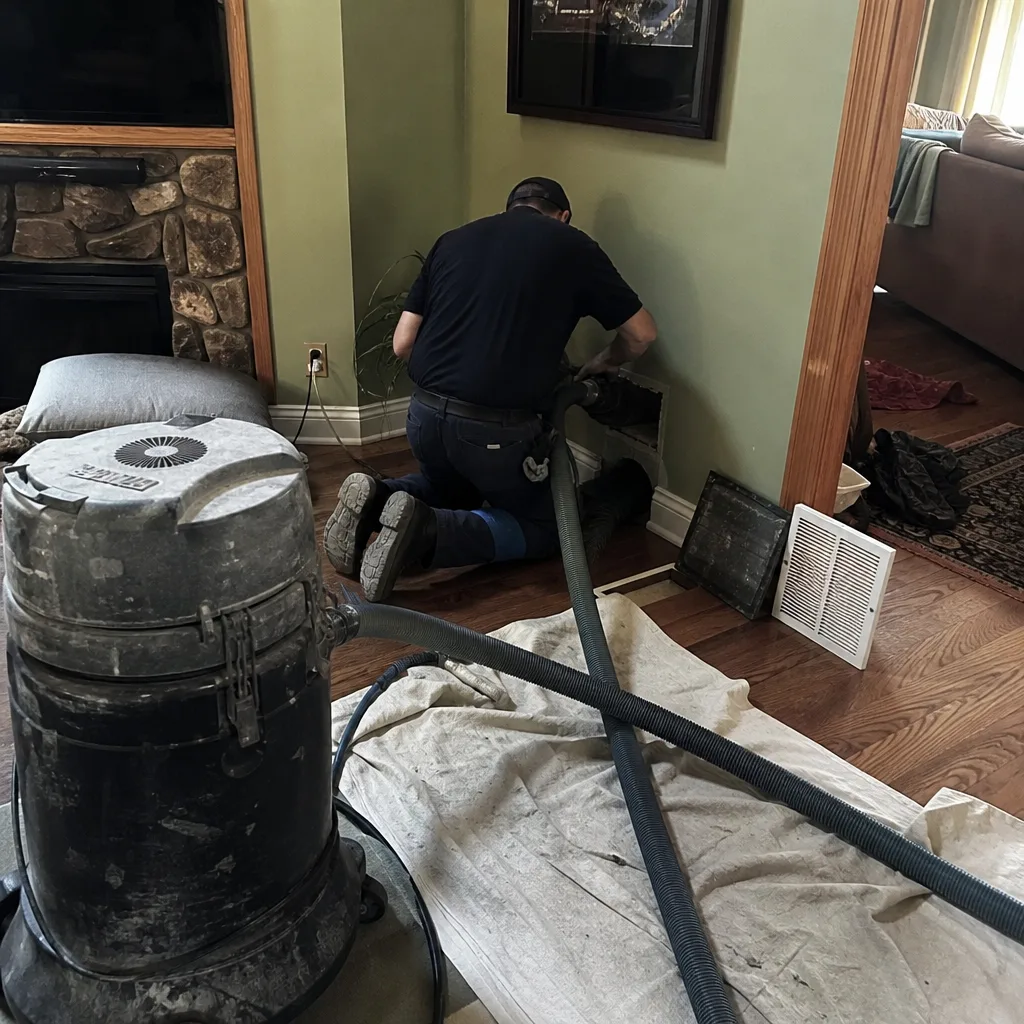
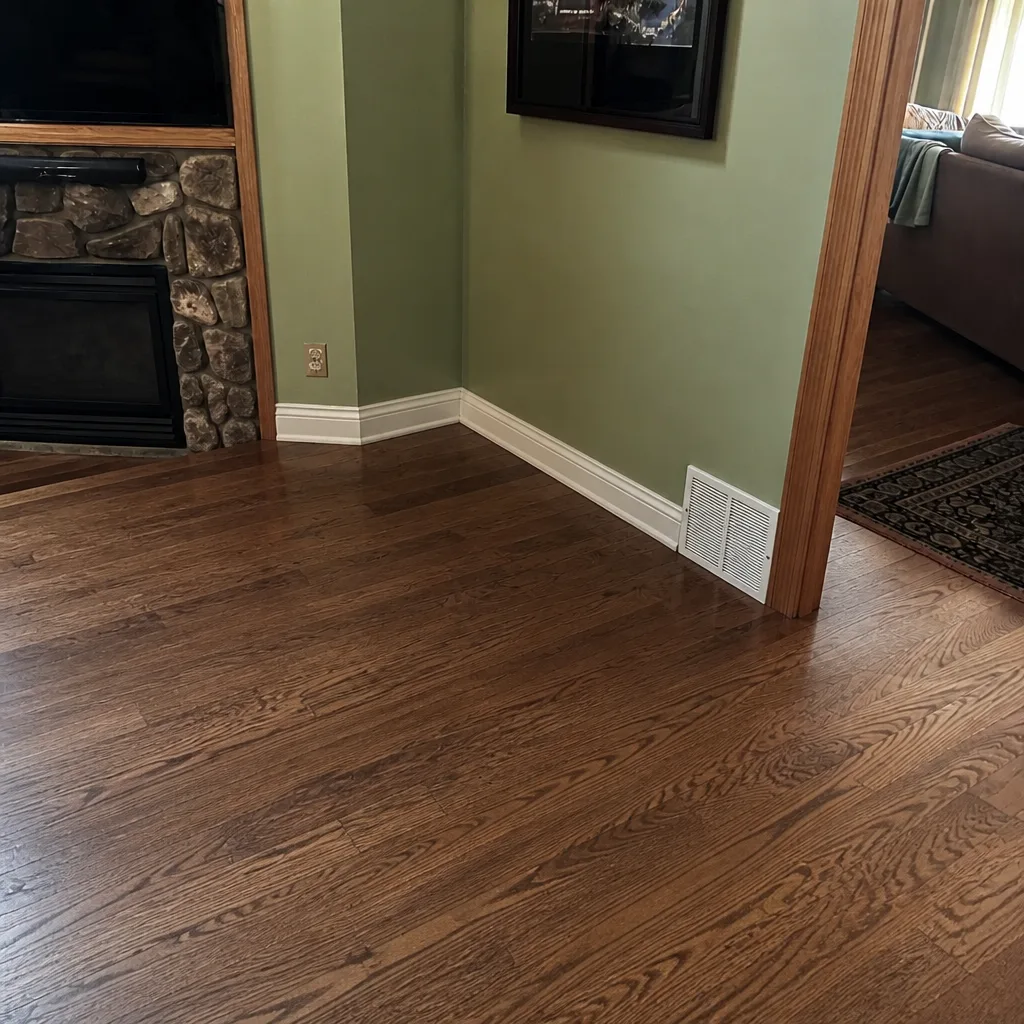
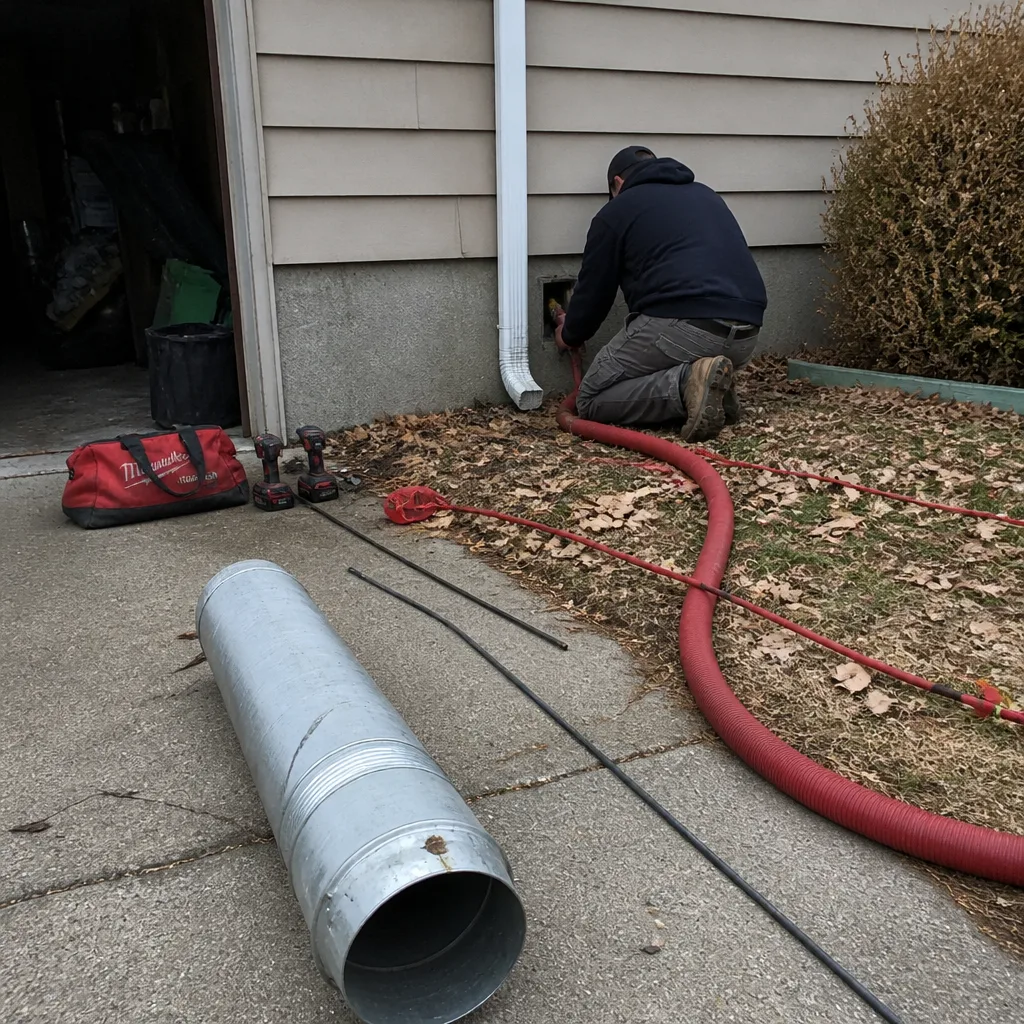
Whole-system duct and dryer vent check with before-and-after photos - you see exactly what came out of your vents
That "$99 whole-house special" is a bait ad - the real number appears once they are in your hallway, or the "clean" is a shop-vac at the register. We photograph the inside of your ducts before and after instead.
Seasonal Air Duct Cleaning Care for Kansas City: Year-Round Homeowner’s Guide
Most homeowners treat duct cleaning as a once-a-year chore, if they think about it at all. That schedule misses the point in Kansas City, where the year splits into four genuinely different operating environments for your HVAC system. Spring brings some of the highest mold-spore counts in the Midwest just as people switch to fan-only mode. Summer holds humidity above 60% RH for weeks. Fall’s first heating cycle cooks dust off the heat exchanger. Winter’s tightly sealed houses pull debris through every loose joint. Each season loads your ducts differently, and each one has a specific inspection window worth building your calendar around. This guide maps the risks to the seasons and gives you an inspection routine that follows the building, not the calendar.
Quick Answer
Air duct cleaning in Kansas City is best scheduled around seasonal risk windows rather than a fixed yearly date: inspect in early spring for winter condensation damage, clean before summer humidity peaks, watch for debris after the fall heating switchover, and check joints and connections during winter heating season. Most homes need a professional cleaning every three to five years, but the right timing depends on your system, filtration, and how your house handles Kansas City’s four-season swing.
Styles & brands we work with
- Whole-home duct cleaning
- Dryer vent cleaning
- Camera inspection
- Sanitizing & deodorizing
Table of Contents
- Why Kansas City’s Four Seasons Load Your Ducts Differently
- Spring: Post-Winter Inspection and Condensation Damage
- Summer: Humidity, Return Plenums, and Duct Board Liner
- Fall: The HVAC Switchover Debris Surge
- Winter: Negative Pressure and Disconnected Joints
- How to Build a Seasonal Cleaning and Inspection Schedule
- Common Mistakes to Avoid
- When to Call a Professional
Why Kansas City’s Four Seasons Load Your Ducts Differently
A duct system in a mild climate runs in a narrow band all year. A system in Kansas City does not. You go from heating-driven air movement in January to cooling-driven movement in July, often with a stretch of fan-only operation in between. Each mode moves air at a different temperature and humidity level through the same network of metal, flex, and duct board, and that difference is what makes seasonal attention matter.
The core issue is condensation. Whenever a duct surface sits below the dew point of the air around it, water collects. In winter, the cold surfaces are in unconditioned space. In summer, the cold surfaces are inside the conditioned envelope. Both create moisture, and moisture is what turns ordinary dust into the kind of buildup that supports biological growth.
We’ve watched this play out across Kansas City homes for years, and the pattern is consistent: the houses that stay cleanest aren’t the ones cleaned most often, they’re the ones inspected at the right moments. Our Millbrook Air Duct Cleaning approach is built around those windows rather than a blanket annual reminder.
- Spring: spore activity peaks while systems often run in fan-only mode
- Summer: humidity above 60% RH sits on cold duct surfaces
- Fall: the first heating cycle burns dust off the heat exchanger
- Winter: tightened houses push and pull air through every joint
Understanding these four profiles is the foundation of everything below. Once you see your ducts as something that changes with the weather, the question shifts from “when do I clean?” to “what do I check, and when?”
Spring: Post-Winter Inspection and Condensation Damage
Spring is the inspection season. After a winter of heating cycles, the duct runs that live in unconditioned space, meaning attic runs and any flex duct routed through the cold side of the envelope, have been through repeated temperature swings. The risk isn’t debris yet. The risk is condensation damage that started in January and February.
Here’s what happens. A flex duct run in a cold attic carries warm, moist air from the furnace. The outer jacket stays cold. The temperature differential between the moving air and the surrounding space creates a dew point inside the duct wall, and moisture collects on the inner liner and on the insulation. By spring, that moisture has had weeks to saturate the material, degrade the vapor barrier, and create the damp environment that supports mold growth.
That matters in Kansas City specifically because our spring spore counts peak right when homeowners flip the thermostat to fan-only to manage the transition between heating and cooling. Fan-only mode moves air through the system without running the cooling coil, which means nothing dehumidifies the airstream. Unfiltered air passes across damp duct liner with no conditioning cycle to dry it out.
- Walk your attic or crawlspace and look for sagging flex duct, torn outer jackets, or dark staining on the insulation.
- Smell the supply registers at each room. A musty odor points to moisture somewhere upstream.
- Check the condensate pan and the area around the air handler for standing water or rust.
- Look at the filter. A filter that’s damp or matted after winter suggests air is bypassing it.
- Schedule a professional inspection if any of the above show up, because liner damage inside a duct isn’t visible from the outside.
Our technicians use Rotobrush and Nikro systems designed to reach the inside surfaces of flex and rigid runs, so a spring inspection can actually see and clean what a flashlight can’t. This is also the point in the year when an air duct cleaning appointment catches damaged liner before the summer humidity arrives.
Summer: Humidity, Return Plenums, and Duct Board Liner
Summer is the moisture season, and the return plenum is where it bites. Kansas City regularly sits above 60% relative humidity for extended stretches, and every time that humid air passes through the return system, it meets cold surfaces on the supply side. That’s a condensation engine.
Duct board liner is particularly vulnerable. Duct board is a rigid, fiberglass-based material with a facing that can support biological growth when it stays damp. The return plenum is the largest single duct surface in many homes and the one most likely to sit at a temperature where condensation forms. Once mold colonizes that liner, no amount of surface wiping addresses it, because the growth is embedded in the material.
Neg pressure also matters here. When you run the AC, the return side pulls air from the house. If there’s a gap in the return, it pulls humid attic air into the system instead of conditioned air, and that humid air hits the cold plenum. The combination of high outdoor humidity and a leaky return is why summer is the season we most often find liner problems in Kansas City homes.
- Watch for: musty smell that intensifies on humid days, condensation dripping at registers, or a return grille that feels damp
- Check: return plenum joints and seams for gaps, and the filter slot for bypass
- Time the cleaning: before the humidity peak, not after it, so the system starts summer with dry, clean surfaces
- Consider filtration: homes with Aprilaire or Honeywell whole-home systems can often run a higher-MERV filter that captures more of what gets past the return
If your home already has a Honeywell or Aprilaire air quality system, our technicians are familiar with those setups and clean around them correctly rather than treating them as obstacles. That’s a small thing that says a lot about system-level knowledge. A crew that understands whole-home filtration knows where the bypass points are and how to protect the equipment during cleaning.
Fall: The HVAC Switchover Debris Surge
Fall is the debris surge, and it’s the season most homeowners never connect to their ducts. The first heating cycle after summer does something specific: it burns off accumulated dust on the heat exchanger. During the cooling months, dust that makes it past the filter settles on the heat exchanger fins and the surrounding cabinet. When the furnace fires the first time in October or November, that dust heats up and releases into the airstream as fine particulate, and the blower pushes it straight into your supply ducts and then into your rooms.
That’s why people notice a faint burning smell on the first cold morning. It’s not a problem with the furnace. It’s a year of dust cooking off in one cycle. What most people don’t realize is where the rest of it goes: it coats the inside of the supply runs, and it adds a fresh layer to whatever was already there.
- Change the filter before you switch to heating, not after. The first cycle is the dirtiest.
- Note the smell and the dust. If it’s strong or lasts more than a few minutes, you’re looking at significant heat exchanger fouling.
- Check the supply registers in each room for a fresh dust film in the first week of heating.
- Book a cleaning if it’s been three or more years since the last one, or if the previous owner never had it done.
- Ask for before-and-after photos of your own ducts, so you know the supply runs got the attention.
Fall cleaning also sets up the winter. A system cleaned in October carries less particulate into the heating season, which matters because winter’s airflow dynamics push debris into the living space rather than trapping it. If you want a single season to prioritize, fall is a strong candidate for most Kansas City homes.
Winter: Negative Pressure and Disconnected Joints
Winter is the pressure season. Modern homes are built tighter than they used to be, and homeowners seal them tighter still with weatherstripping and insulation. That’s good for energy bills. It also changes how air moves. As a house gets airtight, the pressure differentials created by the furnace and by exhaust fans (bath fans, kitchen hoods) get stronger, and those differentials push and pull on the entire duct system.
Here’s the mechanism. The return side of your duct system carries negative pressure. Every joint, seam, and connection experiences that pull. Most joints are sealed with mastic or tape, and most hold. But flex duct connections at boots, collars, and the air handler are the weak points, and over years of thermal cycling they loosen. A loose joint under negative pressure doesn’t just leak air. It pulls unfiltered air from whatever cavity the duct passes through, and if the duct is in an attic or between floors, that means insulation fibers, dust, and whatever has settled in the cavity gets drawn into the supply airstream and delivered to your rooms.
- Check: supply registers in the coldest rooms for dust streaks or a visible deposit line where the airstream hits
- Listen: whistling or hissing at boots and grilles suggests a pressure leak
- Feel: for weak airflow in rooms that used to be comfortable, a sign of a disconnected run
- Look: in the attic for flex duct that has slipped off a collar or that is kinked or crushed
Winter is also when we see the most connections that need repair. That’s why Millbrook carries air duct repair as a named service, not an afterthought. If a cleaning reveals a disconnected joint, the same trained team can address it rather than leaving you to source a separate contractor mid-winter. Clean ducts and repaired ducts, one call.
How to Build a Seasonal Cleaning and Inspection Schedule
Calendar-based duct cleaning, where you pick a date and forget it, ignores Kansas City’s actual weather. The better approach builds a small inspection rhythm into each season and reserves the full professional cleaning for the right window.
Our technicians have up to 10 years of experience, and in that time the most reliable schedule we’ve seen is one that pairs a light seasonal check with a deeper professional service every few years. Here’s the framework:
- Early spring (March-April): post-winter inspection. Look for condensation damage in attic flex runs and check the filter condition after heating season. This is the window to catch liner damage before summer humidity.
- Late spring (May, before the humidity peak): schedule the full professional cleaning if it’s due. Starting summer with dry, clean surfaces prevents the return plenum from creating condensation problems.
- Summer (June-August): monitor for musty odors and damp return grilles. Investigate any humidity-related smell promptly, because mold colonization on duct board is a repair-and-clean job, not a wipe-down.
- Early fall (September-October, before the first heating cycle): change the filter, note the first-cycle smell, and book a cleaning if it’s been three or more years or if the house is new to you.
- Winter (November-February): check joints, listen for whistles, feel for weak airflow. Address disconnected runs when you find them rather than waiting for the next cleaning.
The interval between full cleanings depends on the home, not the calendar. A house with pets, kids, or an occupant with allergies may need attention more often. A tightly built, well-filtered home may stretch to five years. The seasonal checks are what tell you which camp you’re in.
Common Mistakes to Avoid
- Cleaning on an arbitrary annual date. A January cleaning and a July cleaning solve different problems in Kansas City. Align the service with the seasonal risk you’re actually facing.
- Ignoring the return side. Most of the contamination and nearly all of the humidity problem lives on the return. A crew that only cleans supply registers has done half the job, and the wrong half.
- Running fan-only mode through a damp spring. It moves unfiltered, unconditioned air across any moisture in the system. If you need to circulate air, address the moisture first.
- Skipping the filter change at the fall switchover. The first heating cycle is the dirtiest, and a clogged filter pushes more of that burn-off dust into the supply runs.
- Assuming a cheap cleaning and a professional cleaning are the same job. A blow-and-go crew loosens debris and leaves it in the system. Proper work pairs mechanical agitation with containment, which is why we run Abatement Technologies equipment for negative-air pressure that captures contaminants rather than redistributing them through the house.
- Waiting until a joint completely fails. A disconnected flex run in winter delivers cavity dust straight to your rooms. Check joints in the fall before heating season puts sustained pressure on them.
- Forgetting the dryer vent. It runs year-round and isn’t part of the HVAC system, but a clogged dryer vent is a fire risk every season. Add dryer vent cleaning to your annual check.
When to Call a Professional
Some seasonal checks you can do yourself: filter changes, visual inspections, listening for whistles, and feeling for weak airflow. Other problems require equipment and training. Call a professional if you smell mustiness that gets worse on humid days, if you find moisture or staining on duct insulation, if the first heating cycle produces a strong or persistent smell, if a room has lost airflow, or if your ducts have never been serviced. Those are the cases where a camera, negative-air containment, and mechanical brushing make the difference between diagnosing the problem and guessing at it.
Millbrook Air Duct Cleaning offers free estimates in Kansas City. Our technicians work with Rotobrush and Nikro equipment and Abatement Technologies containment, so the debris loosened during cleaning gets captured, not pushed back into the house. If the inspection turns up damage, we handle repair in the same visit. One call for your entire duct system.
Call (855) 473-1004. We answer 24/7. Fast dispatch from 7am to 7pm, Sunday through Friday.
See the difference
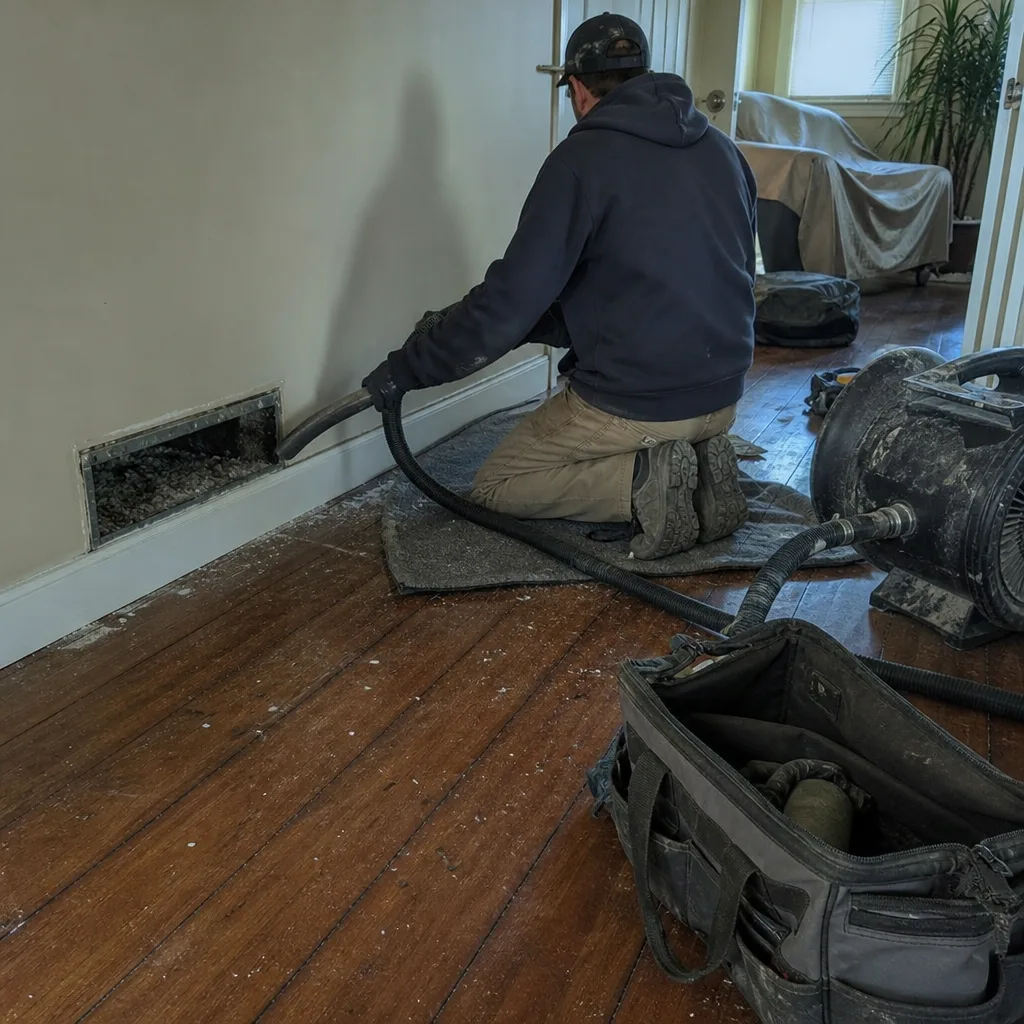 Before
 After
 Before
 After
 Before
 After
Frequently Asked Questions
Most homes need a professional cleaning every three to five years. The interval depends on pets, occupants with allergies, filtration quality, and whether the house is tightly sealed. Seasonal inspections in between tell you whether you’re on the shorter or longer end, and those checks matter more than a fixed date.
It’s different because the contamination is different. Kansas City’s spring spore activity, summer humidity above 60% RH, fall heating switchover, and winter pressure changes each load the ducts in distinct ways. Cleaning in the right window addresses the actual problem; cleaning on an arbitrary date may miss it entirely.
Accumulated dust on the heat exchanger burning off during the first heating cycle. It’s normal for the first few minutes. A strong or lingering smell points to significant fouling, which means dust is also moving into your supply runs. Change the filter before the switchover and have the system cleaned if it’s been several years.
Yes, especially on duct board liner in return plenums during humid summer months. When the return side stays damp and cold surfaces meet humid air, mold can colonize the liner itself. Professional cleaning combined with repair of the moisture source is the right response. We work within our scope of cleaning and repair, and we’ll tell you honestly what we find.
Clean ducts support better airflow, and better airflow lets your system run closer to its design capacity. We don’t promise specific savings, since that depends on the system and the house. What we can do is show you before-and-after photos of your own ducts so you see exactly what was removed.
Not with us. Air duct repair is a named core service at Millbrook. If cleaning turns up a disconnected joint, crushed flex run, or damaged liner section, the same team can address it. That’s a big part of why we offer cleaning and repair together, especially for Kansas City homes where winter pressure puts joints to the test.
The Bottom Line
Kansas City gives your duct system four distinct seasons to work through, and each one has a specific risk worth checking. Inspect in spring for condensation damage. Clean before summer humidity peaks. Watch the fall heating switchover for debris surge. Check joints during winter pressure season. Build those checks into a light seasonal rhythm and reserve the full professional cleaning for the right window. For homes in the Kansas City area, that schedule is the difference between reacting to each season and getting ahead of it. If you’re overdue, start with a free estimate and a look at what’s actually in the system.
Call (855) 473-1004. We answer 24/7. Fast dispatch from 7am to 7pm, Sunday through Friday.
Written by the team at Millbrook Air Duct Cleaning.