
Last updated November 14, 2026
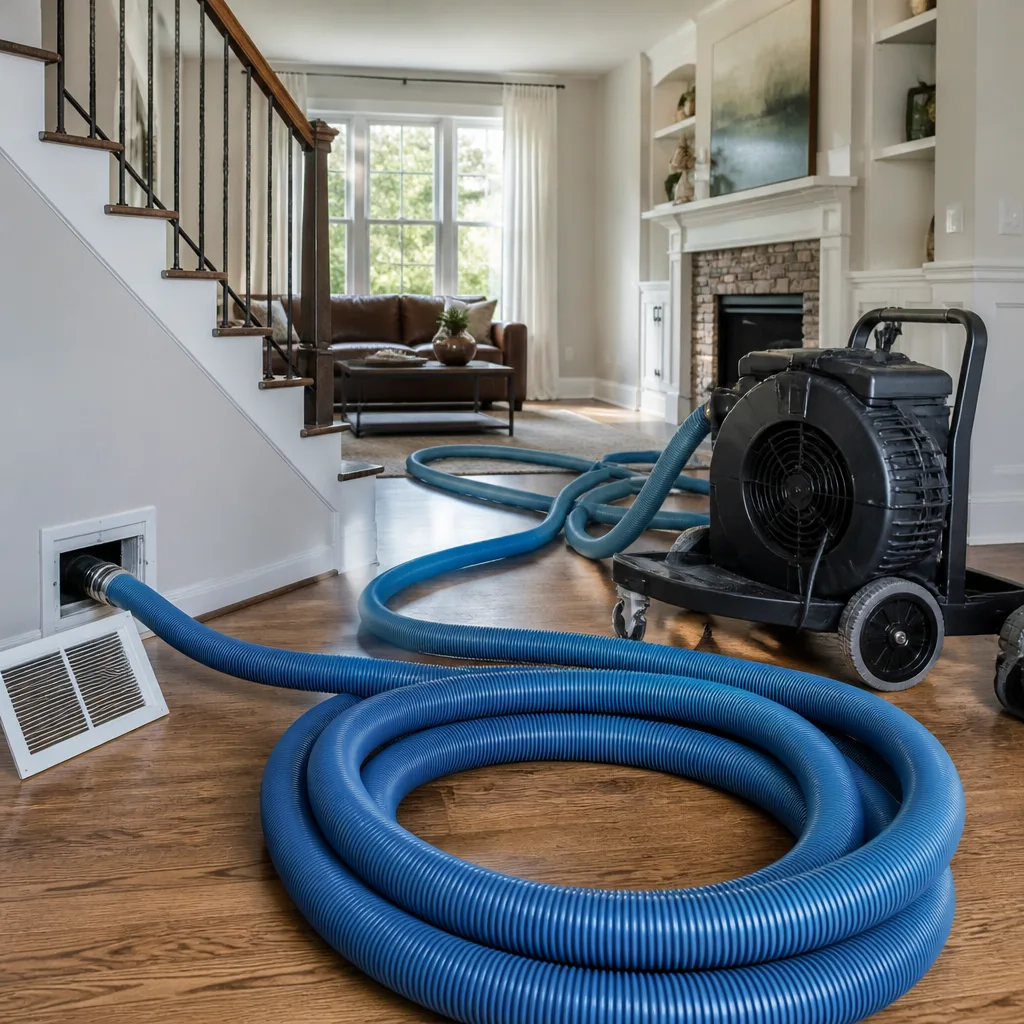 Whole-home duct cleaning
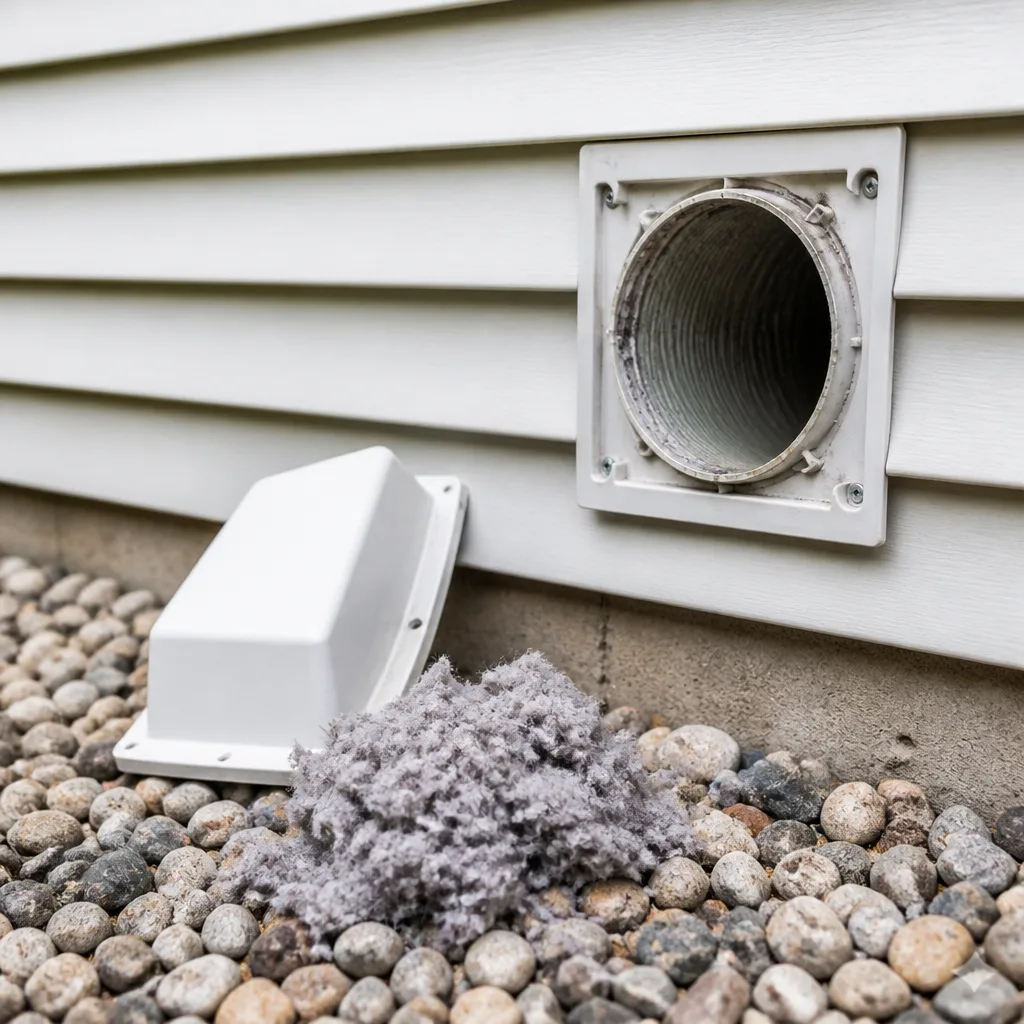 Dryer vent cleaning
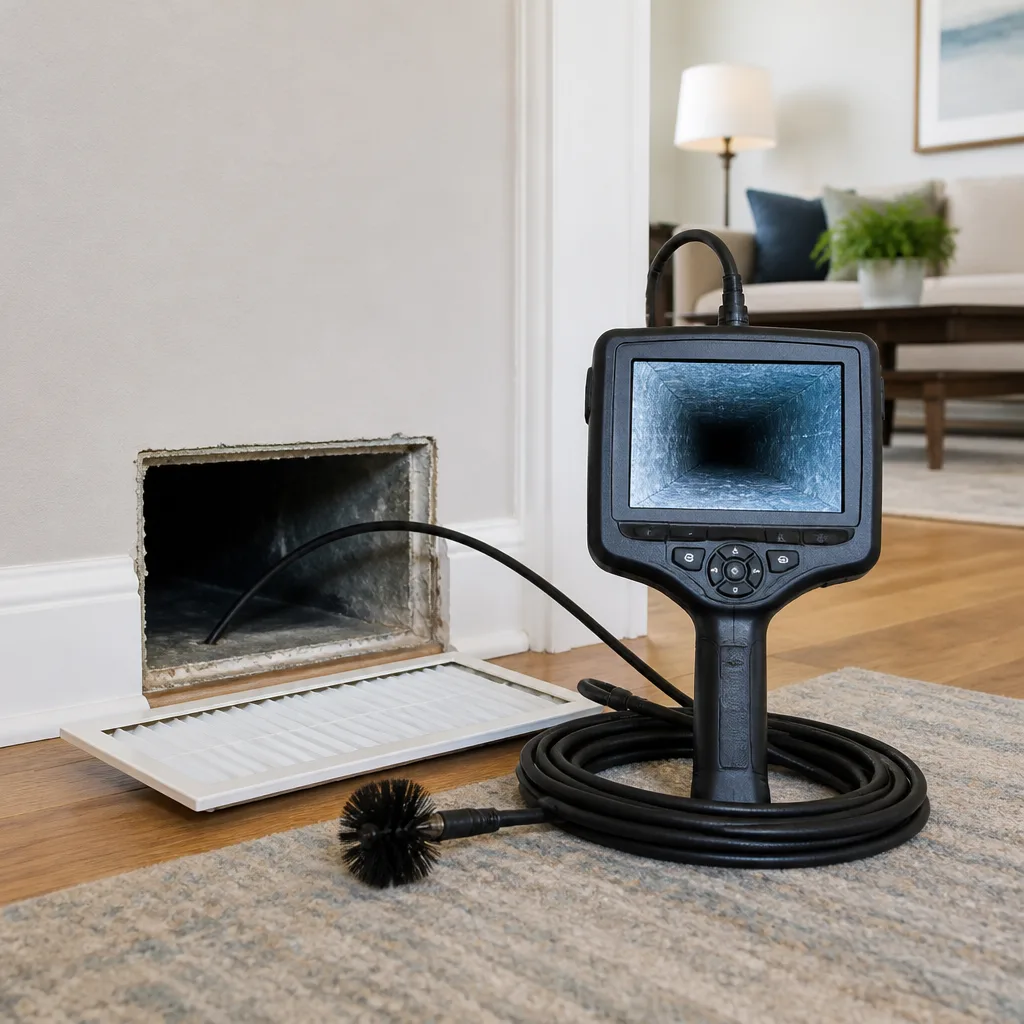 Camera inspection
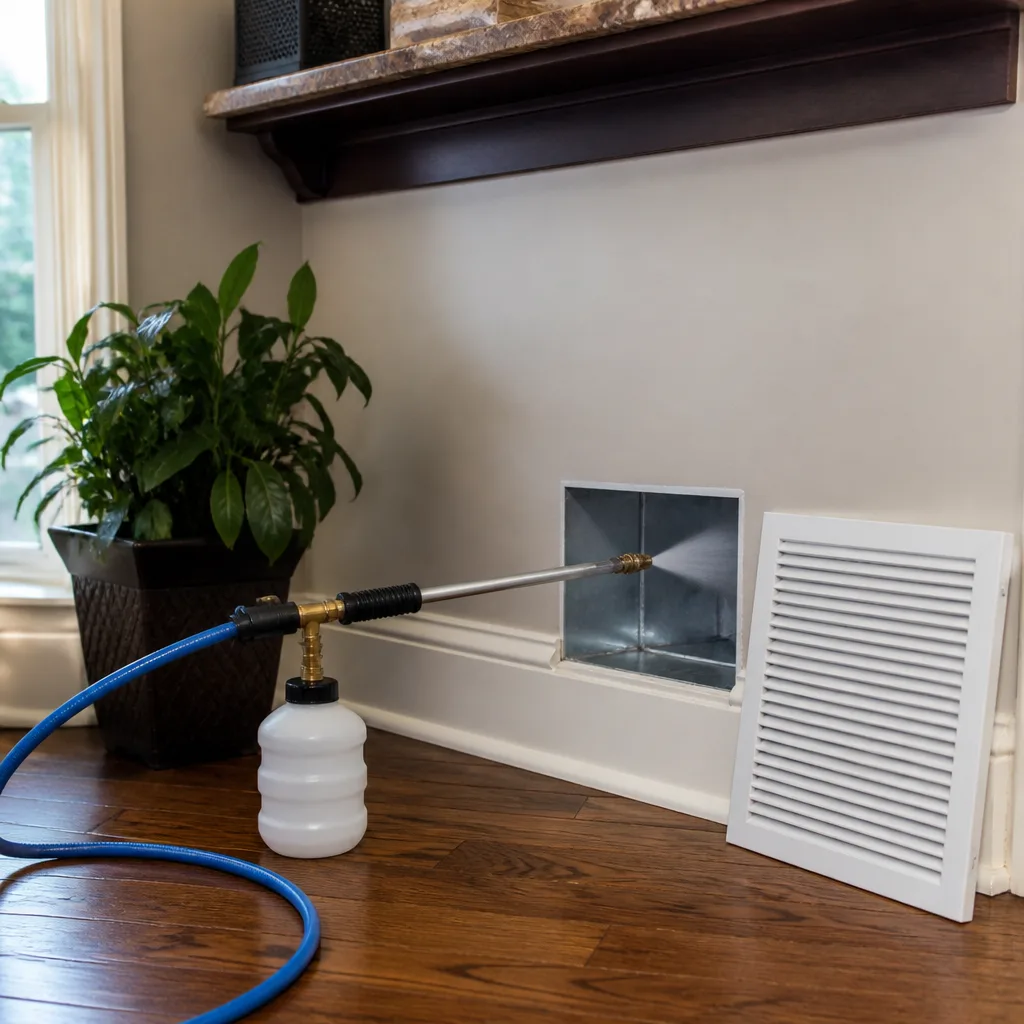 Sanitizing & deodorizing
Whole-system duct and dryer vent check with before-and-after photos - you see exactly what came out of your vents
That "$99 whole-house special" is a bait ad - the real number appears once they are in your hallway, or the "clean" is a shop-vac at the register. We photograph the inside of your ducts before and after instead.
Air Duct Cleaning Maintenance Checklist for Kansas City Homeowners
If you swapped a basic MERV-8 filter for a high-capture MERV-13 without checking what your blower can handle, you may have spent months quietly starving your system of airflow. A filter that’s too restrictive for the fan forces it to work against higher static pressure, and that extra load often shows up as flex duct runs pulled flat and blower motors running hot. No product label warns you. Most checklists online never mention it. This guide covers the between-cleaning routine that actually protects your ducts in Kansas City: correct filter matching, what to inspect quarterly, local humidity benchmarks that matter, and how to log airflow problems before they turn into a repair. What you’ll learn here is how to control the things upstream and downstream of your ducts, not how to clean them yourself.
Quick Answer
The core of duct maintenance between professional cleanings is this: keep the right filter installed, watch quarterly for register and return-grille debris, track humidity and HVAC runtime, and note anything unusual so your technician can diagnose faster at the next service. You don’t clean ducts yourself. You manage the variables that determine how fast contaminants build back up, which extends the life of a professional cleaning and keeps indoor air quality steady through Kansas City’s seasonal swings.
Styles & brands we work with
- Whole-home duct cleaning
- Dryer vent cleaning
- Camera inspection
- Sanitizing & deodorizing
Table of Contents
- Why Between-Cleaning Maintenance Matters More Than Most Homeowners Realize
- Filter Selection for Kansas City’s Allergen Seasons
- The Quarterly Visual Inspection You Can Do Safely
- Humidity Benchmarks That Signal Duct-Liner Risk
- Logging HVAC Runtime Anomalies That Precede Duct Problems
- Building Your Annual Duct Maintenance Calendar
- What to Tell Your Technician at Each Cleaning
- When Cleaning Reveals Duct Damage
Why Between-Cleaning Maintenance Matters More Than Most Homeowners Realize
A professional cleaning resets your duct system to a known clean baseline. What determines how long that baseline holds isn’t the cleaning itself, it’s everything you do afterward. Filtration, humidity control, and catching small airflow problems early are the three levers Kansas City homeowners actually control. Get them right and your ducts stay cleaner for longer. Ignore them and the buildup returns faster than it should.
We’ve seen this play out across Kansas City across every housing vintage, from older homes near downtown to newer builds in the western suburbs. The pattern is consistent: the homes that hold a clean baseline the longest are the ones where someone is paying attention to filter condition, watching for water intrusion, and noticing when a room stops heating evenly. That’s not about cleaning technique. It’s about observation.
There’s a second reason the between-service window matters: it’s the only time you’re likely to notice a developing problem before it becomes expensive. Flex duct that’s sagging, a duct run that’s separated at a joint, a return grille packed with debris. These issues are easier to correct when they’re caught early. Left alone, restricted airflow tends to spread the load onto the rest of the system, and that’s when you start seeing problems in rooms that weren’t affected before.
What a Professional Cleaning Actually Resets
Understanding what gets cleaned helps you protect it. A proper air duct cleaning service removes accumulated debris from the supply and return runs, the register boots, and the main trunk lines. Professional equipment – the kind built for remediation work rather than consumer use – uses negative-air containment to capture loosened contaminants so they don’t simply redistribute through the house. That’s the difference between cleaning and stirring things up. When the process is done right, you’re left with a duct system that’s mechanically clean and can be maintained rather than rescued.
Filter Selection for Kansas City’s Allergen Seasons
Filter choice is the single most impactful decision you’ll make between cleanings, and it’s also the one most homeowners get wrong in both directions. Under-filter and debris travels deeper into the system. Over-filter without checking your blower’s static pressure rating and you can choke airflow, which stresses motors and can collapse flex duct. Kansas City’s allergen calendar makes the tradeoff trickier than it is in a lot of other places.
Matching Filter Rating to Your System’s CFM Capacity
Before you upgrade filter ratings, find your system’s airflow capacity. It’s usually on the data plate on the air handler or furnace, listed in CFM (cubic feet per minute). Higher MERV ratings mean finer filtration, but they also mean higher resistance. A system with limited static pressure headroom may not tolerate a high-capture filter without a pressure-drop problem. When in doubt, a mid-range filter changed on schedule generally beats a high-MERV filter left in too long.
Here’s how a Kansas City seasonal filter calendar typically looks:
- Spring (mold season): As soil thaws and spring rains move through, outdoor spore counts climb. A mid-to-high capture filter helps, but only if your blower can handle it. Change it before the season, not mid-season.
- Summer (humidity season): High humidity means the AC runs hard and long. A filter that’s slightly loaded is a bigger drag in summer than in other seasons. Check condition more often.
- Fall (ragweed season): Ragweed pollen is small and travels far. If someone in the house is affected, this is the season a higher-capture filter earns its keep – if you’ve confirmed the system tolerates it.
- Winter: Heating season runs drier air through the same ducts. Watch for static cling and visible dust on register faces, which often signals a filter that’s past due.
Our technicians have up to 10 years of experience reading these filter tradeoffs in Kansas City homes, and the conversation often comes down to matching the filter to the equipment rather than picking the highest rating available. Homes with whole-home filtration already installed – Aprilaire systems are common in this area – need filter selection coordinated with that equipment rather than chosen independently.
The Quarterly Visual Inspection You Can Do Safely
You don’t need to open ductwork or reach inside runs to catch most problems early. A quarterly walkthrough of the accessible parts of your system takes fifteen minutes and gives you a useful picture of what’s happening upstream. The rule is observation only: if something requires removing a panel, disconnecting a run, or reaching into the ductwork, that’s a technician’s job, and we strongly recommend leaving it to one.
A Simple Quarterly Inspection Sequence
- Check every register face and remove the grille on one supply register per zone. Look at the inside of the boot with a flashlight. A light film is normal. Matting, visible debris accumulation, or dark staining is worth noting.
- Inspect return grilles for debris load. Returns pull in more dust than supplies. If the return grille is visibly loaded after a few weeks, a filter check should be the first thing on your list.
- Look for flex duct sag or disconnection in accessible areas. Basements, attics with clear access, and mechanical closets often show flex runs. Any run that has come loose at a collar, has a visible tear, or droops significantly from its hangers should go on your observation log.
- Smell test near registers and the air handler. A musty or earthy smell near a register is worth following up, especially in humid months.
- Note filter condition and date. Write down the date you last changed the filter. It sounds trivial; it prevents the most common cause of restricted airflow we see.
Do not open the air handler cabinet. Do not remove panels with electrical connections. On newer systems with high-efficiency blowers, even a brief power interruption during disassembly can cause issues. Keep your inspection to what’s visible from outside the equipment.
Humidity Benchmarks That Signal Duct-Liner Risk
Kansas City summers routinely push indoor relative humidity high enough that condensation forms inside ductwork, particularly on metal and foil-faced duct surfaces that carry cool supply air through warmer spaces. When condensation sits on duct liner, the liner stays damp, and damp liner is where mold growth starts. You don’t need to reach for duct-cleaning chemicals when humidity starts climbing. You need a dehumidifier, an AC running properly, and a technician who knows what to look for.
A general target: indoor relative humidity between 30% and 50% is usually comfortable and keeps surfaces dry. When it’s consistently above 55% inside the home in summer, the risk of condensation on supply ducts climbs, especially in unconditioned spaces like attics and crawlspaces. If you’re seeing humidity above 60% inside for extended periods, that’s worth addressing before the next cleaning cycle – a whole-home dehumidifier or an AC charge check from your HVAC contractor is often the right answer, and then we can assess whether any duct-liner moisture needs attention.
Our equipment includes Abatement Technologies negative-air equipment, which is designed for containment during cleaning. That matters in humid Kansas City months because dislodged contaminants are captured rather than recirculated through the home – the right protocol when the ducts have been sitting in high humidity. If you suspect liner moisture, it’s worth asking about it directly when you book service so we can plan accordingly.
What to do if your humidity readings trigger this benchmark, before the next cleaning cycle:
- Verify your AC system is removing moisture as designed – a system running low on refrigerant or oversized for the home can leave indoor humidity high.
- Run exhaust fans during cooking and showering in summer. Kansas City’s summer humidity means every extra moisture source matters.
- Keep interior doors open when the AC is running so conditioned air can reach all zones and dry the duct surfaces throughout the house.
- Note any musty smell near registers in your observation log and plan to discuss it when you book cleaning.
Logging HVAC Runtime Anomalies That Precede Duct Problems
Duct problems rarely announce themselves. They show up as small changes in how the system behaves – a room that used to heat evenly now stays cool, the system cycles more often than it used to, and airflow at a register feels weaker. If you track these anomalies for a few weeks, you can hand your technician a much faster path to a diagnosis.
What to Log
- Cycle frequency: Note how many times the system kicks on in a typical heating or cooling hour. A sudden increase often means the system is fighting for airflow.
- Room temperature gaps: Compare temperatures in a few rooms over a week. Persistent gaps of several degrees in rooms that used to be even point at a supply duct restriction.
- Register airflow: A tissue or light piece of paper held near a supply register tells you if airflow feels weak. Do this quarterly and note changes.
- Sound changes: Whistling at a return grille, rattling at a supply register, or an air handler that suddenly sounds strained are all worth noting.
Keep a simple log – date, what you noticed, which room or register. That’s it. When we assess a duct system, that kind of history cuts diagnosis time significantly. It’s also often the difference between catching a separated flex run early and discovering it after it’s affected the whole home’s airflow.
Building Your Annual Duct Maintenance Calendar
A duct maintenance routine in Kansas City is best thought of in terms of seasons, since what you’re controlling changes from spring to winter. Below is a broken-out schedule you can adapt to your own home. Every home is different, and these are general recommendations rather than hard rules.
- Early spring: Change filter. Do the quarterly visual inspection. Re-check return grille debris load as AC season approaches.
- Late spring: Confirm dehumidifier setup if you use one. Log any humidity readings above 55% indoor. Check supply register airflow in a few rooms and compare to last season’s log.
- Summer: Change filter mid-season, not just on a monthly nominal schedule – hot, long cycles load filters faster. Watch for musty smells, which signal humidity issues worth discussing.
- Early fall: Change filter before heating season. Do the quarterly visual inspection. Note any room-to-room temperature differences that persisted through summer.
- Late fall: Check for any duct-related anomalies in the log. If cleaning was last done more than a few years ago and you’ve been seeing more visible debris on register faces, book the next Millbrook Air Duct Cleaning appointment.
- Winter: Watch filter condition and register face dust. Winter heating often surfaces duct issues that were masked by summer cooling.
Our technicians have up to 10 years of experience working the duct-and-filtration side of these home systems, and a scheduled look at the calendar you keep is worth more than most duct-related upgrades. If you want to fold dryer vent maintenance into the same annual rhythm, our dryer vent cleaning service is a fire-risk reduction step many homeowners forget until it’s overdue. The professional equipment we use – Rotobrush and Nikro systems built for duct work, and Guardsman on the dryer vent side – is chosen for the job the equipment is designed to do, not repurposed from a shop vac.
What to Tell Your Technician at Each Cleaning
Your observation log turns into actionable intelligence for a technician. It’s also how you avoid paying for a diagnosis someone else could have done in ten minutes. Before your next cleaning, gather these observations:
- Filter change dates since the last cleaning, and the filter rating you used.
- Any room where temperature or airflow has changed.
- Indoor humidity readings above 55% and when they occurred.
- Any visible flex duct damage, sag, or disconnection you noticed during quarterly inspection.
- Any smell noticed near supply registers or the air handler.
- Any change in system cycling frequency.
That handoff lets your technician skip the guesswork and focus on the specific areas that need attention. If you have whole-home air-quality equipment – Aprilaire or Honeywell filters are both common here – flag it before the visit so the technician cleans around the system properly and can speak to how it fits into your filtration plan.
When Cleaning Reveals Duct Damage
Cleaning is often the first time a duct system gets examined in detail. That’s when flex duct can be found kinked, separated at a joint, or crushed by stored items in a basement or attic. Sometimes that damage was there for years. Sometimes a piece of flex duct that was fine when installed has sagged out of position after years of running. Either way, it’s a repair, not a cleaning issue, and it needs to be addressed the same way.
Many duct-cleaning crews stop at debris removal and hand you a list of damage to call someone else about. That’s a real gap for homeowners. Our technicians handle air duct repair as a named service, so when damage is found during cleaning it can generally be addressed in the same visit, by the same team. That single-vendor relationship matters when the work is happening because you were paying attention between cleanings in the first place.
The specific repairs we handle typically involve:
- Reconnecting flex duct at collars and boots where it’s come loose.
- Repositioning or rehanging sagging flex runs so they aren’t restricted.
- Sealing duct joints where leakage is significant enough to affect delivered airflow.
- Correcting crushed or crimped duct sections.
If your technician finds something outside that scope during cleaning, they’ll tell you honestly. Air duct repair covers duct-related problems. Equipment-level issues – refrigerant, blower motor replacement, compressor work – are best handled by an HVAC contractor, and we’ll help you identify that distinction at the visit.
Common Mistakes to Avoid
- Slapping a MERV-13 filter into a blower that wasn’t rated for it. This is the most common over-filtering mistake we see in Kansas City homes. It can choke airflow and stress the blower without any obvious warning except performance decline.
- Waiting for visibly dirty register grilles to trigger a cleaning. Register faces show only what reaches them. Ducts can be significantly loaded long before anything is visible from the room side.
- Running the AC with windows open in a humid summer stretch. It sounds basic, but internal humidity climbs fast, and duct liner that stays damp is where problems start.
- Washing return grilles only and skipping filter changes. The grille is the cosmetic layer. The filter is the one that protects the equipment.
- Storing boxes against flex duct runs in basement or attic areas. Flex duct gets crushed easily, and restricted runs affect every room downstream.
- Ignoring mild musty smells because they come and go. Intermittent smell often tracks to humidity swings and points to duct-liner moisture worth checking before it worsens.
- Choosing a cleaning service on teaser pricing alone. A very low advertised price that becomes a much larger invoice on-site is a known problem in this trade. Ask how the estimate is set – a fair contractor will tell you it’s a flat per-system price agreed before work starts, and can show before-and-after photos of your ducts.
See the difference
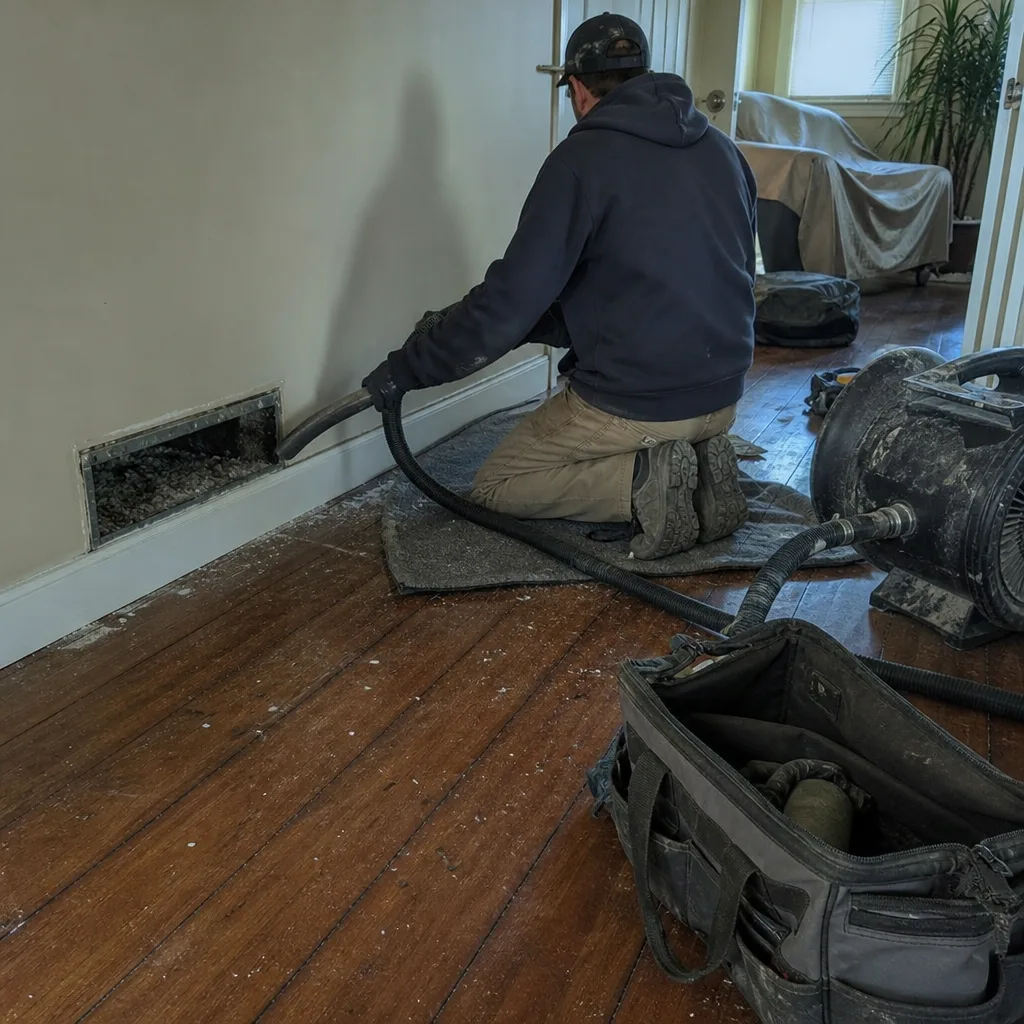 Before
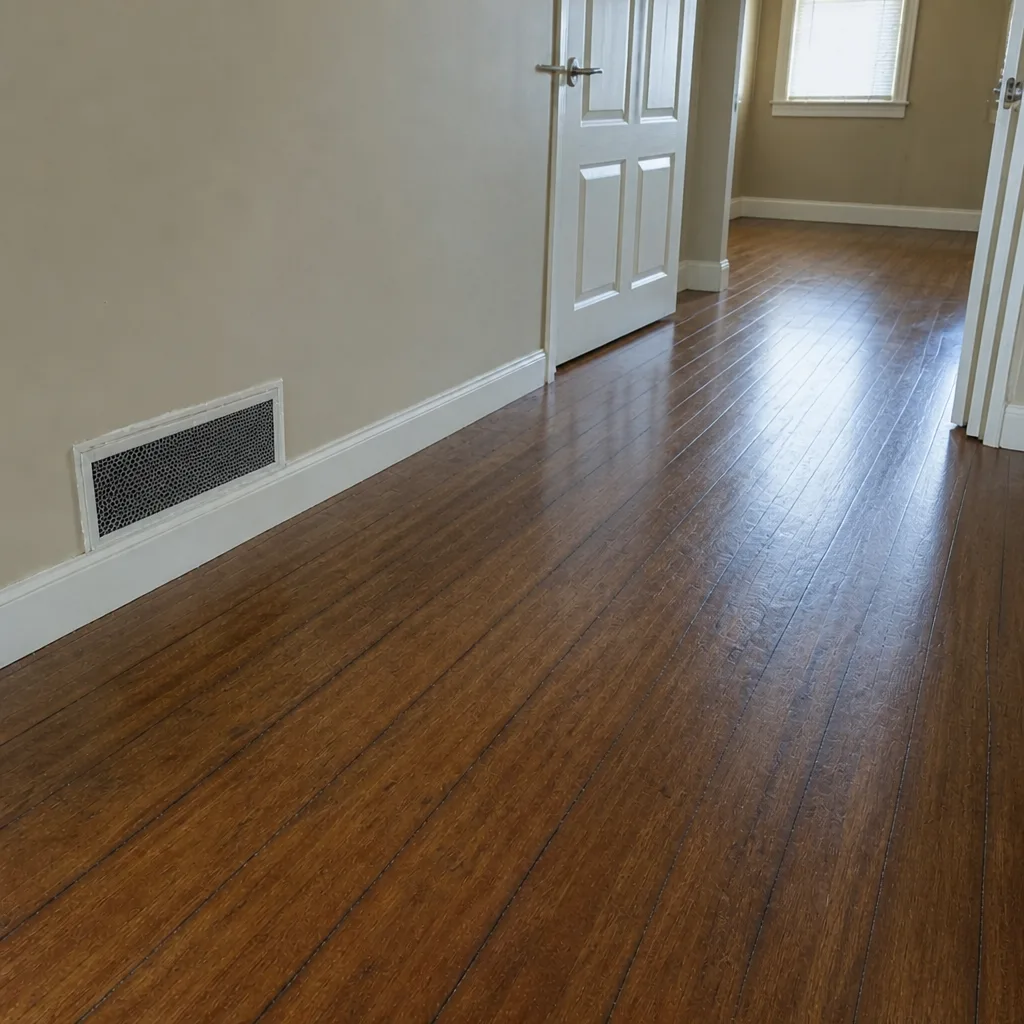 After
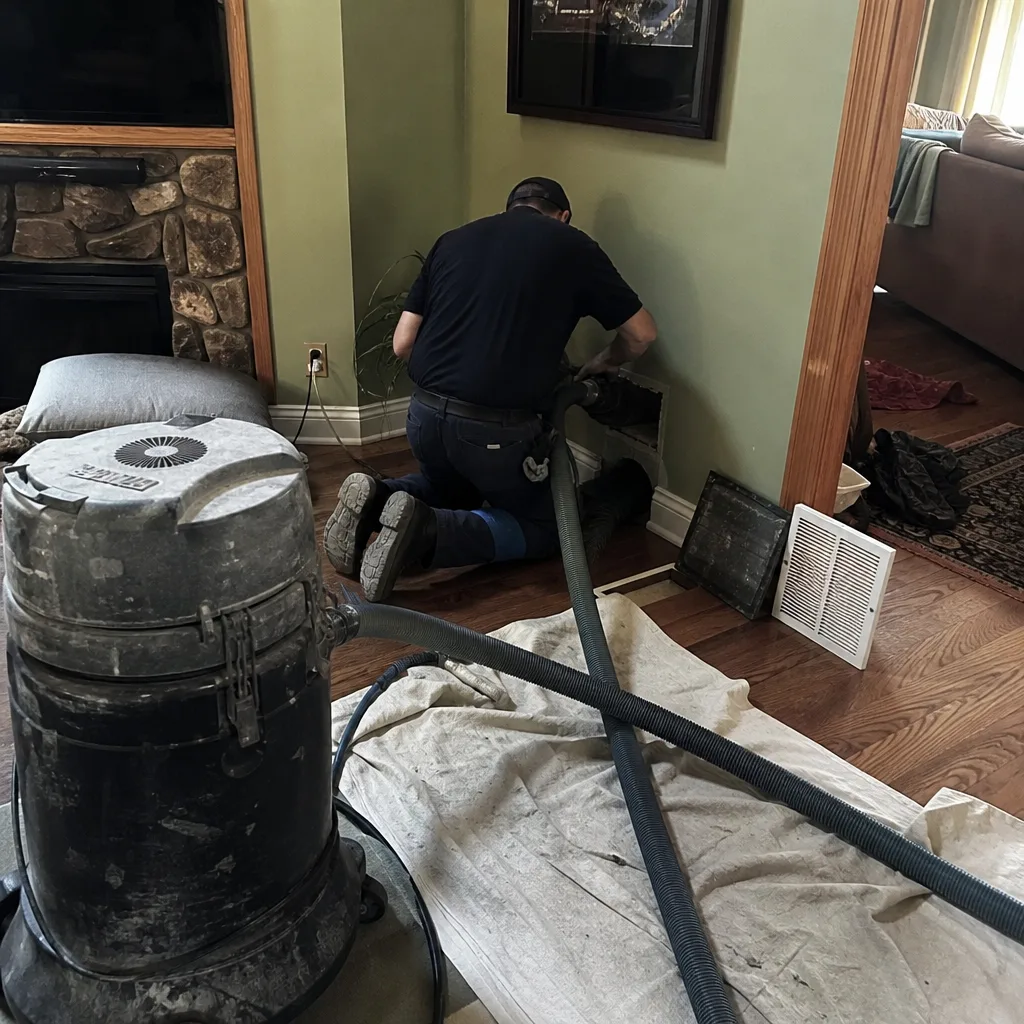 Before
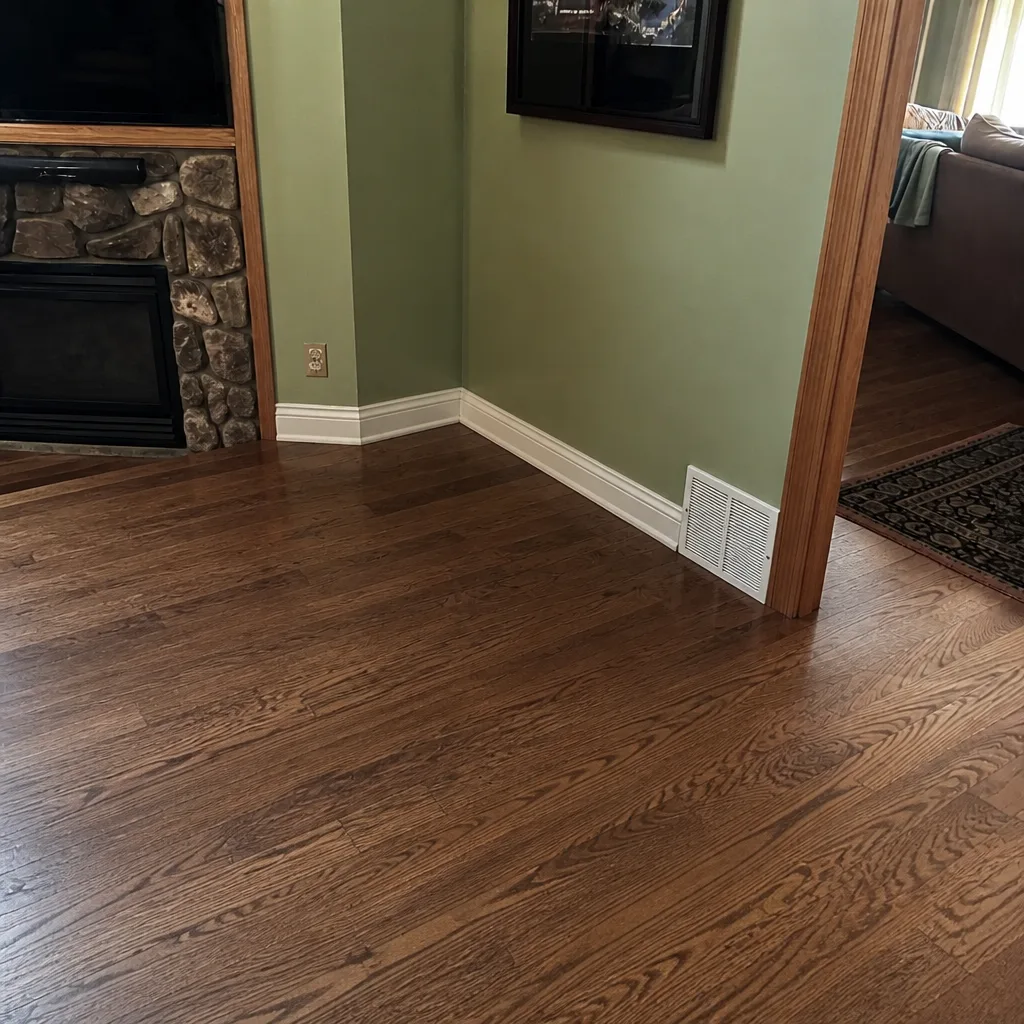 After
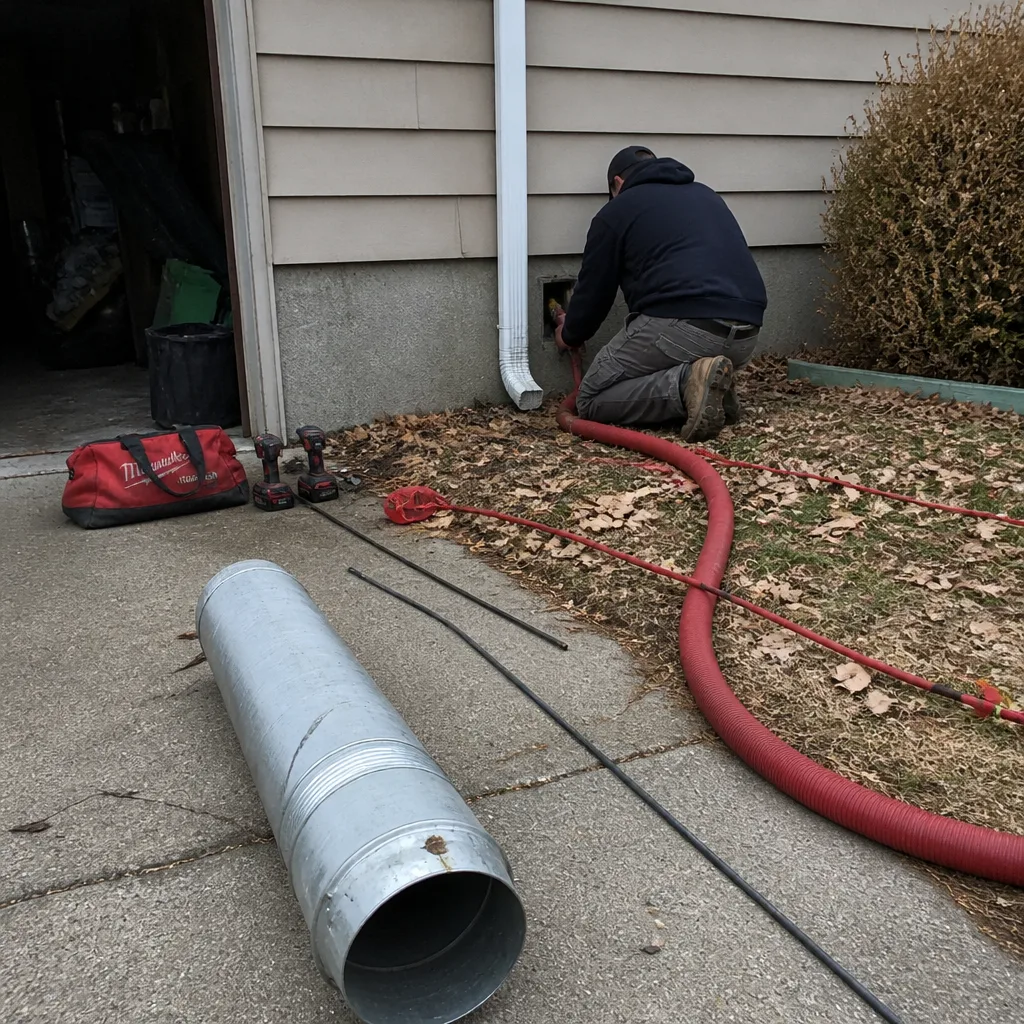 Before
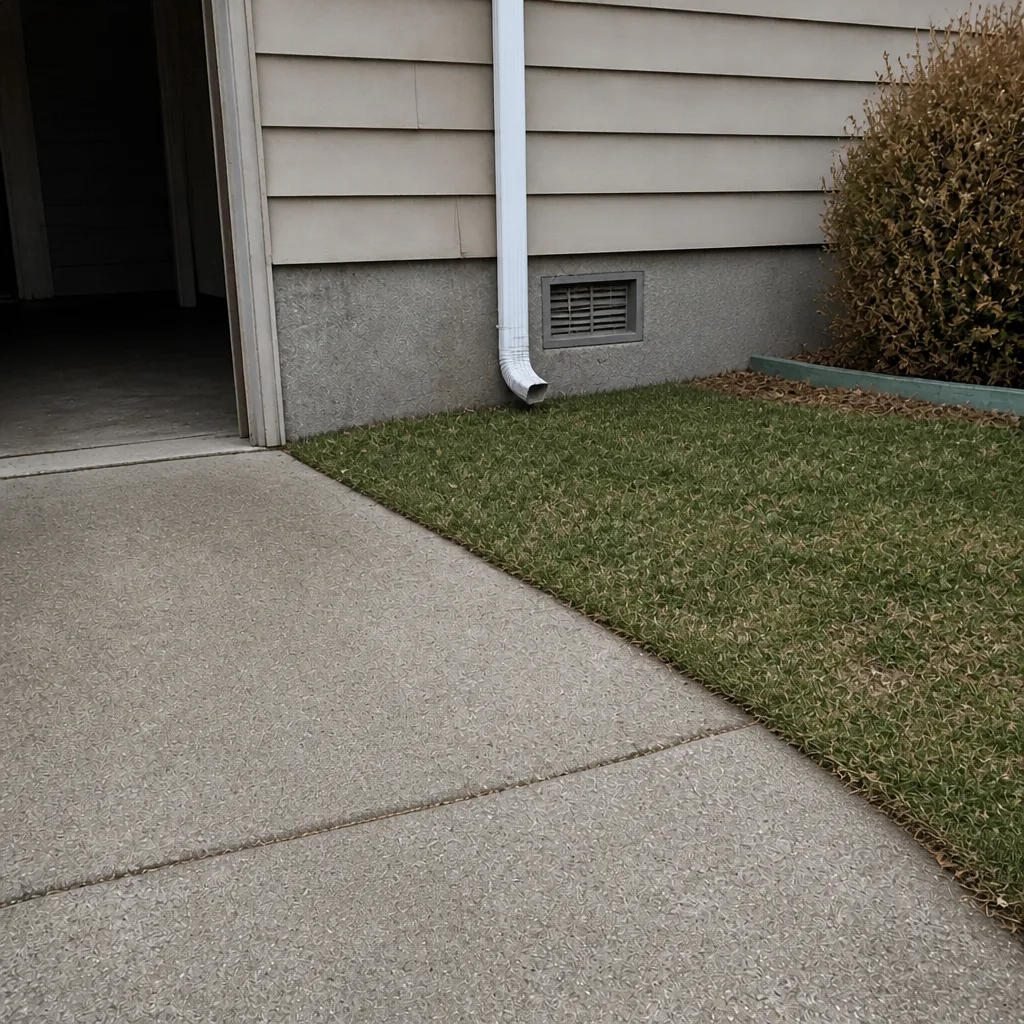 After
When to Call a Professional
Some things are for your quarterly checklist and some are for a professional. Call when you’ve logged the same duct-related anomaly for several weeks and it isn’t resolving with a filter change. Call when you’ve seen flex duct disconnection or crushing during a visual inspection and want it assessed. Call when humidity above 55% indoors has been persistent for a summer and you’re seeing or smelling something in the air near registers. Call when the ducts have never been professionally cleaned and the home is new to you. And call when visible debris on register faces has been increasing since your last cleaning. Those are all situations where the next step is a technician with the right equipment, not more homeowner observation.
Millbrook Air Duct Cleaning offers free estimates in Kansas City – call (855) 473-1004. We come out with the Rotobrush and Nikro equipment built for duct work, and if we find damaged ductwork we can handle repair in the same visit rather than sending you looking for a second contractor. One flat price per system, set before work starts.
Frequently Asked Questions
Most Kansas City homes benefit from a professional cleaning every two to three years, though the right interval depends on filter maintenance, humidity control, pets, and how much construction dust or renovation the home has seen. Homes with persistent humidity issues, pets, or allergy sufferers often need closer to the two-year side; homes that stay dry with disciplined filter changes can go longer. The between-cleaning checklist in this guide is what determines which end of that range applies to you.
No. Consumer vacuums lack the airflow and containment to remove debris from duct runs, and running one through a supply line often just redistributes fine dust through the house. Professional cleaning uses purpose-built equipment with negative-air containment to capture loosened contaminants. It’s also safer – and it produces a result you can actually judge, with before-and-after photos of your own ducts.
Duct cleaning is priced per system, not per vent, and the written estimate sets the final number. Whole-system pricing depends on the number of systems, the size of the home, and whether duct repair is needed. What we’d caution against is teaser pricing that turns into a much larger invoice on-site – that’s the pattern this checklist is designed to help you avoid by choosing on quality, not coupon price. Call (855) 473-1004 for an exact quote – estimates are free.
Cheap quotes often skip equipment or containment, meaning you may pay for a process that loosens debris without capturing it. The better question to ask is what equipment the crew brings, whether they use negative-air containment, and whether they can repair duct damage if they find it. A fair quote reflects those capabilities. Call (855) 473-1004 and we’ll walk you through how we price a system.
Ask for before-and-after photos of your own ductwork. That’s the most reliable check – real photos of your registers, boots, and main runs before and after cleaning. You should also ask for the flat per-system price upfront and get confirmation before work starts, so nothing is added after the technician is on site. Call (855) 473-1004 to schedule and we’ll walk through what you’ll see when we’re done.
If you’ve logged persistent room-to-room temperature differences, whistling at registers, or visible flex duct damage, repair may be on the table. Cleaning alone won’t fix a disconnected or crushed run. Millbrook handles air duct repair as a named service, so if a technician finds damage during a cleaning, it can usually be addressed in the same visit rather than requiring a separate contractor. Call (855) 473-1004 to book an assessment.
The Bottom Line
Duct maintenance between professional cleanings is about controlling the variables, not cleaning your ducts yourself. Pick the right filter for your blower’s capacity, run a quarterly visual inspection on accessible parts, watch indoor humidity against the 30-50% target for Kansas City, and log runtime anomalies so your technician has real information at the next visit. That discipline extends the life of a cleaning and catches problems while they’re still small. Our technicians have up to 10 years of experience in Kansas City on the duct, filtration, and dryer vent side of home systems, and we’re happy to look at your system with the same eye – whether the answer is “due for cleaning,” “due for repair,” or “you’re in good shape.” Call (855) 473-1004. We answer 24/7. Fast dispatch from 7am to 7pm, Sunday through Friday. Closed Saturday. Written for homeowners in Kansas City who would rather prevent problems than rescue them.
Written by the team at Millbrook Air Duct Cleaning.