
Last updated November 14, 2026
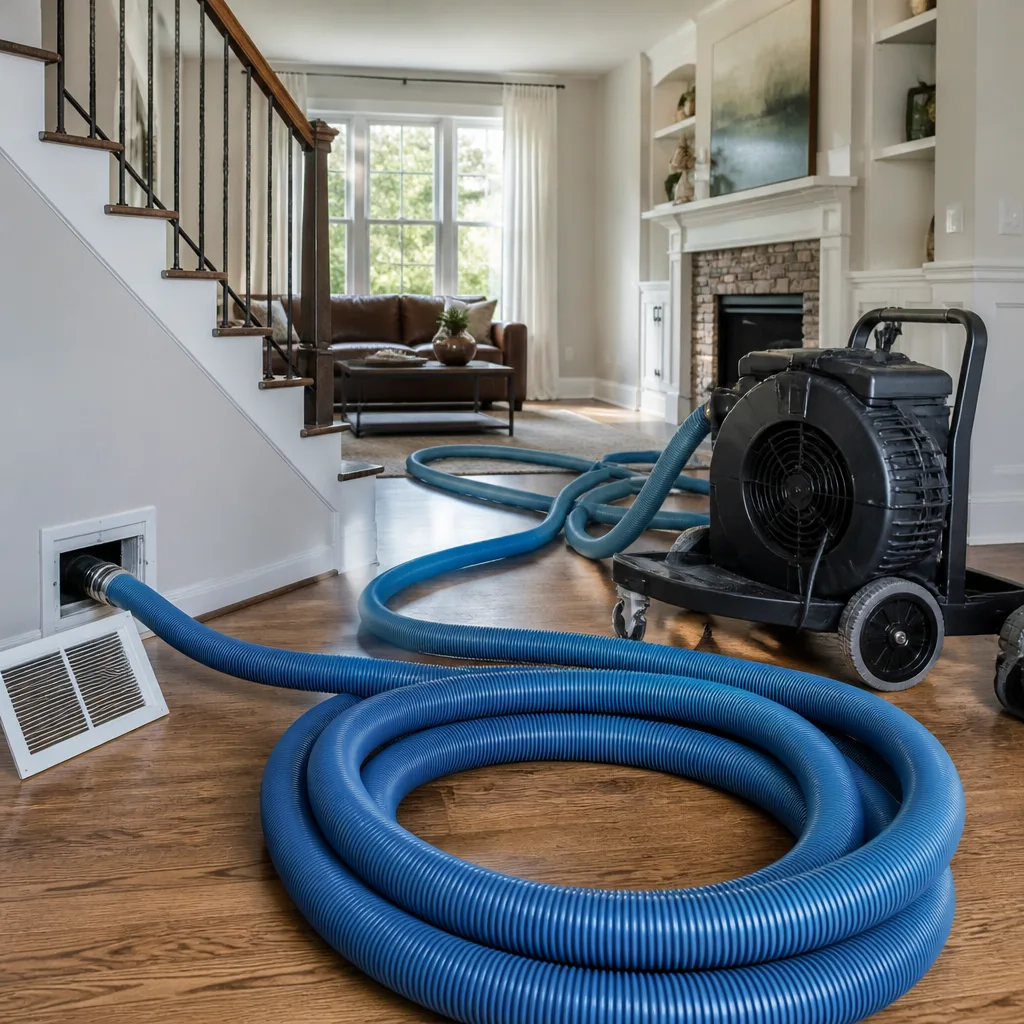 Whole-home duct cleaning
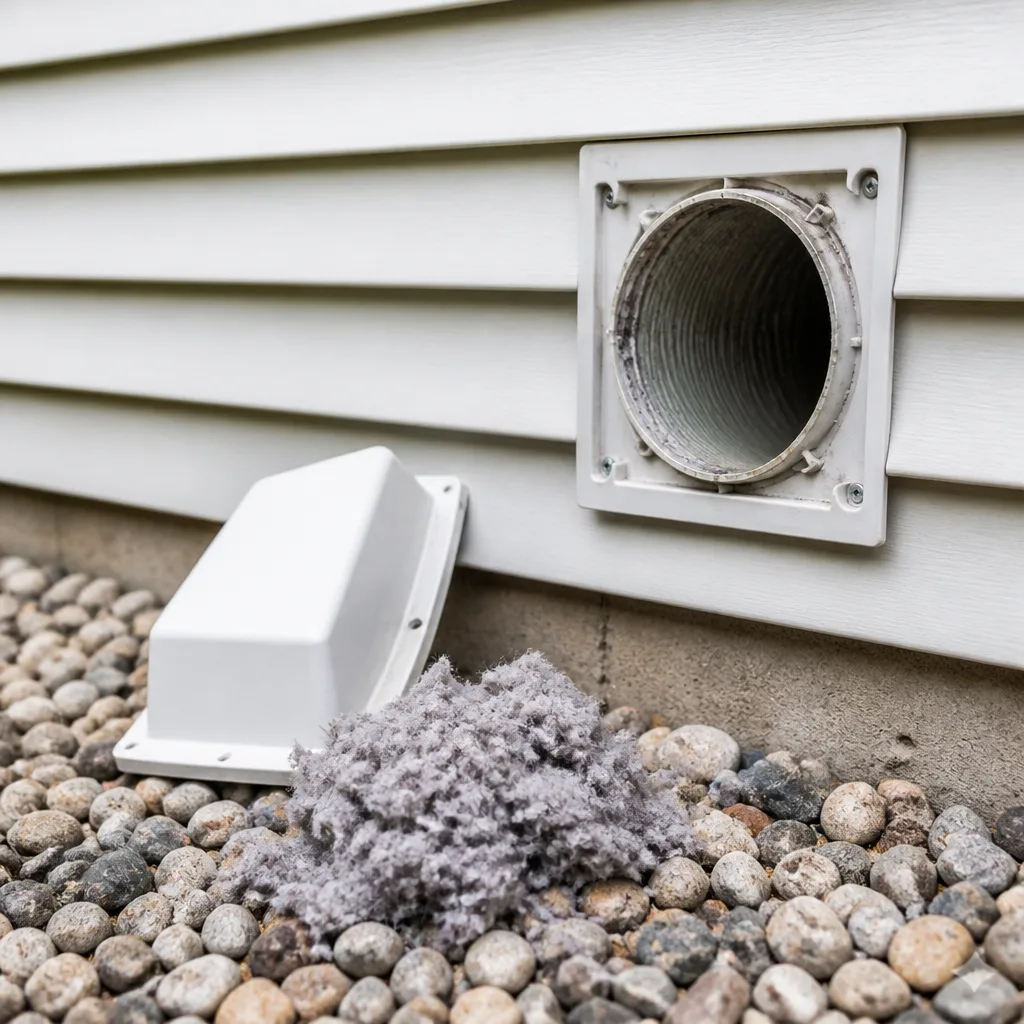 Dryer vent cleaning
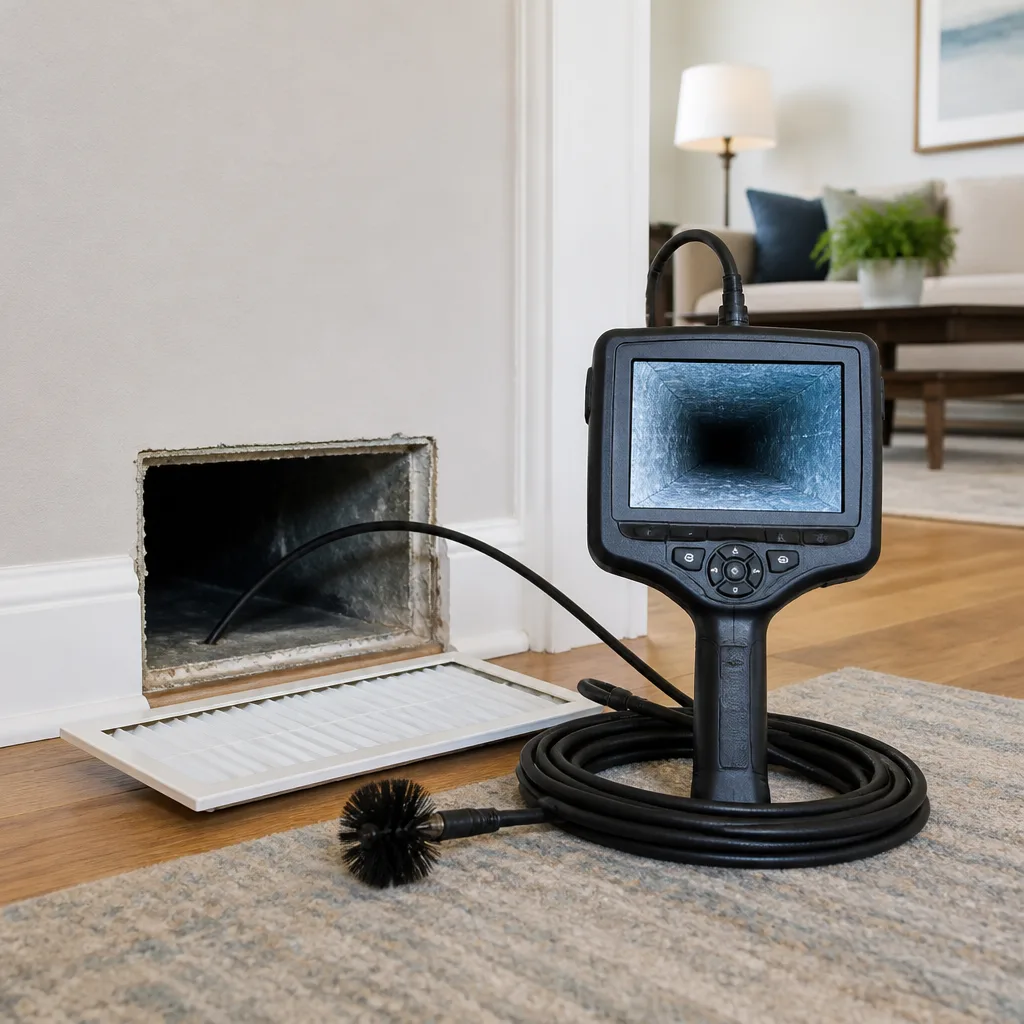 Camera inspection
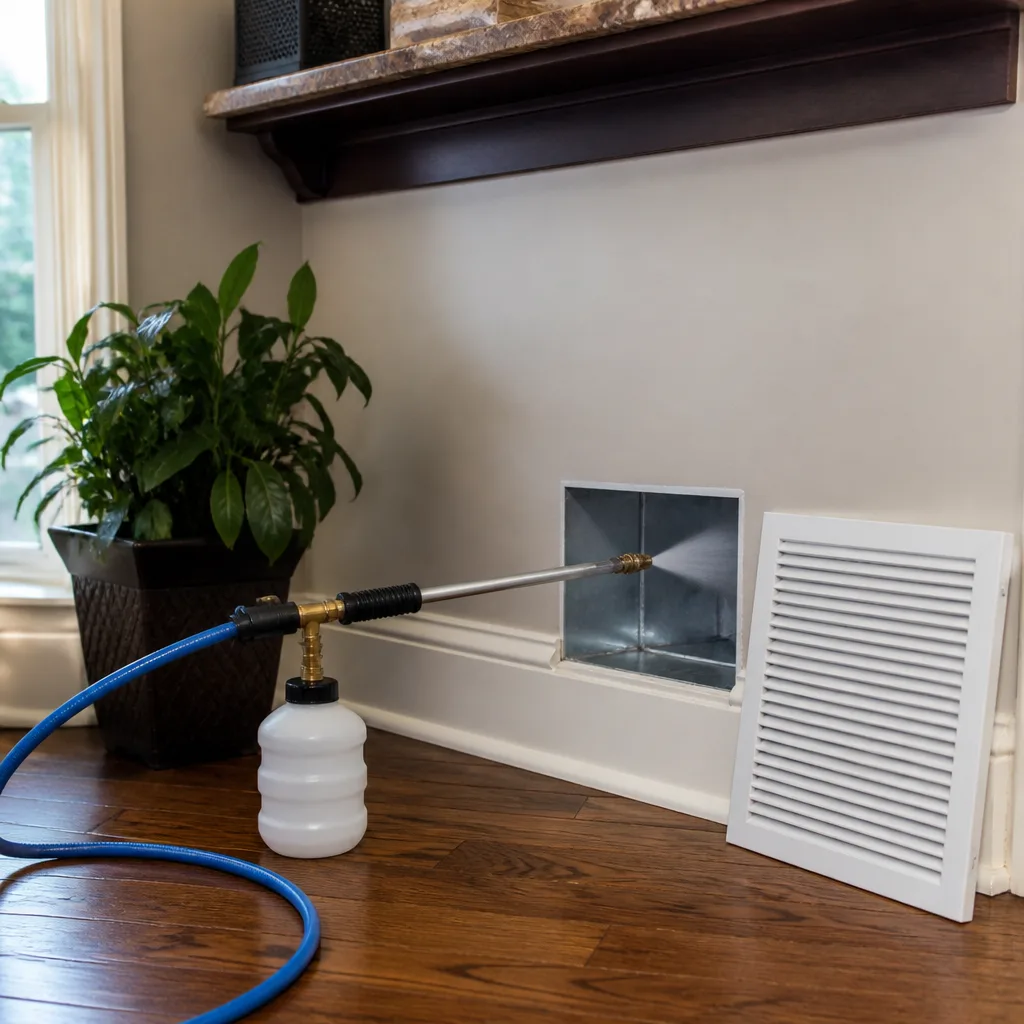 Sanitizing & deodorizing
Whole-system duct and dryer vent check with before-and-after photos - you see exactly what came out of your vents
That "$99 whole-house special" is a bait ad - the real number appears once they are in your hallway, or the "clean" is a shop-vac at the register. We photograph the inside of your ducts before and after instead.
Air Duct Cleaning Cost Breakdown: The Kansas City Homeowner’s Reference for 2026
Two Kansas City duct cleaning quotes for the same house can land at $189 and $680, and both can be honest numbers for completely different jobs. That gap isn’t a scam in one case and a fair deal in the other. It’s the difference between a crew that runs a hose through your floor vents for forty minutes and a crew that maps the whole system, sets up containment, cleans every trunk and branch, and inspects for damage while they’re in there. The trouble is that almost no quote tells you which one you’re buying. This guide pulls apart the five things that actually move the number so you can compare quotes on equal terms, understand Kansas City’s 2026 price ranges, and know what each add-on really accomplishes.
Quick Answer
Air duct cleaning in Kansas City typically runs $350 to $700 for a standard single-system home in 2026, with larger or multi-zone homes landing between $700 and $1,200 and duct repair adding $250 to $1,500 depending on how much damage is found. Whole-system pricing is more honest than per-vent pricing, because per-vent quotes reward speed over thoroughness. Always compare quotes on scope, equipment class, and whether the contractor can repair what they find, not on the bottom line alone.
Styles & brands we work with
- Whole-home duct cleaning
- Dryer vent cleaning
- Camera inspection
- Sanitizing & deodorizing
Table of Contents
- The Five Cost Drivers Behind Every Kansas City Duct Cleaning Quote
- Per-Vent Pricing vs. Whole-System Pricing: What Each One Signals
- Kansas City Price Ranges for 2026, Segmented by Home and Scope
- Add-Ons Explained: Sanitizing, Dryer Vent, and Coil Cleaning
- How Duct Repair Costs Interact With Cleaning Costs
- What a “Free Inspection” Actually Involves vs. a Real Diagnostic
- Why Equipment Class Changes What You’re Paying For
The Five Cost Drivers Behind Every Kansas City Duct Cleaning Quote
Once you know the five drivers, a quote stops being a mystery number and starts reading like a work order. These are what actually move the price in a Kansas City home, and any contractor worth the call can explain where your house lands on each one.
- Duct linear footage. A 1,400-square-foot ranch with a short trunk run is a very different job from a 3,200-square-foot two-story with long supply branches and multiple returns. Footage drives time, and time drives price.
- System configuration complexity. Single-zone versus multi-zone, the number of returns, whether the system has been added onto over the years, and whether there’s a finished basement run all change the access map and the cleaning time.
- Access difficulty. Vents under carpet, ceiling registers above a staircase, and trunks boxed in behind drywall all cost more to reach safely and properly. Good crews don’t skip the hard runs; they price them in.
- Equipment class deployed. A purpose-built rotary brush and negative-air setup from Nikro or Rotobrush, paired with Abatement Technologies containment, is a different tier of tooling than a shop vacuum and a hose.
- Whether repair is included. A quote that includes inspection and a plan for found damage is a different product from one that ends when the vacuum shuts off.
Kansas City’s older housing stock matters here. Homes in neighborhoods like Strawberry Hill and the West Side often have ducts retrofitted decades after construction, which means odd routing and joints that need a careful look. Newer builds out in the western suburbs tend to have cleaner layout and shorter access times. Neither is a problem, but both change the quote.
That’s also why we tie our pricing to the whole system rather than a headcount of vents. When you look at air duct cleaning as a system-wide job, the cost naturally reflects footage, access, and equipment instead of how many registers happen to be in your floor.
Per-Vent Pricing vs. Whole-System Pricing: What Each One Signals
Per-vent pricing looks simple and transparent. In practice it’s a trap for thoroughness, because the clock and the price both stop at the register whether or not the trunk line behind it ever got cleaned.
Here’s the mechanic. A crew paid per vent has every incentive to move fast, hit the visible openings, and move on. The long horizontal runs, the return trunk, and the interior of the main supply plenum, which is where a lot of the buildup actually lives, are the parts that take time. Those are precisely the parts that per-vent pricing quietly leaves out.
Whole-system pricing works the other way. The contractor quotes the house based on footage, configuration, and access, then the crew is obligated to clean the entire system, top to bottom, for that number. That structure only makes sense if the contractor intends to do the full job.
- Signals a thorough approach: whole-system flat quote, a pre-service walkthrough, a conversation about what’s in the system, and a commitment to the whole network.
- Signals a speed approach: “from $X per vent,” a coupon headline price, no walkthrough, and no discussion of trunks or returns.
- A warning sign either way: a quote that changes dramatically once the technician is on site.
One flat price per system, agreed before the work starts, is the model that protects you. It removes the incentive to rush and removes the surprise at the end. When you’re comparing prices for Kansas City, that single question, “is this a whole-system flat price?” will separate the real quotes from the teaser ones faster than anything else.
Kansas City Price Ranges for 2026, Segmented by Home and Scope
These ranges are typical, not fixed, for the Kansas City market heading into 2026. Your written estimate sets the final number. Use them to sanity-check the quotes you collect.
Standard Whole-System Cleaning
| Home profile | Typical range | What it includes |
|---|---|---|
| Smaller single-system home, one story | $350 – $470 | Full supply and return cleaning, registers removed and cleaned, pre- and post-service photos |
| Mid-size home, single system | $470 – $700 | Same scope, longer footage and more registers |
| Large or two-story with multiple zones | $700 – $1,200 | Whole-system scope across zones, multiple returns, access-difficult runs included |
Add-Ons
- Sanitizing / deodorizing: $75 – $200, applied after cleaning to the interior surfaces.
- Dryer vent cleaning (standalone or add-on): $120 – $200. A separate service with a separate purpose: lint removal that reduces fire risk.
- Coil cleaning: $150 – $350, depending on how accessible the evaporator coil is and how much buildup has collected.
- Duct repair: $250 – $1,500, depending on the number of separated joints, crushed runs, and whether new fittings are needed.
One more Kansas City note: humidity. Summer here can push indoor moisture high enough that dust in ductwork clumps and sticks to surfaces rather than staying loose. That can make a system take longer to clean than a homeowner expects, and a fair quote accounts for it. If a Kansas City quote seems unusually low for a home that’s gone a long time without service, ask what scope the number actually covers.
Add-Ons Explained: Sanitizing, Dryer Vent, and Coil Cleaning
Each add-on solves a different problem, and none of them are required. Buy them because you understand what they do, not because the quote upsold them.
Sanitizing / Deodorizing
The cleaning removes what’s physically in the ducts. Sanitizing applies a treatment to interior surfaces afterward, which can help if there’s a persistent odor or a system that’s been damp. It’s not a substitute for cleaning, and it’s not needed on every job. If a contractor leads with sanitizing before cleaning has been discussed, ask why.
Dryer Vent Cleaning
Dryer vents are separate from your HVAC system and accumulate lint that never disperses. It’s a fire-risk reduction step, and many cleaning companies skip it because it isn’t part of the duct job. We offer dryer vent cleaning as either a standalone or an add-on so it can be handled in the same visit as the duct work.
Coil Cleaning
The evaporator coil is where air meets refrigerant, and it accumulates dust over time. A coated coil reduces airflow and efficiency. Coil cleaning is worth it on a system that hasn’t been serviced, but it depends on access. Some coils are easy to reach; others require disassembly, which drives the cost up.
If your home already runs a Honeywell or Aprilaire air-quality system, mention it. Those systems filter and sometimes humidify or dehumidify, and they change how the surrounding ductwork gets cleaned and protected. An experienced technician should be able to clean around that equipment without damage and answer questions about how it’s performing.
How Duct Repair Costs Interact With Cleaning Costs
Cleaning reveals damage. The question is whether the contractor on site can fix it. That single fact determines whether duct repair costs you a small additional line item or a second contractor, a second schedule, and a second minimum service charge.
Common damage found during cleaning includes separated joints, crushed flexible runs behind drywall, disconnected branch lines, and crushed takeoffs. On older Kansas City homes, sagging or disconnected runs are common because ducts were retrofitted after construction. Older neighborhoods with tight attics and crawlspaces tend to show more of it.
Here’s the two-scenario cost comparison on the same house:
- Same vendor cleans and repairs: a single diagnostic visit, one scheduled repair, one written estimate covering both. Typical total: cleaning plus $250 to $1,500 for the repair.
- Clean-only vendor finds damage: a separate contractor is called out, likely pays its own minimum service charge, schedules a later visit, and the system runs unrepaired in the meantime.
That second scenario is where the “cheap” quote rarely stays cheap. The savings on the cleaning get eaten by the second visit and the wait. Our Millbrook Air Duct Cleaning team handles cleaning and repair together, not because it’s more convenient for us but because a system with separated joints doesn’t hold a cleaning well. Fixing the damage the same visit is the only way the work stays done.
What a “Free Inspection” Actually Involves vs. a Real Diagnostic
Free inspections are a sales tool. The question isn’t whether the inspection is free; it’s what the inspection is designed to produce. A free inspection is designed to produce a signature. A real diagnostic is designed to produce an accurate quote. The two are not the same job.
A budget operator’s “free inspection” usually means a technician glances at a couple of vents, confirms that yes, there’s dust, and hands you a quote at a headline price. Nothing about footage, returns, or access gets examined. That’s why the surprise shows up later, when the on-site technician “discovers” that your system needed the higher scope all along.
A proper pre-service diagnostic looks like this:
- A walkthrough of every accessible register and return.
- Identification of the system configuration, number of zones, and return count.
- An examination of visible trunk runs and joints for obvious damage.
- Notes on access difficulty and any areas the crew will need to work around.
- A written estimate reflecting all of the above, with scope stated clearly.
That walkthrough is what makes a quote accurate. It’s also why we don’t quote a Kansas City home over the phone without a real walkthrough first. A number based on a quick glance will either be too low (and rise later) or too high (and overcharge). Neither serves you.
Why Equipment Class Changes What You’re Paying For
Here’s the part most homeowners never see, and it explains a lot of the price spread. Two quotes for the same house can differ by hundreds of dollars because one contractor is bringing professional-grade equipment and the other is improvising with a shop vacuum and a hose.
Purpose-built duct cleaning equipment is not a luxury. A rotary brush system from Nikro or Rotobrush uses a motorized brush head that physically scrubs duct walls as it travels, rather than blowing air past a surface. That difference matters because caked-on dust doesn’t release from air pressure alone.
Then there’s containment. Equipment from Abatement Technologies lets a contractor set up negative air pressure so loosened contaminants are pulled out of the system rather than pushed back into your living space. Without that, what you don’t see is what you breathe. “Contaminants captured, not just loosened” is a real distinction, and it belongs on your quote.
Ask any contractor two questions before they start:
- What equipment will you be running? (You’re hoping for a professional name and not “a vacuum.”)
- What does your containment setup look like? (You’re hoping for negative air.)
If they can’t answer both, the quote is priced to the equipment they’re bringing. Our technicians have up to 10 years of experience, and it’s the equipment that carries most of what makes the job work.
Common Mistakes to Avoid
- Comparing bottom-line prices instead of scope. A $189 and a $680 quote can cover completely different work. Ask what each one includes before deciding.
- Accepting a coupon price without reading the scope. A headline coupon usually has fine print about what’s excluded. Read it before you call.
- Hiring a cleaner who can’t repair. If a joint is found separated, you don’t want a second visit from a second contractor. Ask upfront.
- Skipping the pre-service walkthrough. A quote built from a phone call isn’t a quote, it’s a guess. Insist on the walkthrough.
- Adding sanitizing without cleaning first. Sanitizer doesn’t clean. Order matters.
- Ignoring the dryer vent. It’s a separate system with its own buildup and its own fire risk. Many quotes omit it entirely.
- Assuming the work was done without proof. Ask for before-and-after photos of your own ducts. Any contractor doing the work can take them.
See the difference
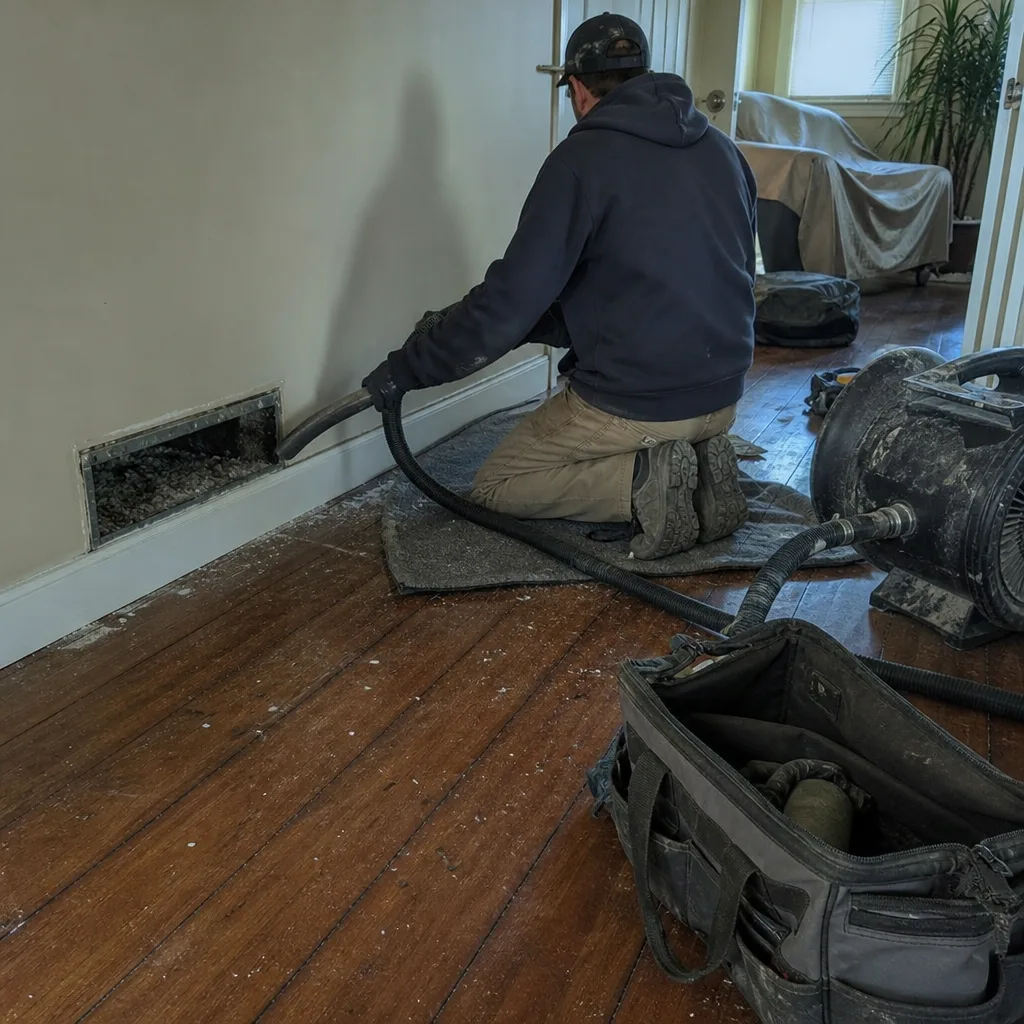 Before
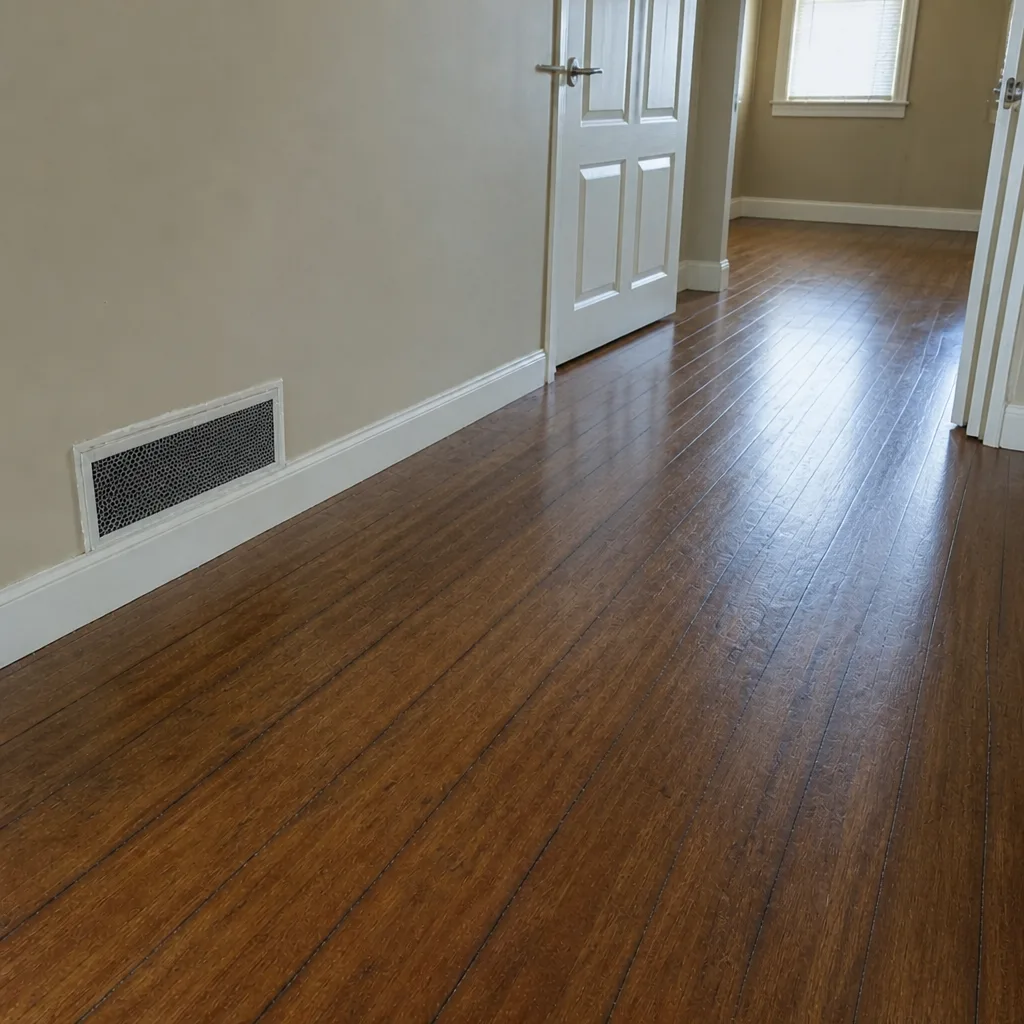 After
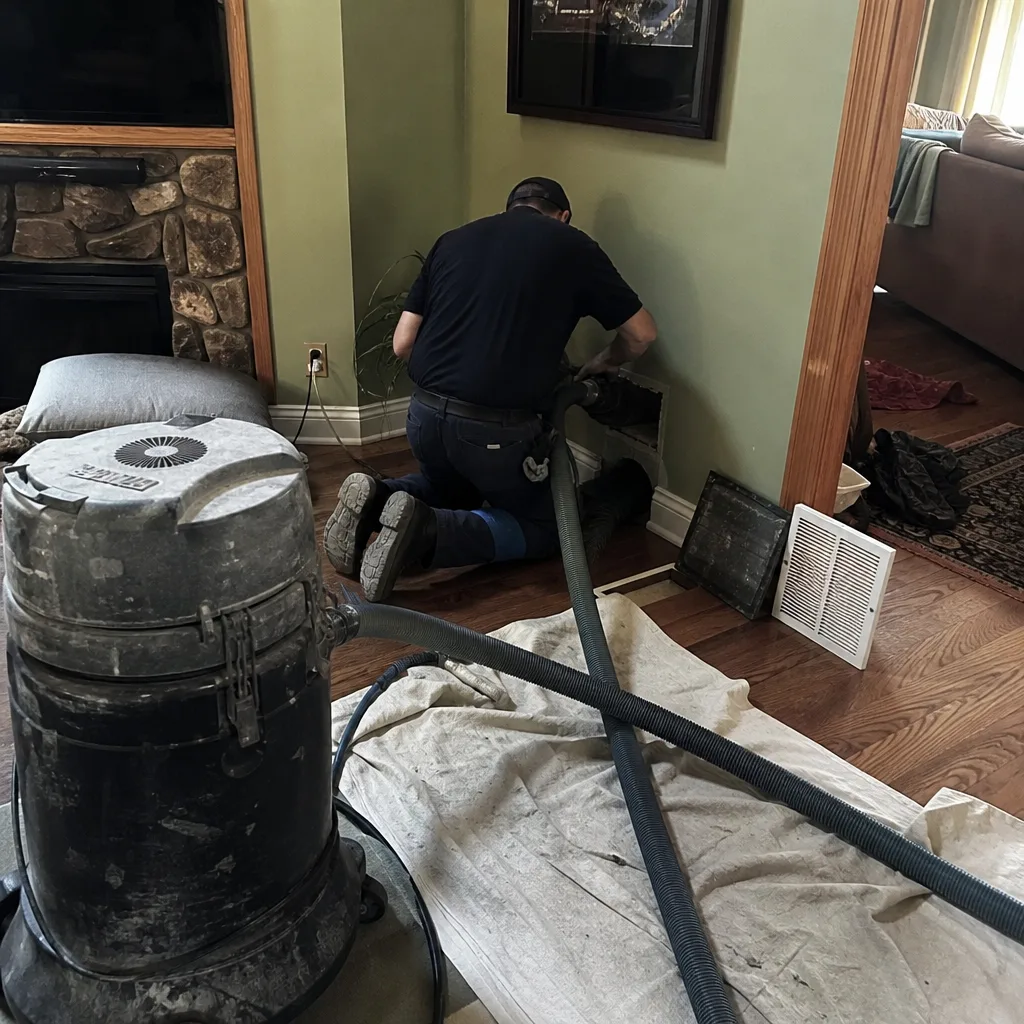 Before
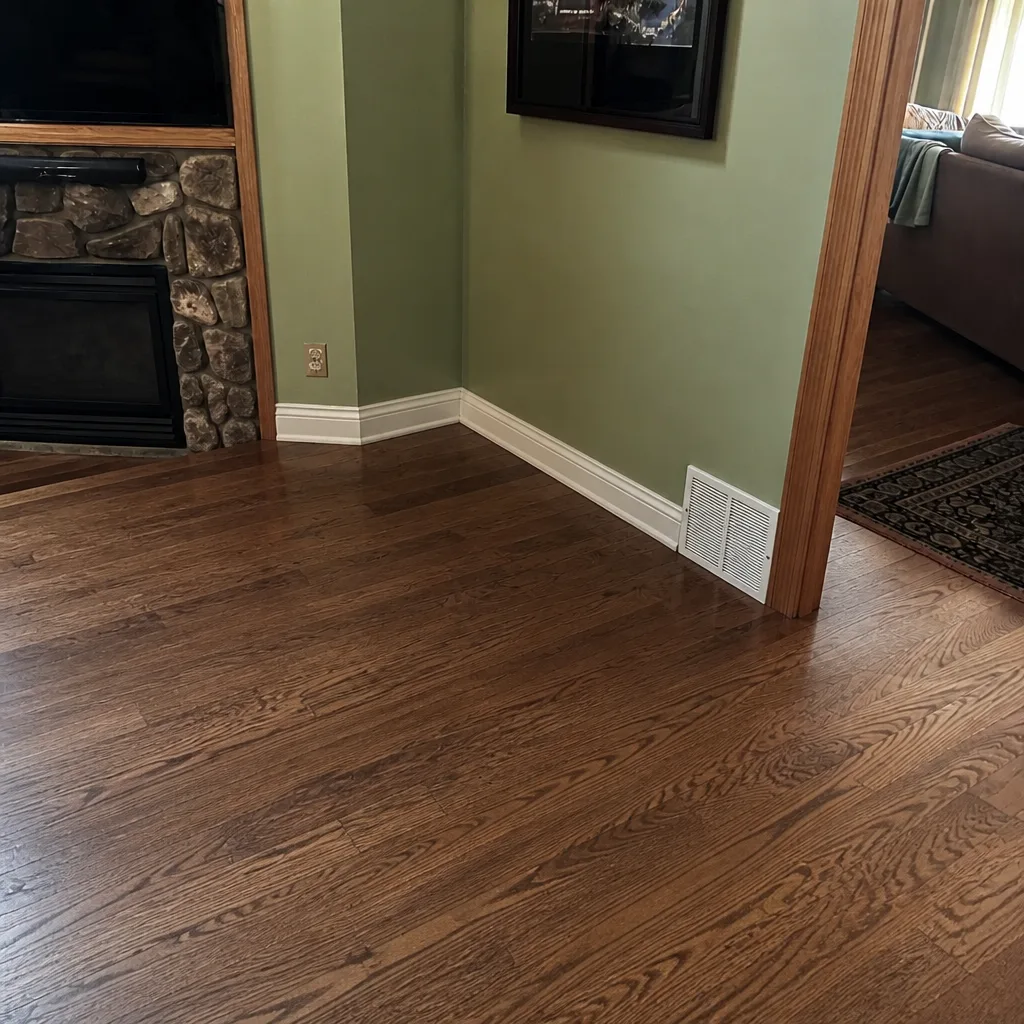 After
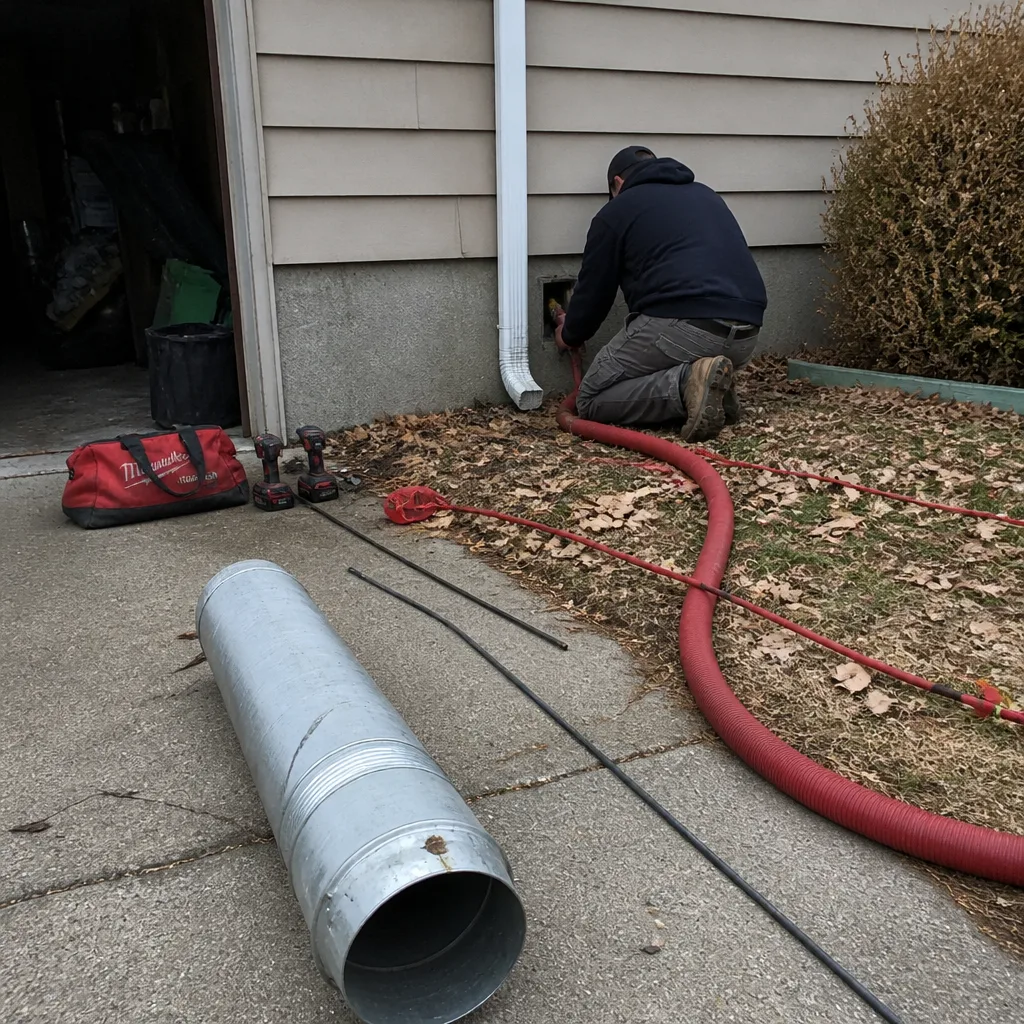 Before
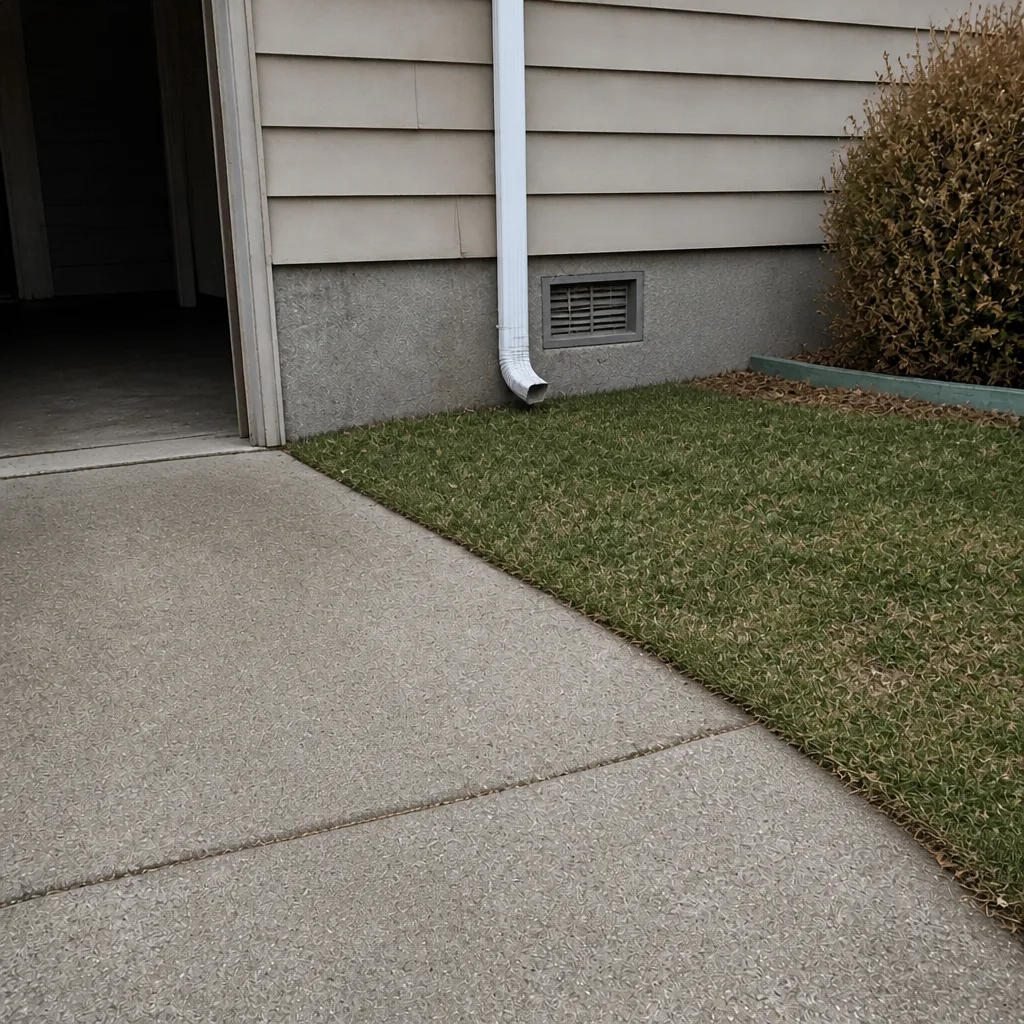 After
When to Call a Professional
Some signs mean it’s time to schedule service. Visible dust puffing from registers when the system kicks on. Persistent musty odor even after filter changes. A recent move into a home where the duct history is unknown. Recent remodeling that generated dust and debris. A technician mentioning crushed or disconnected runs during a service call. Noticeable dust accumulation on furniture and surfaces within days of cleaning. Anyone in the house with allergy or respiratory sensitivity and no known service history on the system.
Millbrook Air Duct Cleaning offers free estimates in Kansas City. Call (855) 473-1004. We answer 24/7. Fast dispatch from 7am to 7pm, Sunday through Friday. Every quote comes with one flat price per system, agreed before work starts, plus before-and-after photos of your own ducts.
Frequently Asked Questions
Standard whole-system air duct cleaning in Kansas City typically runs $350 to $700 for a single-system home in 2026, with larger or multi-zone homes reaching $700 to $1,200. The written estimate sets the final number. Call (855) 473-1004 for an exact quote. Estimates are free.
Cheap quotes are usually cheap because something is left out, such as the return trunk, the main supply plenum, containment equipment, or real inspection. A $189 quote for a house that should be $600 isn’t a deal, it’s the same job priced for half the scope. Whole-system pricing shows you what you’re actually buying. Call (855) 473-1004 and we’ll walk you through the scope before you commit.
Ask for before-and-after photos of your own ducts, taken during the visit, not stock photos or generic images from a website. Any contractor doing the work can take them. Call (855) 473-1004 to discuss how our visit works.
Most homes don’t need it on a fixed schedule. Three to five years is a reasonable baseline, but the real triggers are visible dust, musty odor, a recent move, or a remodeling project that generated debris. A diagnostic walkthrough will tell you if you’re due. Call (855) 473-1004 to schedule one.
Kansas City pricing is in line with other Midwestern metro areas in 2026, in the $350 to $700 range for a standard whole-system clean. The bigger driver of variation is home age and configuration, not the city itself. Older homes with retrofitted ducts often cost more because access and routing are harder. Call (855) 473-1004 for a quote specific to your home.
If the contractor can repair, it’s a second line item on the same visit. If they can’t, you’re scheduling a second contractor and paying a second minimum service charge. That’s why we include repair in the same visit when we can. Call (855) 473-1004 to confirm scope upfront.
The Bottom Line
Duct cleaning pricing in Kansas City isn’t opaque because contractors are hiding anything. It’s opaque because quotes bundle labor, equipment, and scope into one number that can’t be compared to the next one. Once you know the five drivers (footage, configuration, access, equipment class, repair), you can read a quote for what it actually covers. Whole-system flat pricing beats per-vent pricing. Same-vendor cleaning plus repair beats two calls. Before-and-after photos beat a receipt that says “completed.” Our team brings Rotobrush and Nikro systems, Abatement Technologies containment, and duct repair as a named service so a system that’s found damaged gets fixed, not deferred. One flat price per system, agreed before work starts.
Contact
Ready to get a real number for your home? Call Millbrook Air Duct Cleaning at (855) 473-1004 for a free estimate. We answer 24/7. Fast dispatch from 7am to 7pm, Sunday through Friday. Every quote is a whole-system flat price, agreed before work begins, with before-and-after photos of your own ducts included.
Written by the team at Millbrook Air Duct Cleaning.