
Last updated November 14, 2026
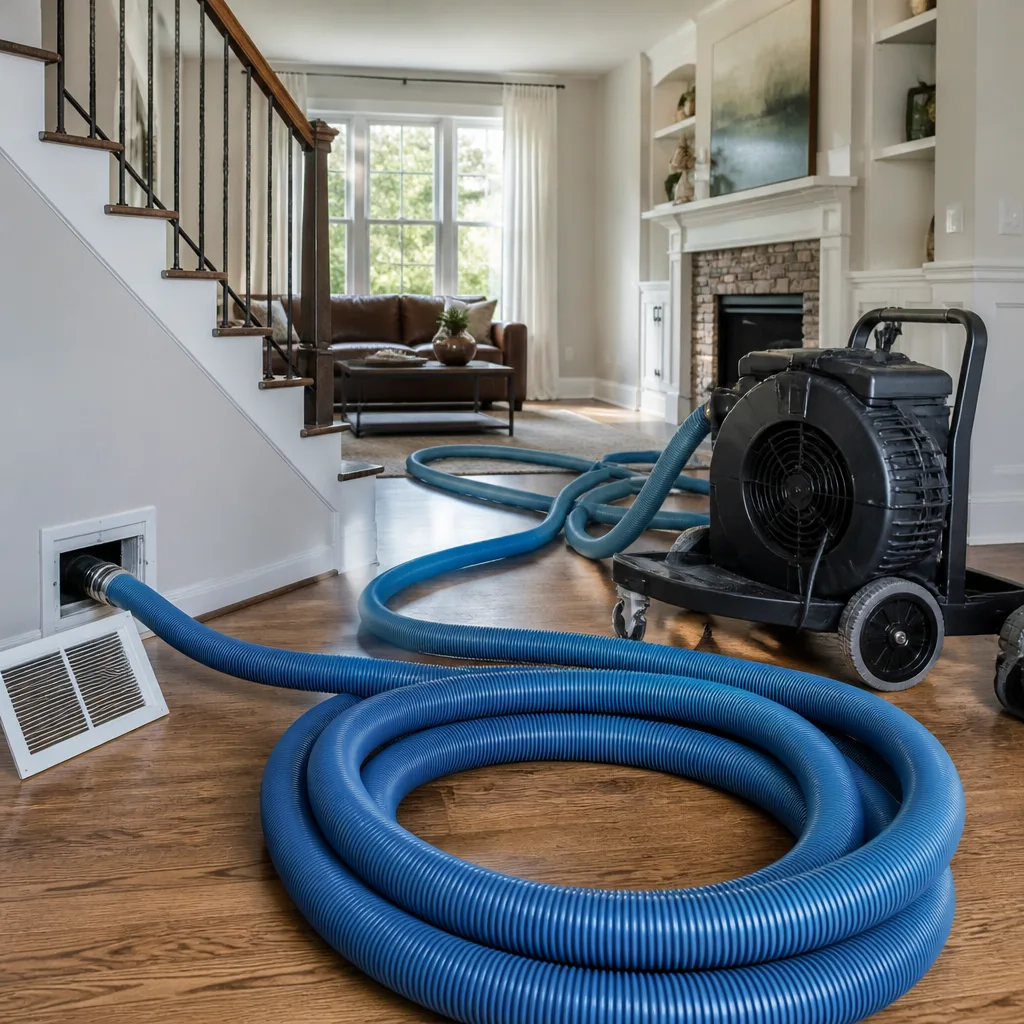 Whole-home duct cleaning
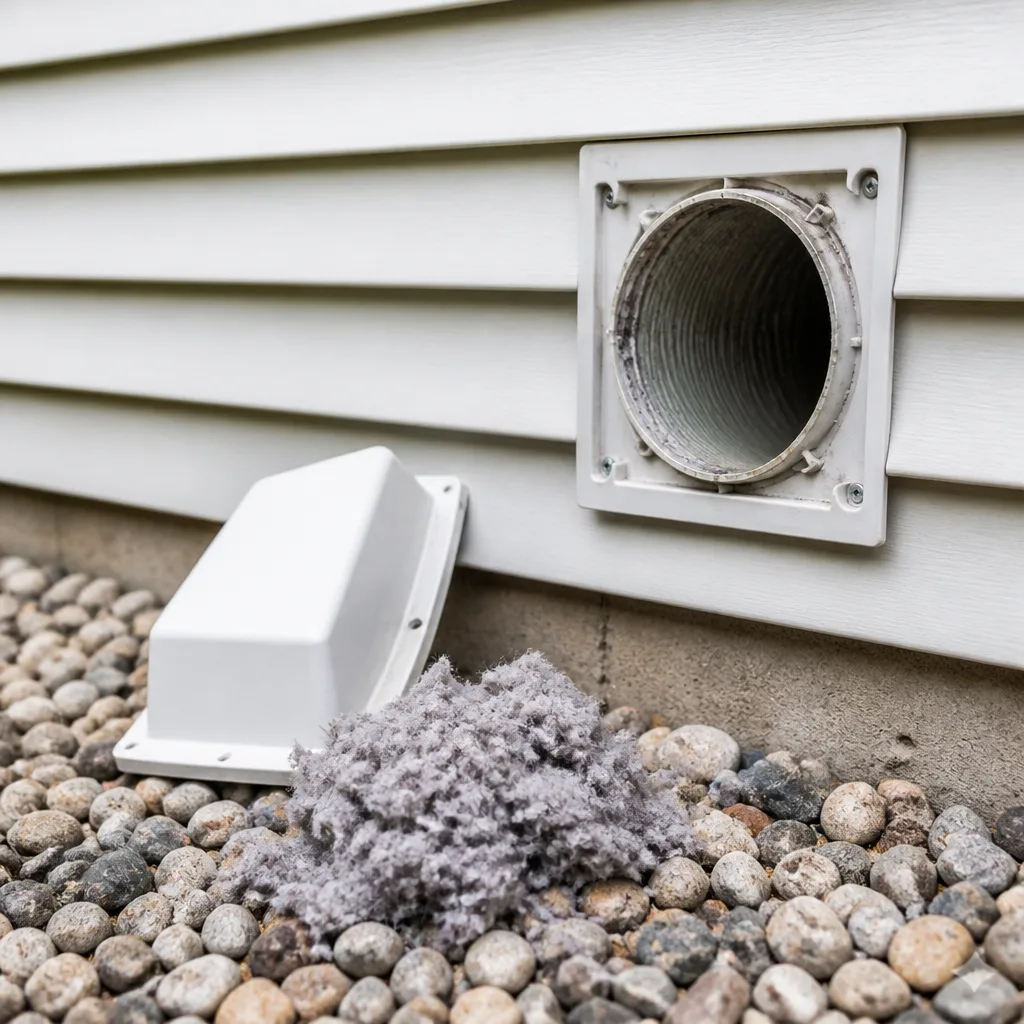 Dryer vent cleaning
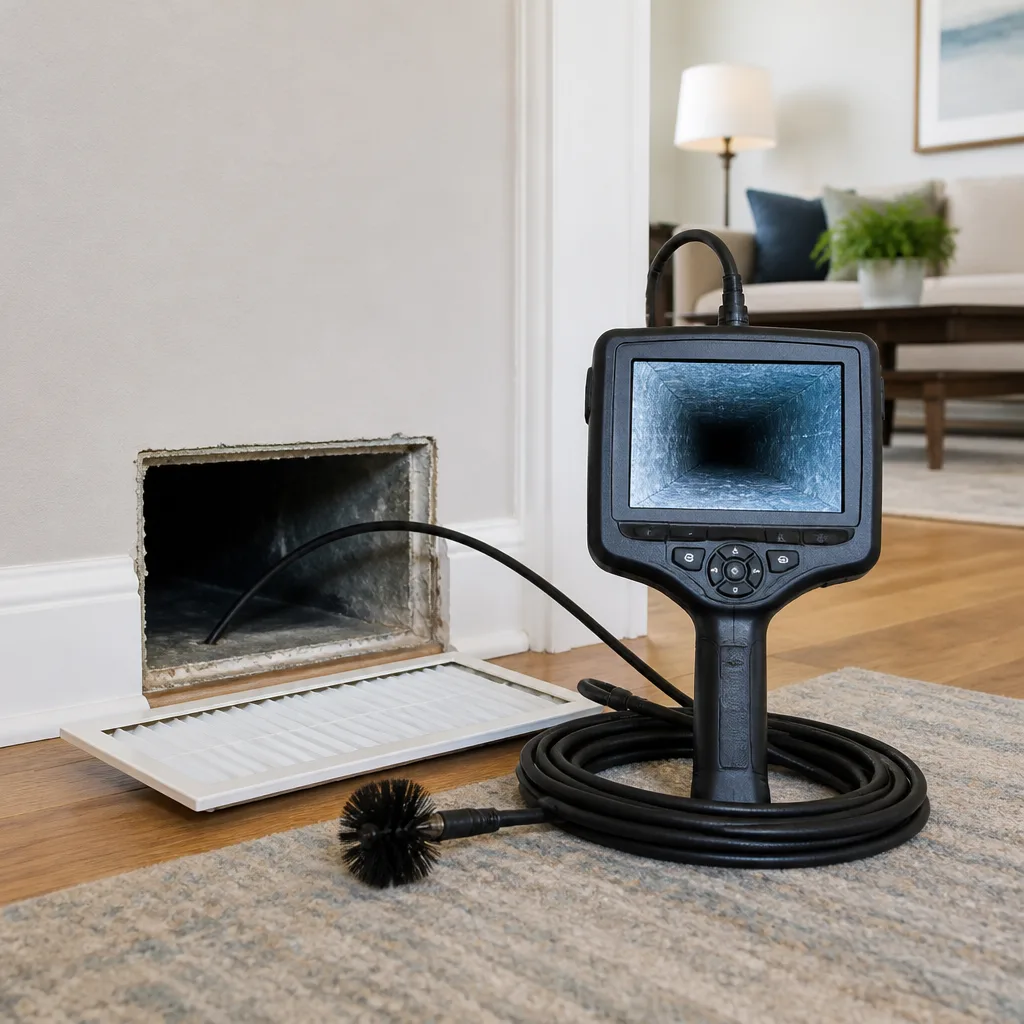 Camera inspection
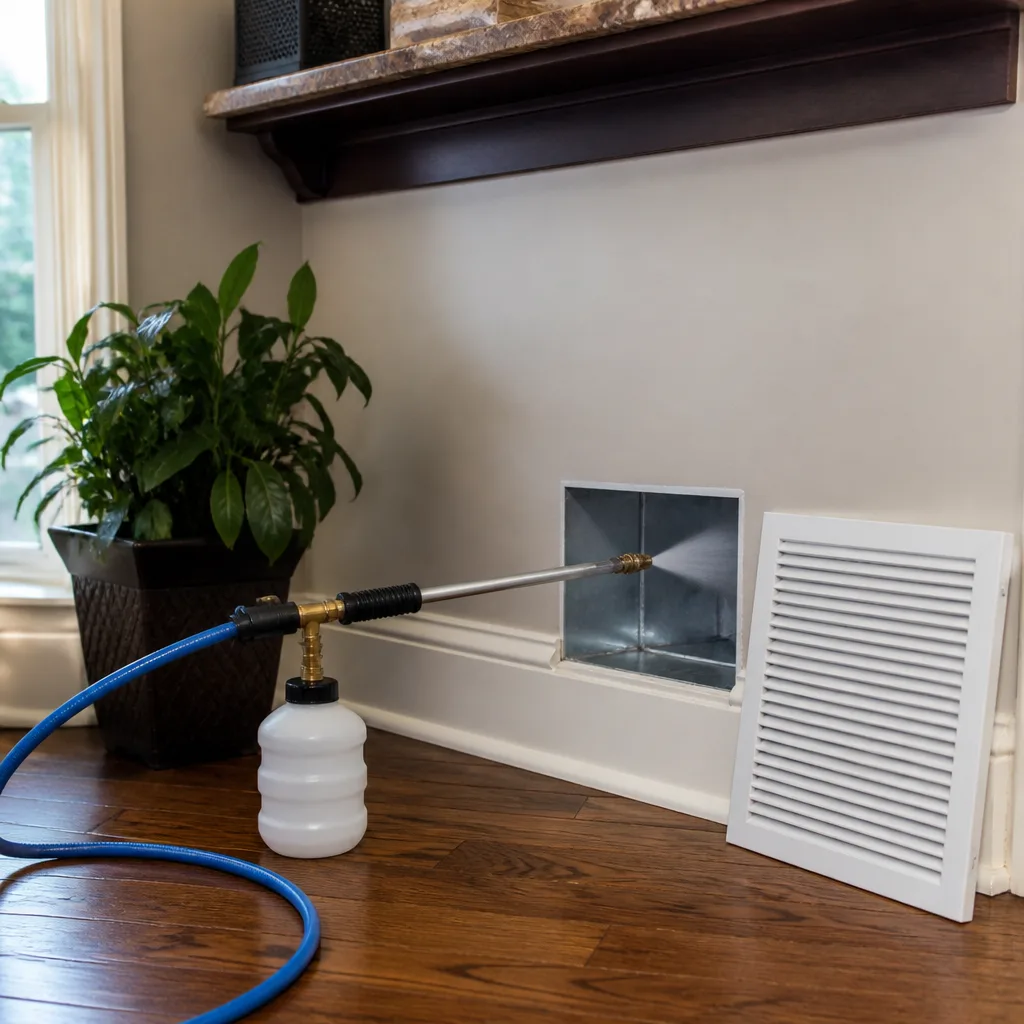 Sanitizing & deodorizing
Whole-system duct and dryer vent check with before-and-after photos - you see exactly what came out of your vents
That "$99 whole-house special" is a bait ad - the real number appears once they are in your hallway, or the "clean" is a shop-vac at the register. We photograph the inside of your ducts before and after instead.
Choosing the Right Air Duct Cleaning Brand: A Buyer’s Guide for Kansas City
Three of the most commonly searched duct cleaning brands in Kansas City are national franchise operations that license their name to independent operators. The equipment, training, and service standards vary by franchisee, not by brand, which means the recognition you’re paying for tells you almost nothing about the crew that shows up at your door. Outfits that added duct work as a revenue line sit right next to genuine trade contractors, and the two look identical on a search results page. This guide walks you through what actually separates one operator from another in the Kansas City market: equipment ownership, containment practice, repair capability, and how to verify a company’s credentials before you book.
Quick Answer
Choosing the right air duct cleaning brand in Kansas City comes down to verifying three things: whether the operator is a true HVAC-adjacent trade contractor with professional equipment and real containment, whether they can repair duct damage as well as clean it, and whether their credentials check out through NADCA membership and local complaint history. Brand name and logo matter far less than equipment, service scope, and local accountability.
Styles & brands we work with
- Whole-home duct cleaning
- Dryer vent cleaning
- Camera inspection
- Sanitizing & deodorizing
Table of Contents
- What “Brand” Actually Means in Kansas City Duct Cleaning
- HVAC-Adjacent Operators vs. Add-On Cleaning Crews
- What Equipment Ownership Signals About a Contractor
- The Franchise vs. Independent Trade-Off in Kansas City
- Service Scope as a Brand Differentiator
- The Three-Point Legitimacy Check
- Questions to Ask Before You Book
- Red Flags That Signal a Weak Operator
What “Brand” Actually Means in Kansas City Duct Cleaning
In most service industries, a recognizable brand is shorthand for consistent quality. Duct cleaning in the Kansas City market breaks that rule. Several national names you’ll see in search results are franchise systems: the parent company licenses its name and a set of standards to independent operators who run their own trucks. The parent company doesn’t clean ducts. The franchisee does, and the quality of that work depends entirely on the franchisee’s equipment, training, and how seriously they take the job.
That means two crews operating under the same national banner in Kansas City can deliver very different results. One may run a properly equipped negative-pressure rig with documented before-and-after photos. Another may run a portable unit with a shop-style vacuum and call it a full cleaning. The logo says nothing about which one arrives.
Here’s the practical takeaway: treat brand recognition as a starting point for research, not a substitute for it. When you’re comparing operators across Kansas City, the useful questions are about equipment, process, and accountability rather than the name on the truck. A locally accountable operator and a well-run franchisee can both be good choices. A poorly equipped crew with a famous name is still a poorly equipped crew.
This matters most for homeowners who’ve never had ducts serviced and don’t know what a proper job looks like. Without a reference point, the brand logo becomes the only signal, and it’s a weak one. The sections below give you stronger ones.
HVAC-Adjacent Operators vs. Add-On Cleaning Crews
The single most useful distinction in the Kansas City duct cleaning market is whether an operator is genuinely HVAC-adjacent or a cleaning company that tacked duct work onto its menu. The difference shows up in how they think about your system, not just in what they charge.
What a true HVAC-adjacent operator does differently
- Understands airflow and duct physics. They can explain why a particular run in your Kansas City home might be starved of airflow, or why a return duct is undersized for the equipment it serves. Cleaning is one part of a system they understand as a whole.
- Recognizes system integration issues. They know how a whole-home filtration unit, a humidifier, or a zoning damper interacts with the ductwork, and they clean around that equipment without damaging it.
- Diagnoses while cleaning. When they find disconnected joints, crushed flex duct, or torn insulation, they can identify the problem and explain your options rather than ignoring it.
What add-on crews typically do
A cleaning company that added ducts as a revenue line usually treats the job as debris removal and nothing more. They may have limited training on how duct systems are engineered, and their equipment tends to be portable rather than purpose-built. When they encounter damage, they either skip past it or tell you to call someone else.
This is where air duct cleaning done by a mechanically minded operator pays off. A technician who understands the system can flag a failing connection before it becomes a bigger repair, and can clean without disturbing components that weren’t meant to be bumped. We’ve seen Kansas City homes where a botched cleaning job loosened joints that later started leaking air into a crawlspace. That kind of damage doesn’t happen when the crew knows what they’re looking at.
Ask any operator you’re vetting a simple question: what do you do if you find a disconnected duct during cleaning? The answer tells you immediately which category they fall into.
What Equipment Ownership Signals About a Contractor
Equipment is the clearest external signal of a duct cleaner’s seriousness, because it’s expensive and it’s hard to fake. Companies that own truck-mounted negative-pressure rigs and purpose-built cleaning systems have made a real capital commitment to the trade. Companies that rent equipment or run portable units have made a much smaller one.
Why negative-pressure containment matters
Proper duct cleaning dislodges years of accumulated debris. Without containment, that debris gets redistributed into your living space, which is worse than leaving it in the ducts. Negative-air-pressure equipment, like the systems made by Abatement Technologies, captures loosened contaminants and holds them rather than blowing them back into the room. This is standard practice for remediation contractors, and it’s the single most important piece of equipment on the job.
Purpose-built cleaning systems from manufacturers like Rotobrush and Nikro are the other half of the equation. These tools are engineered specifically for duct interiors: they agitate, brush, and extract without damaging duct walls. A repurposed shop vacuum cannot do the same job, no matter how the operator describes it.
What to ask about equipment
- What cleaning system do you run? A specific brand name is a good sign. A vague answer like “professional equipment” is not.
- Do you use negative-pressure containment? If they don’t know what that means, the answer is no.
- Is your equipment truck-mounted or portable? Truck-mounted rigs signal a serious operator; portable units are fine for some work but weaker for whole-home cleaning.
- How do you document the job? Before-and-after photos of your own ducts should be standard.
Homeowners who already run whole-home air quality equipment benefit from a crew that knows those systems. Rotobrush and Nikro handle the cleaning; familiarity with Honeywell and Aprilaire systems means the technician understands how your filtration or humidity control integrates with the ductwork and can clean around it safely.
The Franchise vs. Independent Trade-Off in Kansas City
Kansas City homeowners face a real choice between national franchise names and independent local operators, and there are honest arguments on both sides. Neither is automatically better. What matters is understanding what each one guarantees and what it doesn’t.
What a national franchise guarantees
- Name recognition. You know the brand exists and there’s a corporate structure behind it.
- A standardized process, on paper. The parent company publishes service standards and equipment expectations.
- A corporate complaint channel. If something goes wrong with a franchisee, you can escalate above the local operator.
What a national franchise doesn’t guarantee
The franchisee’s actual equipment, training, and follow-through. The parent company sets standards but doesn’t enforce them at the van level. In practice, that means the quality of a franchise job in Kansas City depends on which local operator you happened to contact, not on the brand.
What a locally accountable independent brings
An independent operator’s reputation lives or dies in the Kansas City market. There’s no corporate parent to absorb complaints or buffer a bad review. That creates a different kind of accountability: the business owner’s name is on the local record, and the crew’s work is visible in the community it serves. For homeowners who value a relationship with a responsive local contractor, that accountability is worth more than a familiar logo.
Ask yourself which you’d rather have: a corporate escalation path that may move slowly, or a local operator whose next job depends on your satisfaction. There’s no universal answer, but for duct cleaning, where the work is technical and the results should be documented, local accountability tends to carry more weight.
Service Scope as a Brand Differentiator
One of the most overlooked ways to evaluate duct cleaning brands is to look at what they can actually complete. An operator who can both clean and repair ducts under one invoice is a different kind of contractor than one who cleans and refers repairs elsewhere. In practice, the difference saves you time, money, and a coordination headache.
Why cleaning and repair belong together
Duct cleaning routinely uncovers damage: loose joints, crushed runs, torn insulation, disconnected sections. When the operator can only clean, that damage gets flagged and then abandoned, and you’re left calling a separate contractor. When the operator can repair, the same trained team fixes the problem before they leave. You also avoid the situation where a cleaning crew reports damage that a second contractor later dismisses, adding another layer of contradiction to sort through.
Duct repair done properly requires the same system knowledge as cleaning: airflow, sealing, and material compatibility. An operator who offers only cleaning is telling you something about their capabilities, and it’s worth listening to.
What a full-scope duct specialist looks like
- Cleans ducts using purpose-built equipment and containment.
- Diagnoses damage during the job and explains it clearly.
- Offers duct repair as a named service, not a referral.
- Handles related work like dryer vent cleaning, so a whole-home air system gets serviced by one contractor.
For a homeowner, this is the difference between juggling three vendors and making one call. For ongoing system maintenance, that single-vendor relationship is also more practical, since the contractor already knows your duct layout and equipment.
The Three-Point Legitimacy Check
Before you book any duct cleaner in Kansas City, run a quick legitimacy check. It takes fifteen minutes and it filters out most of the bad operators you’ll encounter.
1. Check local complaint history
Start with the Better Business Bureau record for the specific operator you’re considering, not just the parent brand. Look for patterns: repeated complaints about the same issue (billing, unfinished work, unexpected charges) mean more than a single disagreement. Also check localized review sites for contractors who work in Kansas City specifically, since an operator’s track record in another metro won’t tell you much about their local work.
2. Verify industry membership
Membership in the National Air Duct Cleaners Association (NADCA) is a meaningful credential. It signals a baseline commitment to industry standards and proper practice. Confirm membership directly with the association rather than relying on the operator’s website claim, and ask whether the specific technicians doing the work hold relevant certification.
3. Request documentation upfront
A legitimate operator will happily send you before-and-after photos from prior jobs and explain their process in writing. If you’re told to “trust them” without documentation, that’s a signal. Ask two questions: what do you photograph before and after cleaning, and will I receive copies of my own photos? An operator with proper equipment and nothing to hide will say yes without hesitation.
Run this check on every operator you consider, whether it’s a franchise or a local independent. The answers separate real trade contractors from casual operators far more reliably than any marketing claim.
Questions to Ask Before You Book
These questions cut through marketing language and get you to the substance. Ask them before an estimate, not after the crew arrives.
- Can you describe your process from arrival to departure? A good answer covers setup, containment, the cleaning itself, and how they verify results.
- What equipment do you use? Listen for specific brands. Vague answers are worth less than specific ones.
- Do you use negative-pressure containment? If the answer is no or the operator can’t explain what it is, look further.
- Will I get before-and-after photos of my own ducts? Yes is the only acceptable answer.
- What happens if you find damage during cleaning? A scope-capable operator explains that repair is available; a clean-only crew refers you elsewhere.
- Who will actually be on-site? Ask whether the crew is trained and employed by the operator or subcontracted on the day.
- Are you a NADCA member? Then verify it yourself.
These questions apply equally whether you’re hiring a national franchise or an independent. Millbrook Air Duct Cleaning, for its part, deploys Rotobrush, Nikro, and Abatement Technologies equipment, treats duct repair as a named service, and photographs the work differently than a shop-vac operator can. If you’re shopping the Kansas City market, we’re happy to walk you through how our process would run in your home.
Red Flags That Signal a Weak Operator
Most duct cleaning complaints trace back to a handful of predictable warning signs. If you see one of these during the estimate phase, walk away.
- Bait-and-switch pricing. A very low advertised price that becomes a much larger invoice once the technician is on-site. Whole-home cleaning takes real work and real equipment.
- Vague equipment claims. If the operator can’t name their cleaning equipment, they’re using consumer-grade tools.
- No containment. A crew that doesn’t use negative pressure is redistributing debris, not removing it.
- Refusal to document the job. Before-and-after photos should be standard, not a special request.
- No repair capability. When an operator declines duct repair work, cleaning becomes a partial service.
- Pressure tactics. Health scares, urgency, and manufactured panic aren’t part of a professional estimate.
- Marketing-first businesses. If every touchpoint is a sales pitch and no one can describe the technical process, the operation is likely built around marketing rather than trade work.
In our experience, the cleanest jobs happen when the homeowner asks questions and the operator answers them without defensiveness. A good Kansas City duct contractor will welcome the scrutiny.
Common Mistakes to Avoid
- Booking on brand name alone. A recognizable logo doesn’t tell you anything about the crew’s equipment or training. Verify the specifics before you book.
- Skipping the containment question. Negative-pressure containment is the difference between capturing debris and redepositing it. If the operator doesn’t know the term, keep looking.
- Accepting a per-vent price. Per-vent pricing encourages cutting corners on every vent. A whole-system estimate agreed before work starts is more honest.
- Hiring only for cleaning. If the operator can’t repair ducts, you’ll need a second contractor the moment damage is found. Start with a full-scope operator.
- Not asking for before-and-after photos. Documentation of your own ducts is the simplest proof the work happened. Request it and expect it.
- Ignoring complaints on the specific operator. Franchise-level reviews don’t tell you about the local operator working in Kansas City. Check the local record.
- Overlooking the dryer vent. Dryer vent cleaning is a separate fire-risk reduction step that many duct cleaners omit. Ask whether it’s part of the service.
See the difference
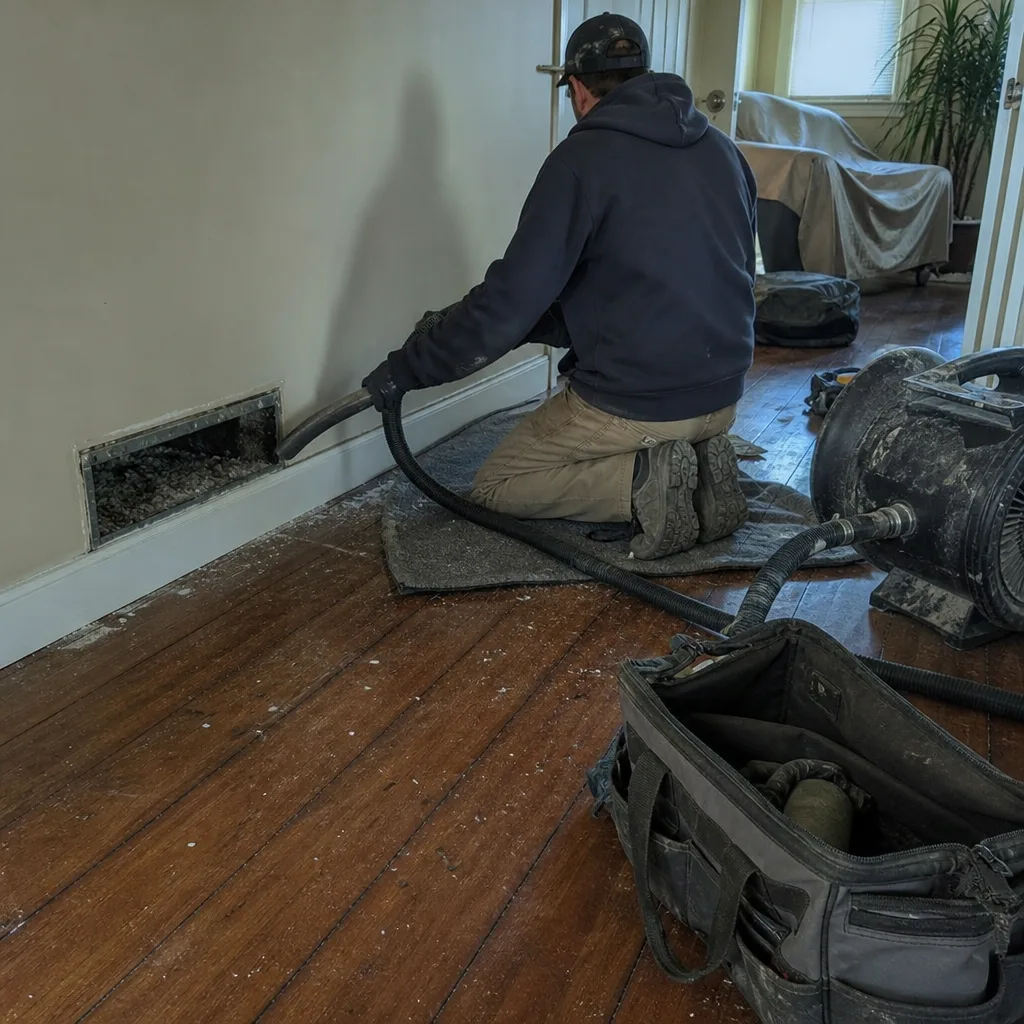 Before
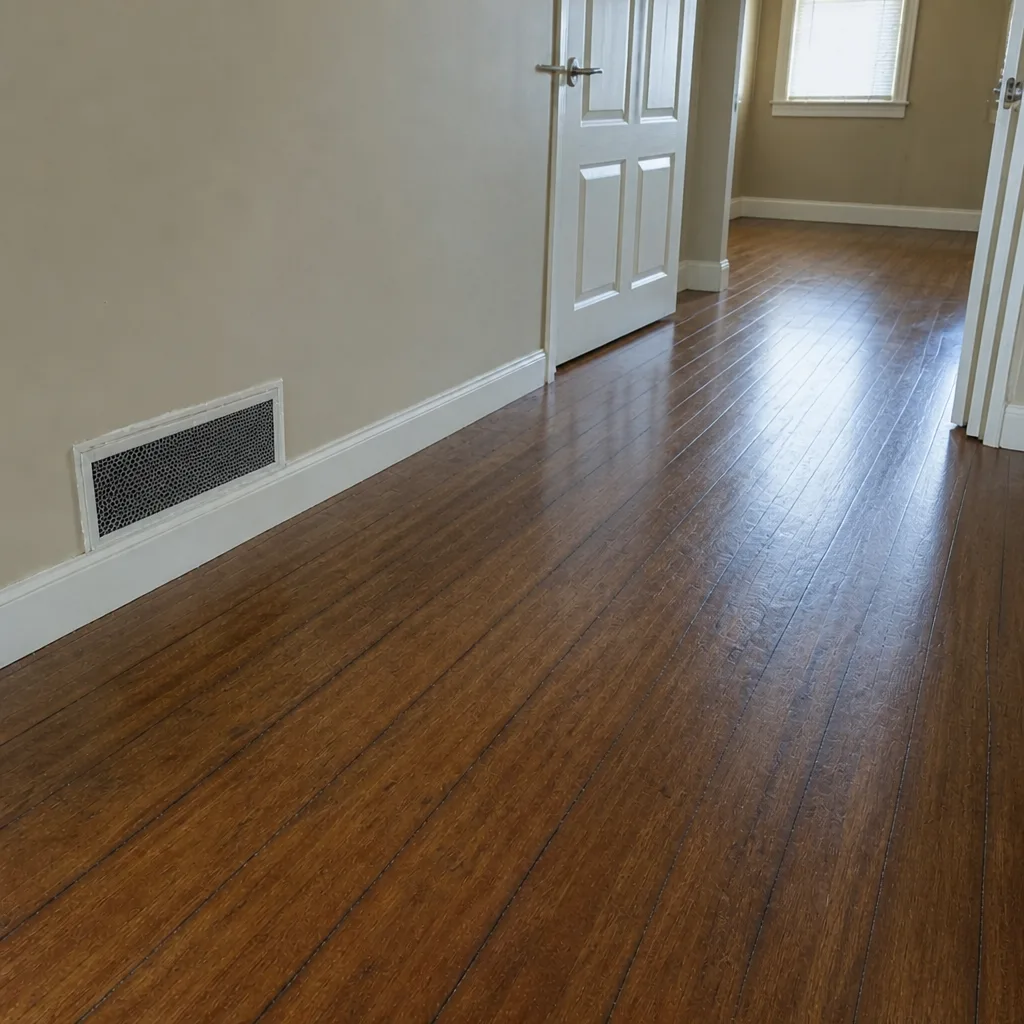 After
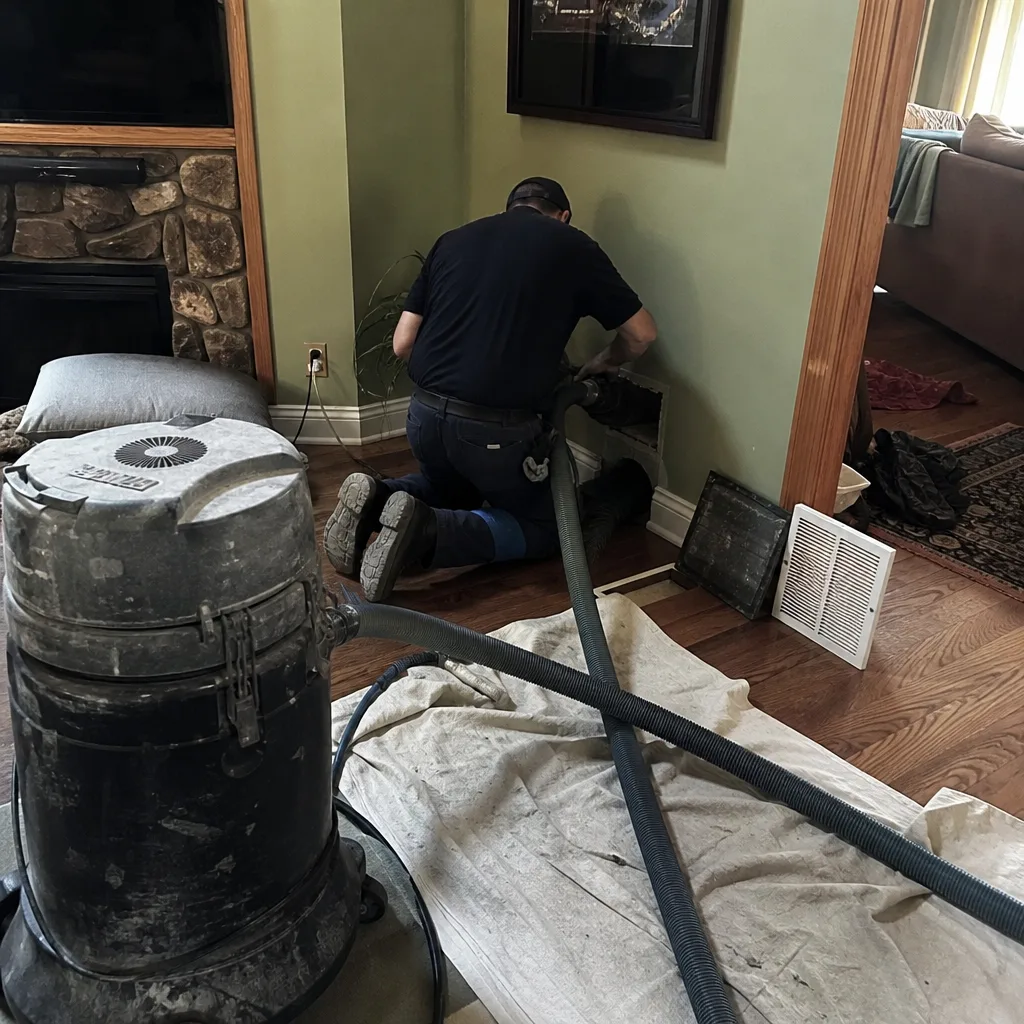 Before
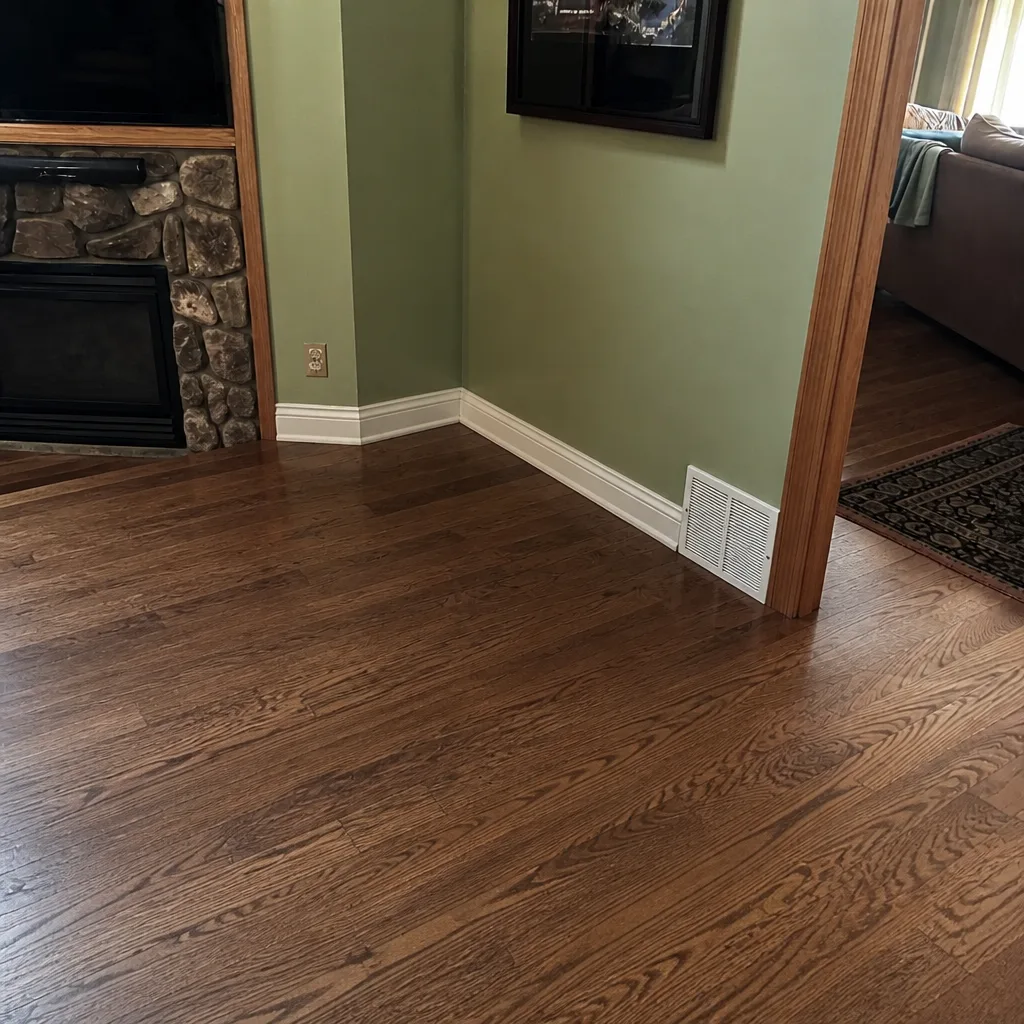 After
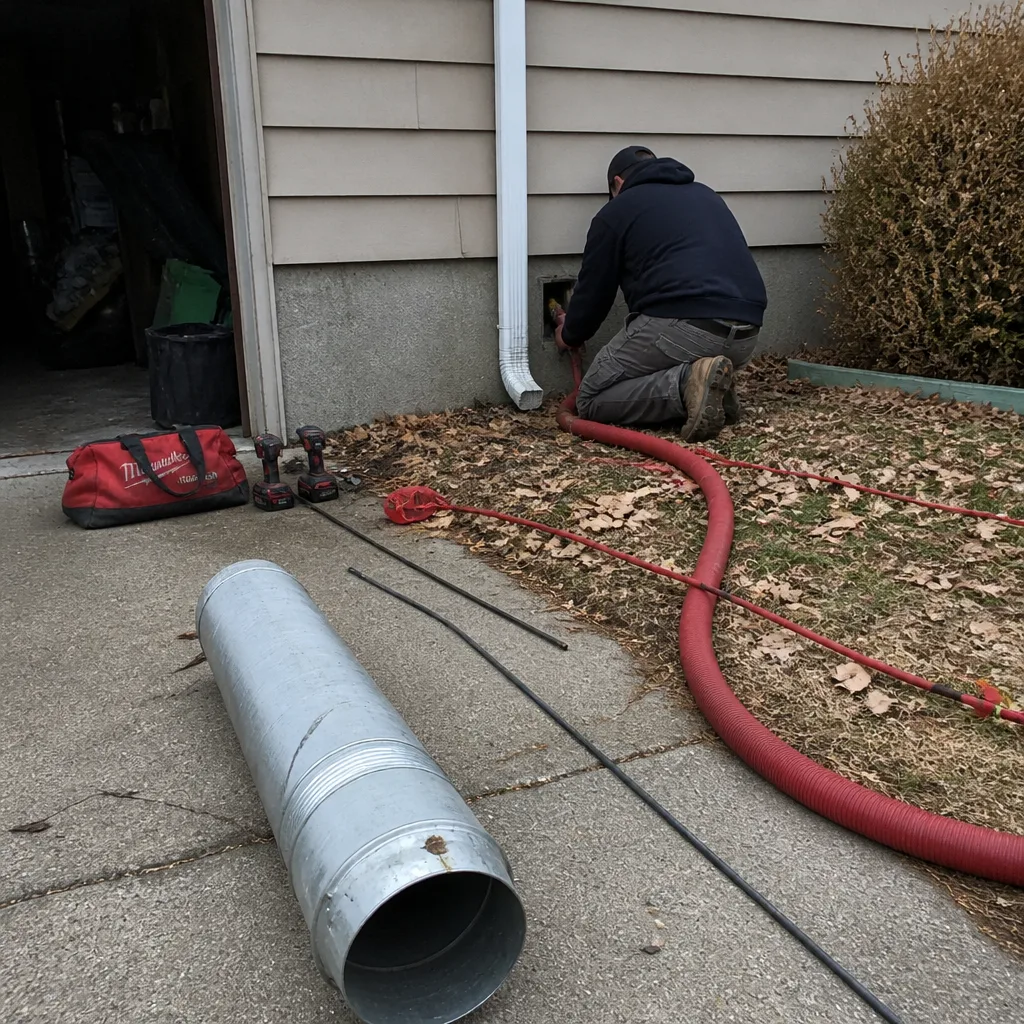 Before
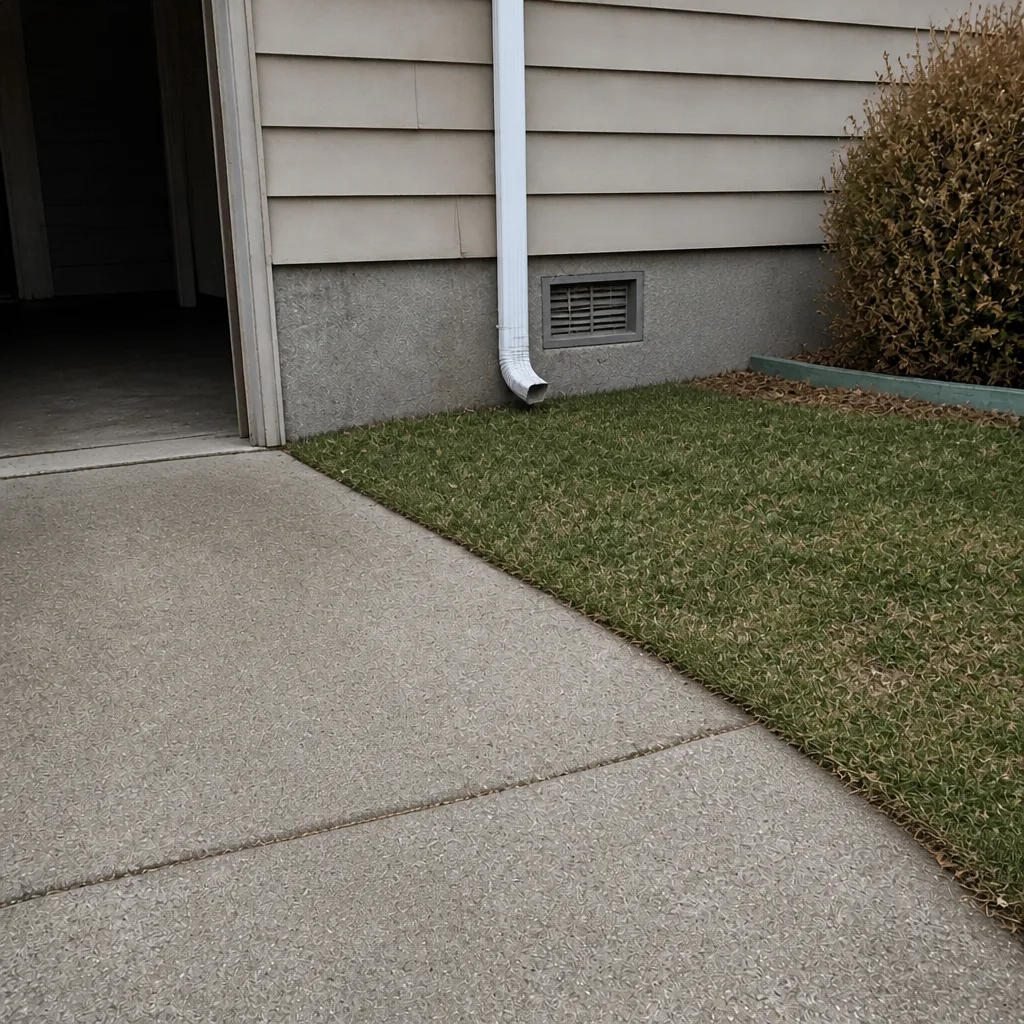 After
When to Call a Professional
Some situations call for a professional duct cleaning rather than a wait-and-see. Recent moves into an older Kansas City home, recently completed renovations that produced dust, a system that’s never been serviced, and persistent dust or airflow complaints in parts of the house are all reasons to talk to an operator. Visible debris around supply registers, musty smells when the system runs, and condensation or moisture near ductwork are signs the system needs inspection. Homeowners with allergy concerns or young children in the house often choose to start with a cleaning and a repair inspection in the same visit. If any of these match your home, it’s worth a conversation before the next heating or cooling season. Millbrook Air Duct Cleaning offers free estimates in Kansas City. Call (855) 473-1004 and we’ll walk you through what a cleaning and repair inspection would involve for your system.
Frequently Asked Questions
Check three things: whether the operator uses professional-grade equipment with negative-pressure containment, whether they offer duct repair as well as cleaning, and whether their local credentials check out through NADCA membership and Kansas City complaint history. A recognizable brand name is not a substitute for any of these checks. Ask for before-and-after photos of your own ducts and get the price agreed before work starts.
Not necessarily. National franchises license their name to independent operators, so quality depends on the specific franchisee’s equipment and training, not on the brand. A locally accountable independent operator with the right equipment and repair capability can deliver the same or better work. Judge by the crew, not the logo.
A professional contractor should use purpose-built duct cleaning systems like Rotobrush or Nikro, plus negative-pressure containment equipment (Abatement Technologies is one manufacturer of that equipment) that captures loosened debris. Consumer-grade vacuums and shop-style tools aren’t a substitute. If a crew can’t name their equipment, that’s a signal worth heeding.
Because cleaning frequently uncovers damage, and a clean-only operator has to stop there. When cleaning and repair sit under one invoice, the same trained team fixes the problem in the same visit. You also avoid the situation where a second contractor contradicts the first. It’s a practical measure of scope, and scope is one of the clearest signs of a serious operator.
It’s a setup that keeps loosened debris from blowing back into your living space while ducts are cleaned. Without it, contaminant removal becomes contamination redistribution. Any operator who can’t explain the concept probably doesn’t use it, which tells you what a cleaning job from them is really removing.
There’s no universal schedule. Homes with recent renovations, a system that’s never been serviced, or persistent dust and airflow issues benefit from cleaning sooner. Homes with regular maintenance and good filtration can go longer. When you do call, ask about repair inspection at the same time: Kansas City homes with older ductwork often have small breaches that go unnoticed until a professional looks.
The Bottom Line
Choosing the right air duct cleaning brand in Kansas City isn’t about the logo on the truck. It’s about distinguishing a true HVAC-adjacent trade contractor from a secondary-service add-on crew, and that distinction shows up in equipment, containment, repair scope, and local accountability. Verify NADCA membership and the operator’s specific Kansas City complaint history, ask for before-and-after photos of your own ducts, and confirm the price is a whole-system estimate agreed before work starts. Those checks will steer you toward the operators worth your money. If you’d like a straight answer on what your Kansas City home actually needs, we’re glad to help.
Millbrook Air Duct Cleaning provides three core services in the area: air duct cleaning, dryer vent cleaning, and duct repair, all under one invoice with professional-grade equipment. Our technicians have up to 10 years of experience, and we use Rotobrush, Nikro, Abatement Technologies, Honeywell, Aprilaire, and Guardsman equipment depending on the job. Call (855) 473-1004 for a free estimate. We answer 24/7. Fast dispatch from 7am to 7pm, Sunday through Friday.
Written by the team at Millbrook Air Duct Cleaning.