
Last updated November 14, 2026
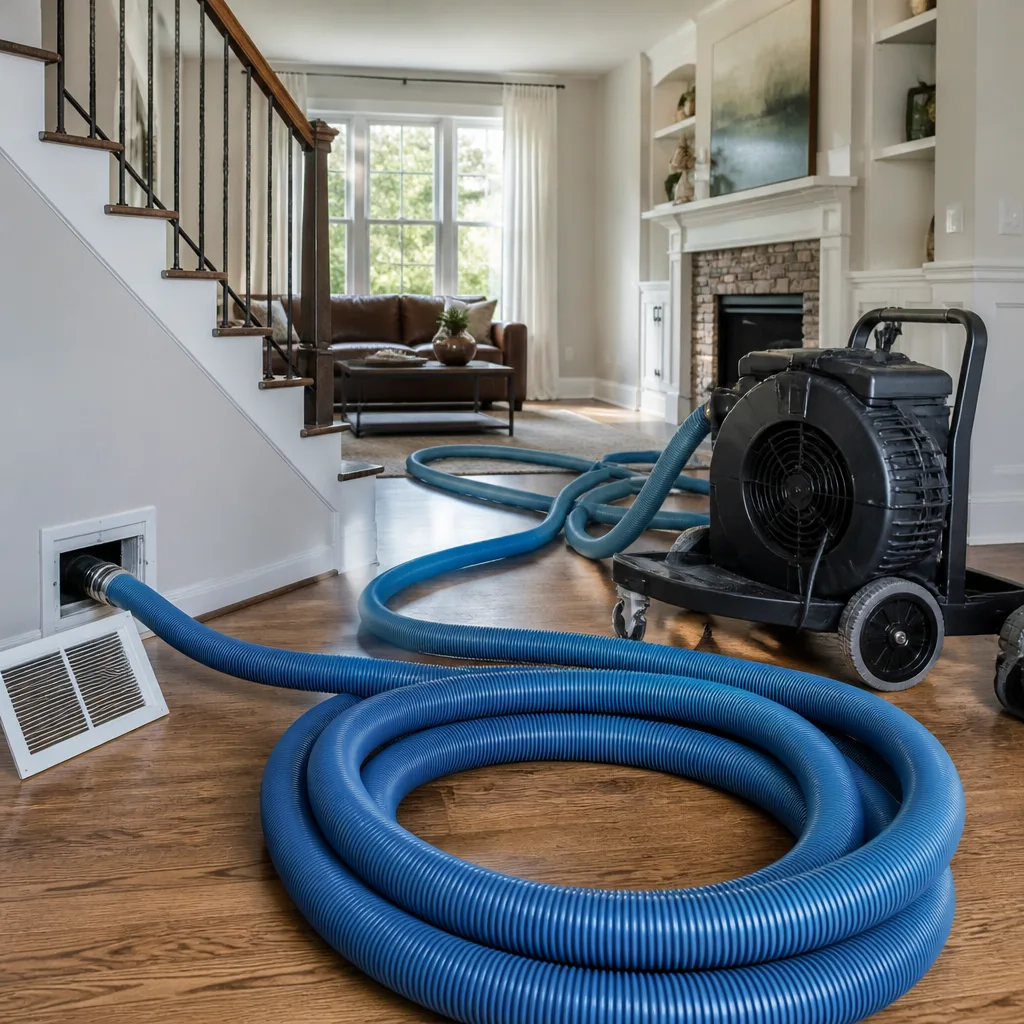 Whole-home duct cleaning
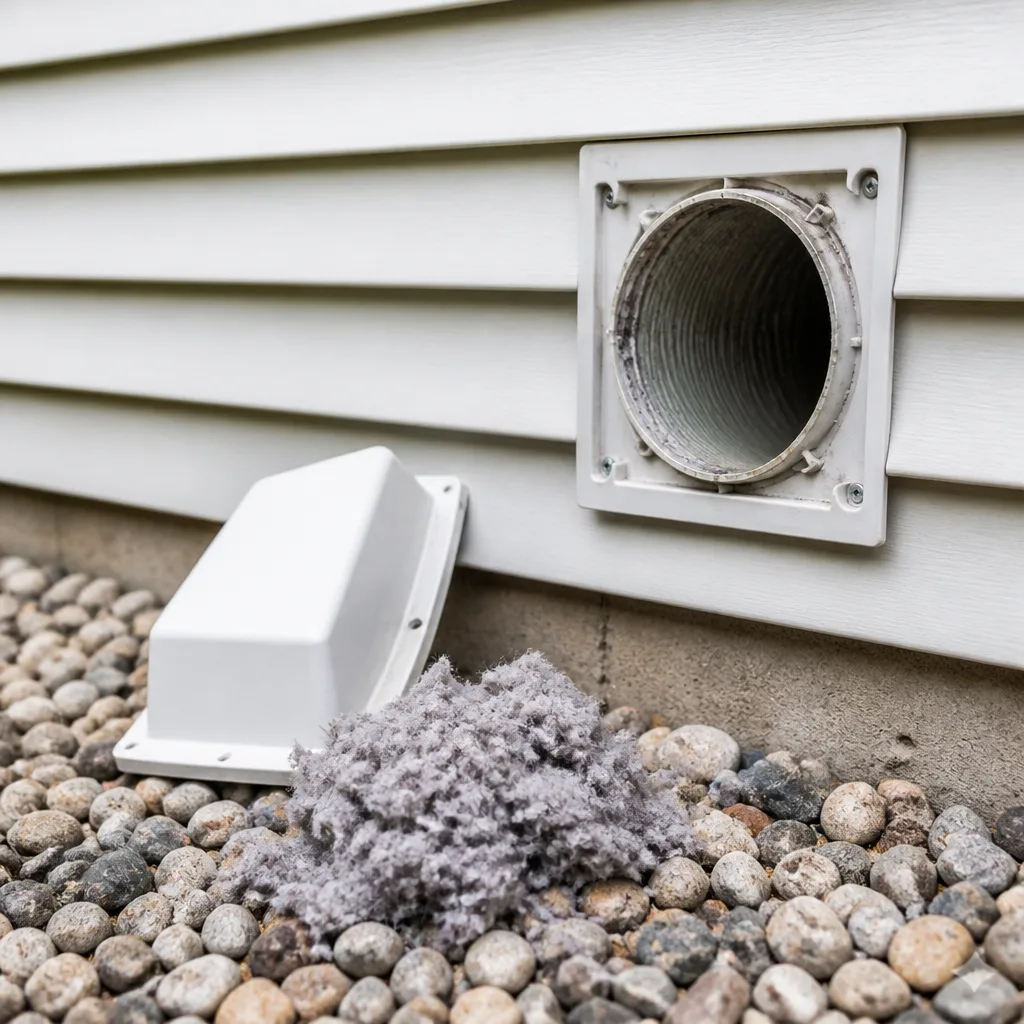 Dryer vent cleaning
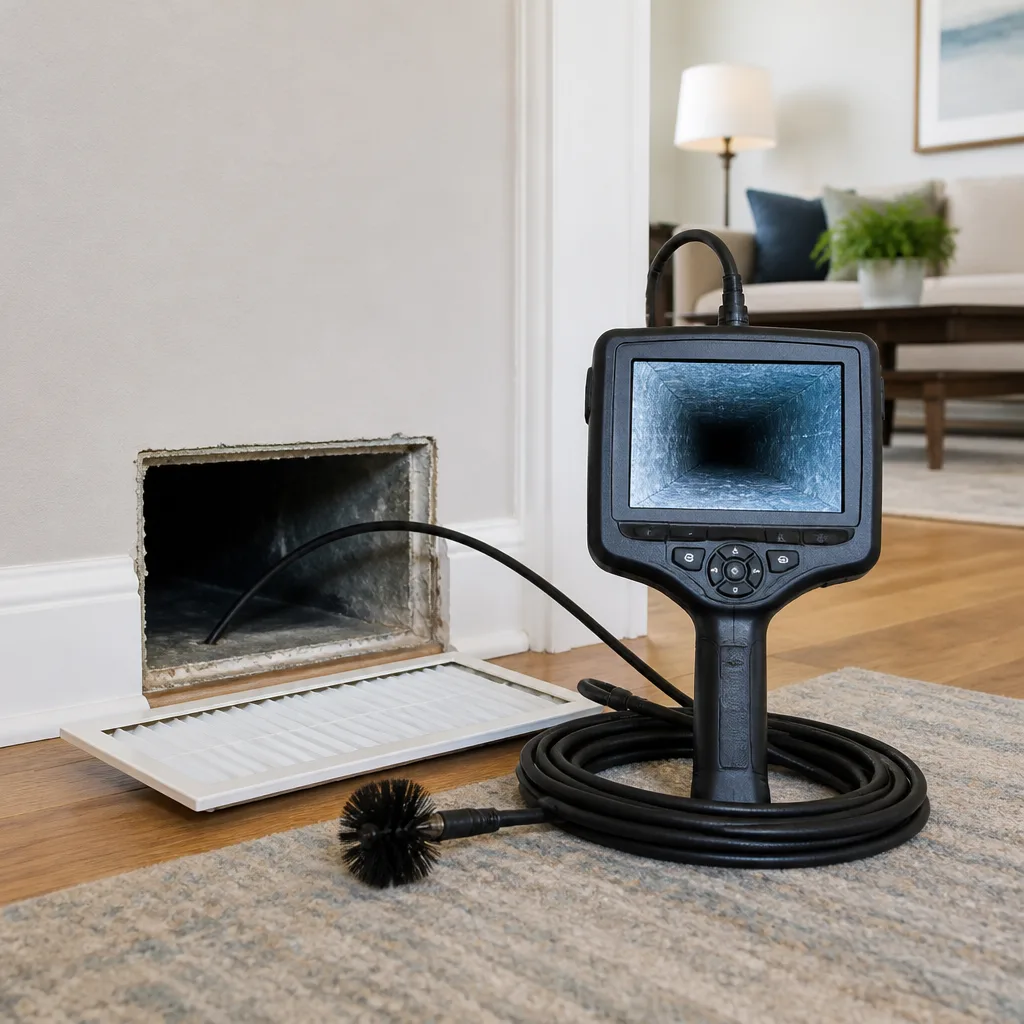 Camera inspection
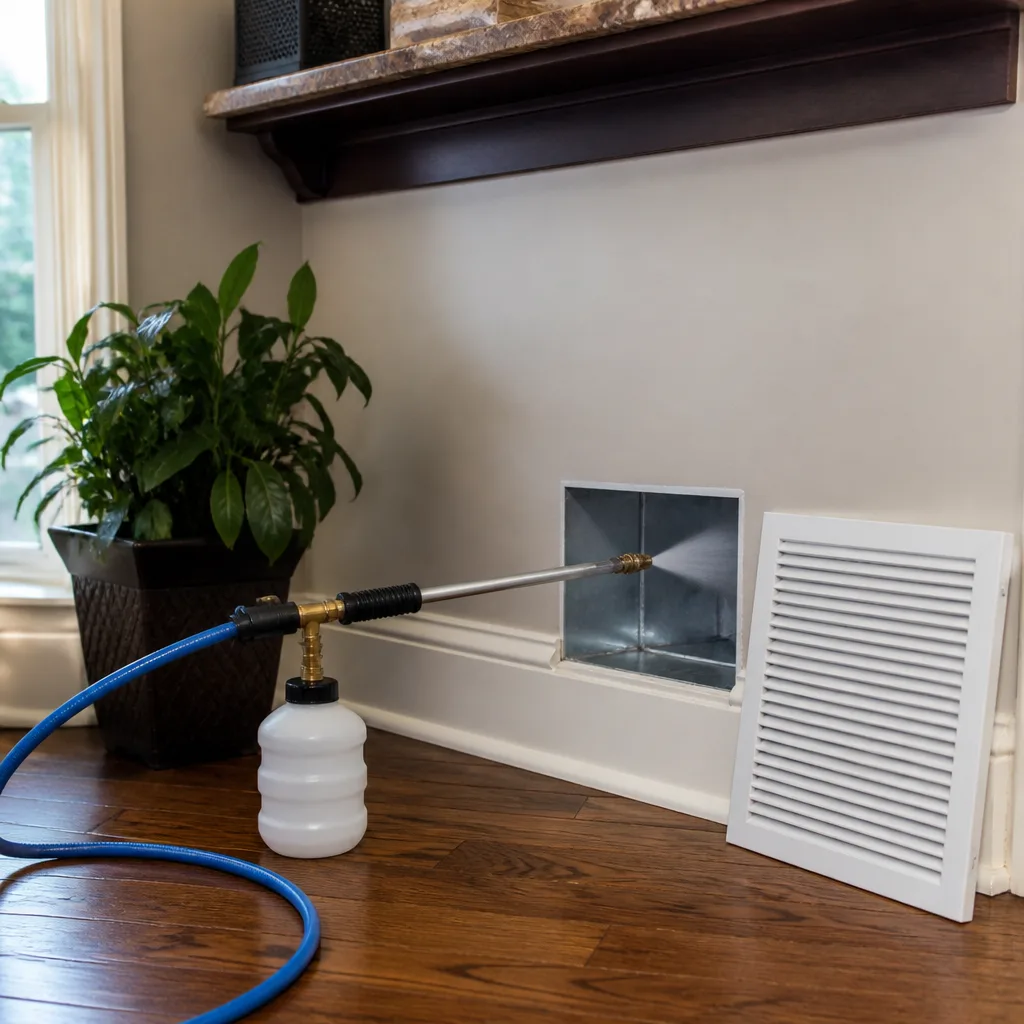 Sanitizing & deodorizing
Whole-system duct and dryer vent check with before-and-after photos - you see exactly what came out of your vents
That "$99 whole-house special" is a bait ad - the real number appears once they are in your hallway, or the "clean" is a shop-vac at the register. We photograph the inside of your ducts before and after instead.
Air Duct Cleaning Emergency Preparedness Guide for Kansas City Homes
When a basement floods in Kansas City, most homeowners call a water remediation crew within the hour. What far fewer people do is walk to the furnace closet and shut the system down. If the air handler ran during or after that flood event, it likely pushed moisture-laden air through every supply and return in the house before anyone thought about the ducts. The same pattern repeats after tornadoes, ice storms, and smoke events. This guide walks through what to do with your duct system in the first 24 to 72 hours after a Kansas City emergency, from the shutdown decision to the insurance conversation.
Quick Answer
After a flood, fire, tornado, or heavy smoke event in Kansas City, the most important first step is shutting off the HVAC system at the air handler before contaminants move through the house. Once the emergency passes, a professional inspection determines whether the ducts need cleaning, a treatment pass, or liner replacement. Documentation from that inspection is often what supports an insurance claim for duct contamination. Call (855) 473-1004 for a free estimate. We answer 24/7. Fast dispatch from 7am to 7pm, Sunday through Friday.
Styles & brands we work with
- Whole-home duct cleaning
- Dryer vent cleaning
- Camera inspection
- Sanitizing & deodorizing
Table of Contents
- The HVAC Shutdown Protocol During an Active Emergency
- After a Tornado: Debris Infiltration and Safe System Restart
- After a Flood: Assessment Before Restart and What to Document
- Wildfire Smoke and Kansas City’s Downwind Exposure
- What to Tell Your Insurance Adjuster About Duct Contamination
- What a Post-Emergency Duct Inspection Actually Covers
- Restart Sequence: Step-by-Step Once the System Is Cleared
The HVAC Shutdown Protocol During an Active Emergency
Cut power to the air handler first, not the thermostat. Flipping the thermostat off leaves the blower circuit live and can leave damp components sitting in a humid plenum. Walk to the furnace or air handler, find the service switch on or beside the unit, and turn it to off. In most Kansas City homes that switch is a standard toggle mounted on the cabinet or the junction box feeding it.
For true emergencies, cutting the breaker at the main panel is the safer move. Do that if there’s standing water near the unit, active smoke, or if you smell burning. Never wade into a wet basement to reach a unit that could still be energized. That part of the decision involves a genuine risk of shock, and a trained electrician or HVAC professional is the right call, not a homeowner in rubber boots.
Why does this matter so much? Because a running system does exactly what it’s designed to do: distribute air. During a flood or smoke event, that air carries water vapor, soot particles, or fine debris into every duct run, every joint, and the fibrous liner on the inside of the ductwork. The moment the system is off, that distribution stops. Contaminants stay localized rather than spreading through the whole house.
- Flood water approaching the unit: cut the breaker at the panel, not the service switch.
- Smoke or burning smell: cut power at the service switch and open windows if safe.
- Tornado passed, house still standing: cut power before the blower pulls outdoor debris in through gaps.
- Storm knocked out power and it just returned: inspect for water or debris near the unit before restarting.
Once power is off, the clock starts on the 24 to 72 hour window that governs how a duct system should be handled after a contamination event. That’s the subject of the next several sections.
After a Tornado: Debris Infiltration and Safe System Restart
Kansas City sits in one of the most active tornado corridors in the country, and tornado season here stretches from early spring into early summer. When a severe weather system moves through, the pressure changes around a house before, during, and after the storm can be dramatic. When a tornado passes nearby, the drop in outside pressure pulls air outward through every gap in the building envelope. When pressure equalizes afterward, air gets pulled back in through those same gaps. Return systems are the biggest openings in most houses.
That means outdoor debris, insulation fibers, dust, and fine grit get pulled into the return plenum and pushed through the filter and into the ducts. If the system was running when the storm hit, that process was faster and deeper. If it was off, the debris is most likely concentrated near the return grilles and in the first few feet of the return trunk.
Here’s the sequence that’s safe after a tornado or severe weather event:
- Keep the system off until you’ve visually inspected the unit, filter, and return plenum for debris or water.
- Replace the furnace filter if it’s loaded with grit, insulation, or shingle granules. A clogged filter won’t protect anything on restart.
- Look inside the return grille nearest the area of worst damage. If you see debris sitting in the boot, don’t vacuum it yourself with a shop vac – that often just pushes fine particles into the duct interior.
- Call a professional for an inspection before restarting if there was visible debris intrusion or water near the unit.
- Once cleared, restart and monitor for unusual noise, airflow loss, or musty smells within the first few hours.
We’ve learned that pressure equalization events leave a signature in return systems – fine grit packed at the joints, insulation fibers in the trunk, granules caught against the filter frame. A professional inspection with a camera can spot where that material settled and confirm whether the supply side was affected. If you’d like a real answer before restarting, schedule air duct cleaning or an inspection.
After a Flood: Assessment Before Restart and What to Document
A Kansas City basement flood is a different animal from a tornado. It brings water, and water in a duct system creates problems that don’t go away on their own. Before anyone restarts the HVAC system after a flood, an assessment is essential. That assessment looks at four things: whether water entered the ductwork itself, whether the liner inside the ducts absorbed moisture, whether the air handler and coil were exposed, and whether microbial growth has started.
Basement floods in older Kansas City neighborhoods often come from a mix of sump pump failure, foundation seepage, and sewer backup. Each one contaminates the ducts differently. Sump pump water and foundation seepage are relatively clean but still carry silt and microbes. Sewer backup contains far more. If the ducts at the basement level were submerged or got wet, that’s a contamination event, not a dampness issue.
- Surface cleaning is appropriate when duct walls are visually dirty but the liner is dry and intact after a flood event.
- Liner treatment is appropriate when the interior liner shows staining, moisture marks, or an odor that returns after cleaning.
- Liner replacement or duct replacement is the right call when the liner is saturated, delaminating, or growing visible microbial material that won’t come out after cleaning.
The most common mistake is restarting the system after “calling the water remediation guy” and letting the air handler dry the ducts out. That pushes moisture through the whole system and can end up costing much more than an inspection would have. Documentation matters here too. Photos of the water line against the ductwork, the air handler cabinet, and the filter before anyone touches anything help your adjuster see the extent of the loss as it was, not as it looked a week later.
If your area flooded and you’re not sure whether the ducts got wet, a professional inspection answers that in one visit. Routine air duct cleaning after the flood dries out cleans the debris and sediment that water leaves behind.
Wildfire Smoke and Kansas City’s Downwind Exposure
Kansas City has become steadily more familiar with western wildfire smoke drifting east across the plains during the late summer and fall. Those smoke events push fine particulate into outdoor air for days at a time, and most of it lands on surfaces and gets pulled into return systems. Smoke particles are small enough that a standard furnace filter catches some of them and lets the rest pass through into the duct interior.
Once inside a duct system, smoke doesn’t just sit on the metal. It penetrates the fibrous liner on the interior of many duct runs, which is where odors go to live. That’s the reason a basic blow-and-go cleaning often doesn’t solve a smoke odor problem. The surface gets clean; the liner still holds the smell. A treatment pass that addresses the liner, not just the metal, is what actually clears the odor long term.
What’s worth knowing about Kansas City smoke events:
- They can last several days, which means the system pulls haze into the ducts on a continuous basis, not just once.
- Older homes with flexible duct runs are more prone to trapping smoke in the corrugated liner than rigid metal systems.
- Homes with Honeywell or Aprilaire whole-home filtration systems tend to fare better during smoke events, but only if the filters are current and correctly sized.
- Homes with a fresh-air intake or an economizer have more exposure and might need a closer inspection after long smoke events.
If the smoke smell in your house lingers more than a few days after outdoor air clears, the ducts are likely holding it. That’s the point to call for an inspection and a quote. Call (855) 473-1004 for a free estimate. We answer 24/7. Fast dispatch from 7am to 7pm, Sunday through Friday.
What to Tell Your Insurance Adjuster About Duct Contamination
Insurance claims for duct contamination after a disaster often come down to documentation, not argument. Adjusters handle water damage, smoke damage, and debris intrusion claims all the time, but they rely on the policyholder – or the professional they hire – to establish that the duct system sustained a loss. Without that evidence, contamination often gets lumped into “general cleaning” and misses coverage.
What supports a claim:
- Photos of the water line, soot staining, or debris intrusion inside the ductwork, taken before any cleaning begins.
- A written inspection report noting what was found, where, and what remediation is recommended.
- Before-and-after photos from the actual cleaning, which is a standard part of professional duct cleaning documentation.
- Records for any liner treatment or repair needed after the contamination event, especially if it required duct section replacement.
- A copy of the filter, plenum, or air handler conditions that show how the contamination got in.
What doesn’t help as much: a general statement from a remediation crew that “the ducts were dirty.” Vague statements don’t match the itemized line items an adjuster needs to cover. A professional inspection that documents specific contamination (soot versus silt versus debris, and where it is) generally gets treated as a contents or structural claim item much more consistently.
If your area got hit by a disaster and you need documentation, Millbrook Air Duct Cleaning offers air duct cleaning with a written inspection summary that adjusters can work from. Call (855) 473-1004 for a free estimate. We answer 24/7. Fast dispatch from 7am to 7pm, Sunday through Friday.
What a Post-Emergency Duct Inspection Actually Covers
A real post-emergency inspection is a diagnostic, not a quick glance inside a supply vent. It’s a documented look at the system from the air handler through the supply trunk and each run. That’s how you find out whether you’re looking at surface cleaning, treatment, or replacement.
What the inspection covers:
- Air handler cabinet and coil inspection for water intrusion, mold growth, or fire residue.
- Return and supply trunk inspection with a camera so the assessor can see inside the ductwork.
- Liner condition assessment – whether the liner is dry, stained, delaminating, or saturated.
- Joint and seam check for leaks or openings that let outdoor contamination in.
- Filter housing and filter condition, plus a check that the filter was correctly sized and installed.
- Documentation – photos of each finding, and a written summary.
Damage found during inspection often becomes its own repair scope. A tornado can loosen a joint, a flood can saturate a liner, and a smoke event can leave a return trunk that just needs cleaning. If the inspection finds damage, Millbrook Air Duct Cleaning also offers air duct cleaning and duct repair as part of the same visit, which saves the extra contractor call. On top of that, if you have a Honeywell or Aprilaire system installed, the inspection walks through how the cleaning will interact with the existing air quality equipment rather than just cleaning around it.
Restart Sequence: Step-by-Step Once the System Is Cleared
Once the emergency is over and the inspection and any cleaning are complete, restart the system carefully. Quick restarts after emergency events are how hidden moisture and debris get reintroduced.
- Verify the filter is new and correctly sized. Don’t reuse a filter that got wet or took on debris.
- Check the condensate drain and pan for standing water before running the cooling cycle.
- Turn the system on at the thermostat and let it run a full cycle (15 to 20 minutes) while you listen for unusual noise.
- Feel each supply vent for airflow. Weak vents signal an obstruction or a duct section that needs a closer look.
- Smell the air at a return grille after the cycle. Lingering odor means a treatment pass is needed, not another standard cleaning.
- Note anything unusual and call the professional who did the inspection. Fast follow-up resolves small problems before they compound.
If you’ve had a professional inspection and cleaning, restarting is a same-day procedure. The professional who did the work usually walks through it with you. If you self-assessed and you’re unsure, a follow-up visit is the safer call.
Common Mistakes to Avoid
- Restarting the HVAC system too soon after a flood. If the ducts got wet and the air handler runs, moisture moves through the whole system. Wait for a professional to confirm the ducts are dry and clear before restarting.
- Using a shop vac to “clean out” the ducts yourself. A shop vac pulls debris out of the vent opening, but it also stirs the fine particles inside the duct and can push them into the supply side. It’s not a substitute for professional containment.
- Relying on a coupon-price cleaning after a disaster. Post-emergency duct work varies widely in scope, and a flat coupon-based cleaning typically can’t handle the contaminants a flood or smoke event puts into a system. Get an itemized quote.
- Skipping the insurance documentation step. A general “the ducts were dirty” statement doesn’t help an adjuster. Photos before cleaning, a written inspection, and before-and-after photos are what support the claim.
- Assuming “the ducts look fine” because the visible vents look clean. The ducts inside the walls and above the ceiling are where contamination from tornadoes, floods, and smoke actually settles. Visible vents are a poor indicator.
- Confusing a standard cleaning with smoke or flood treatment. Standard cleaning addresses surface debris. Smoke and flood events often need liner treatment or replacement to fully resolve odor and microbial issues.
- Forgetting the dryer vent as part of emergency prep. A dryer vent inspection is a small step compared to a duct cleaning, but it’s one of the easiest fire-risk reductions in a home. It belongs on the same checklist.
See the difference
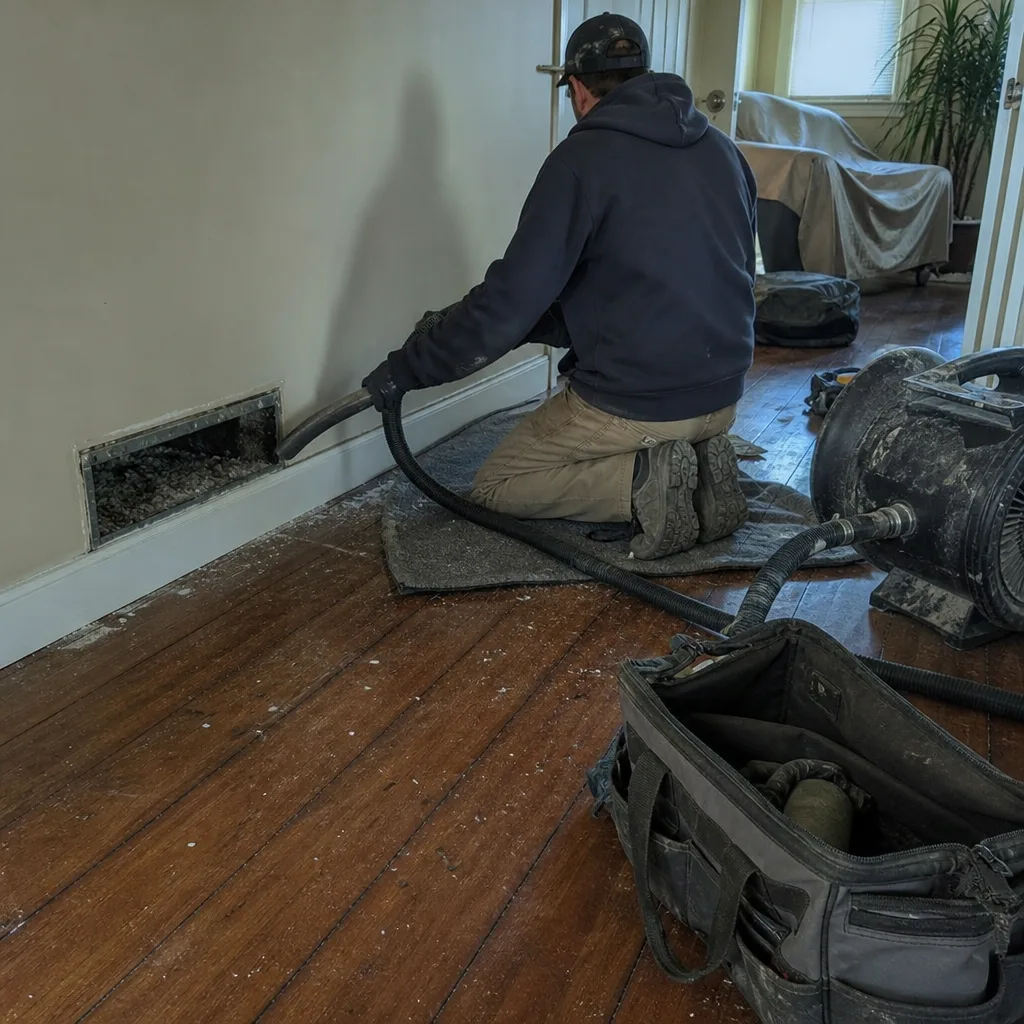 Before
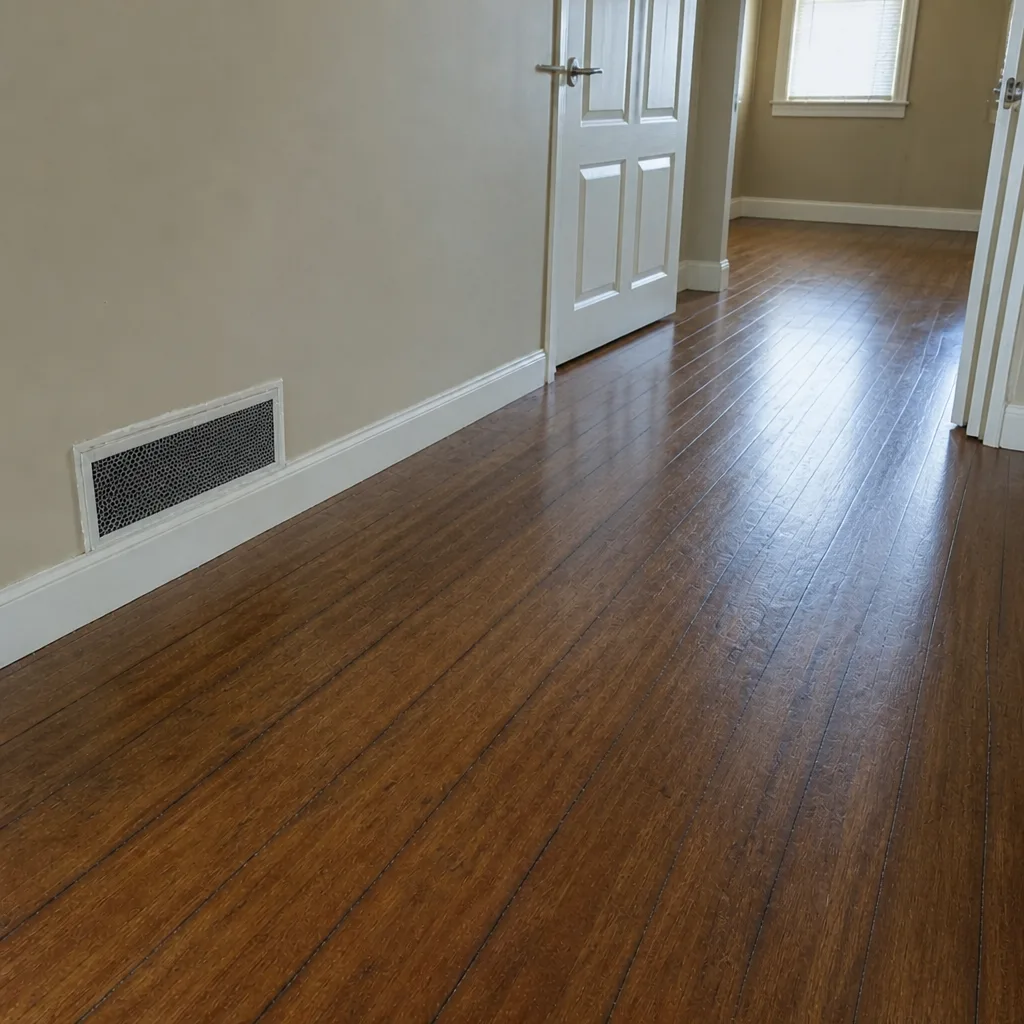 After
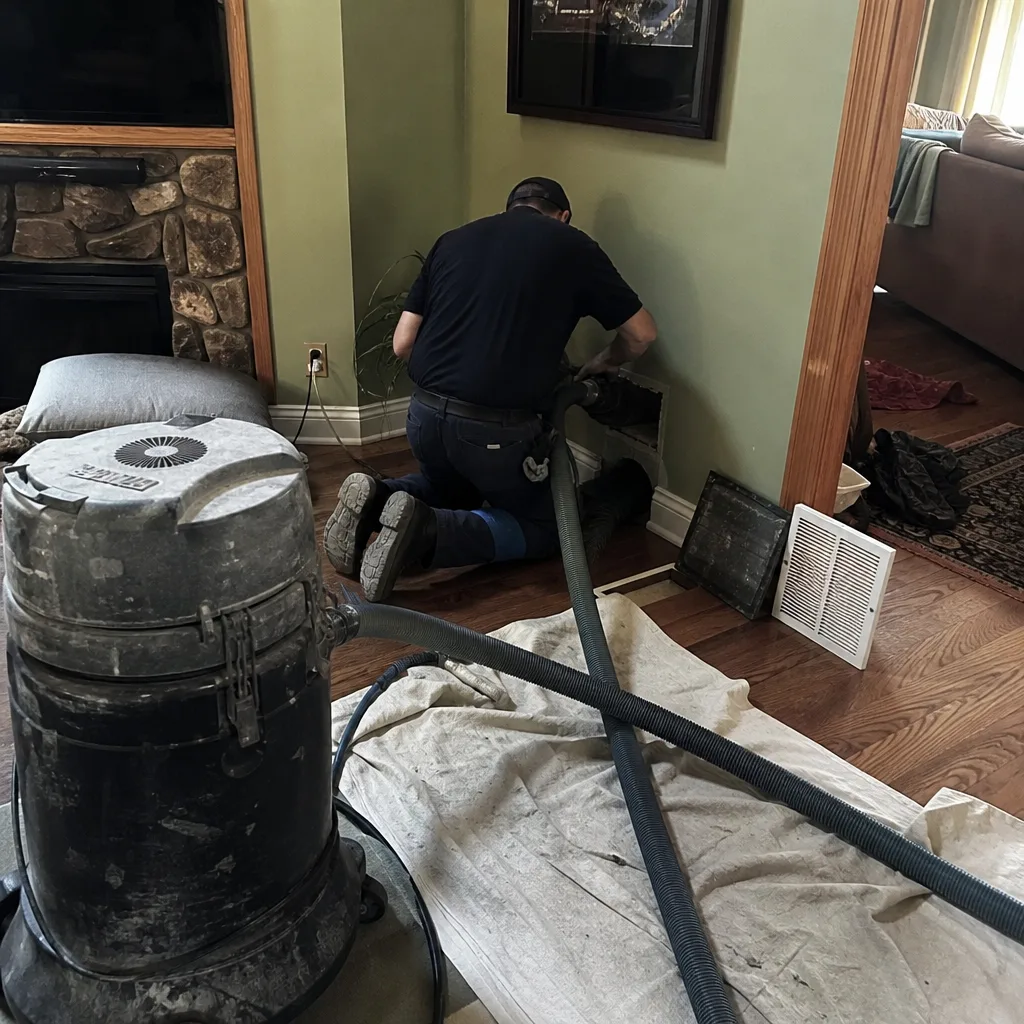 Before
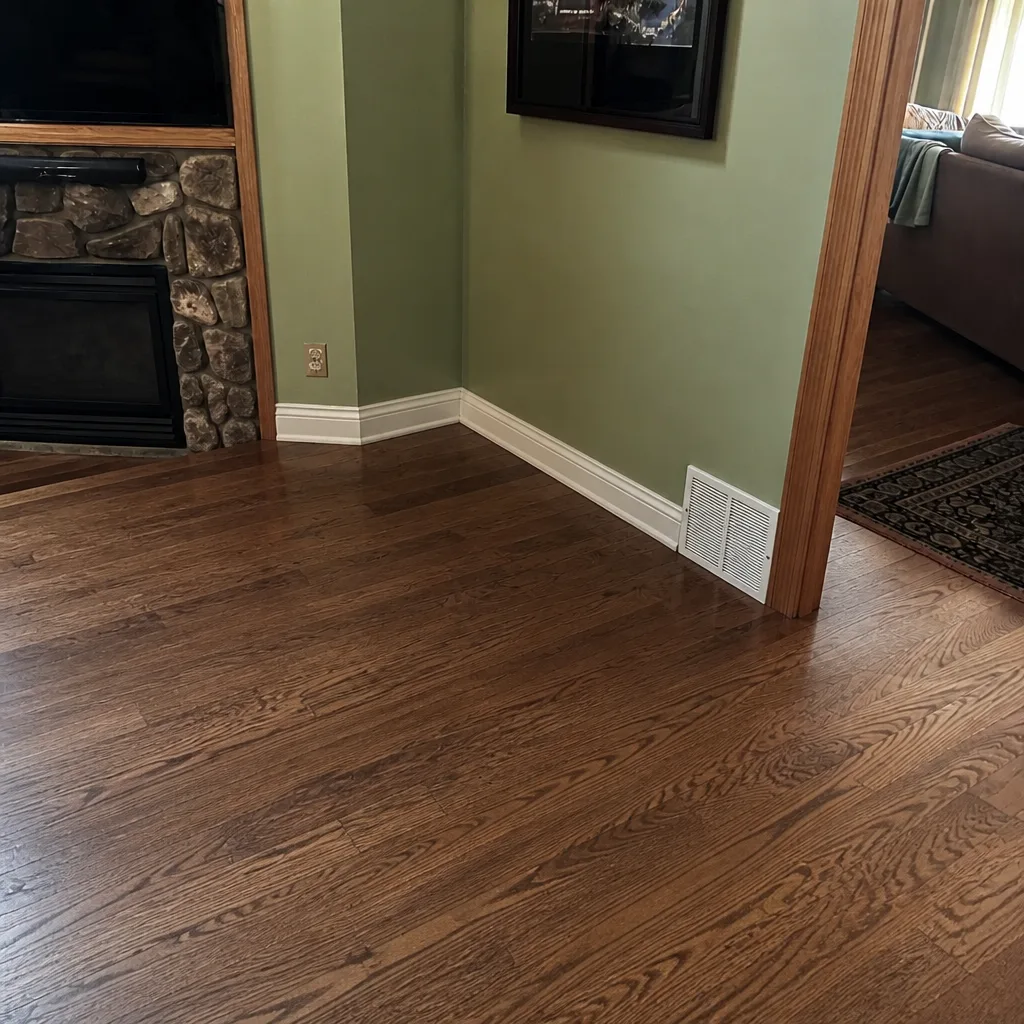 After
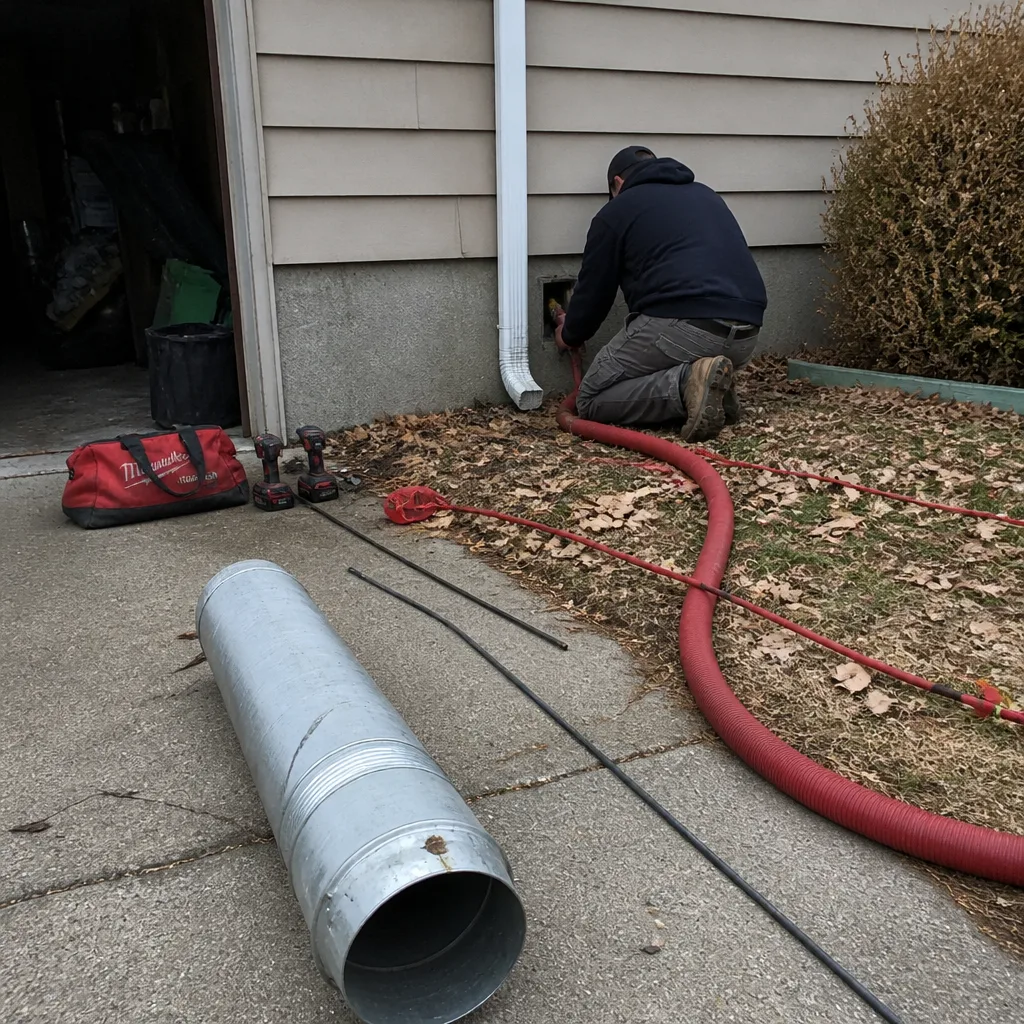 Before
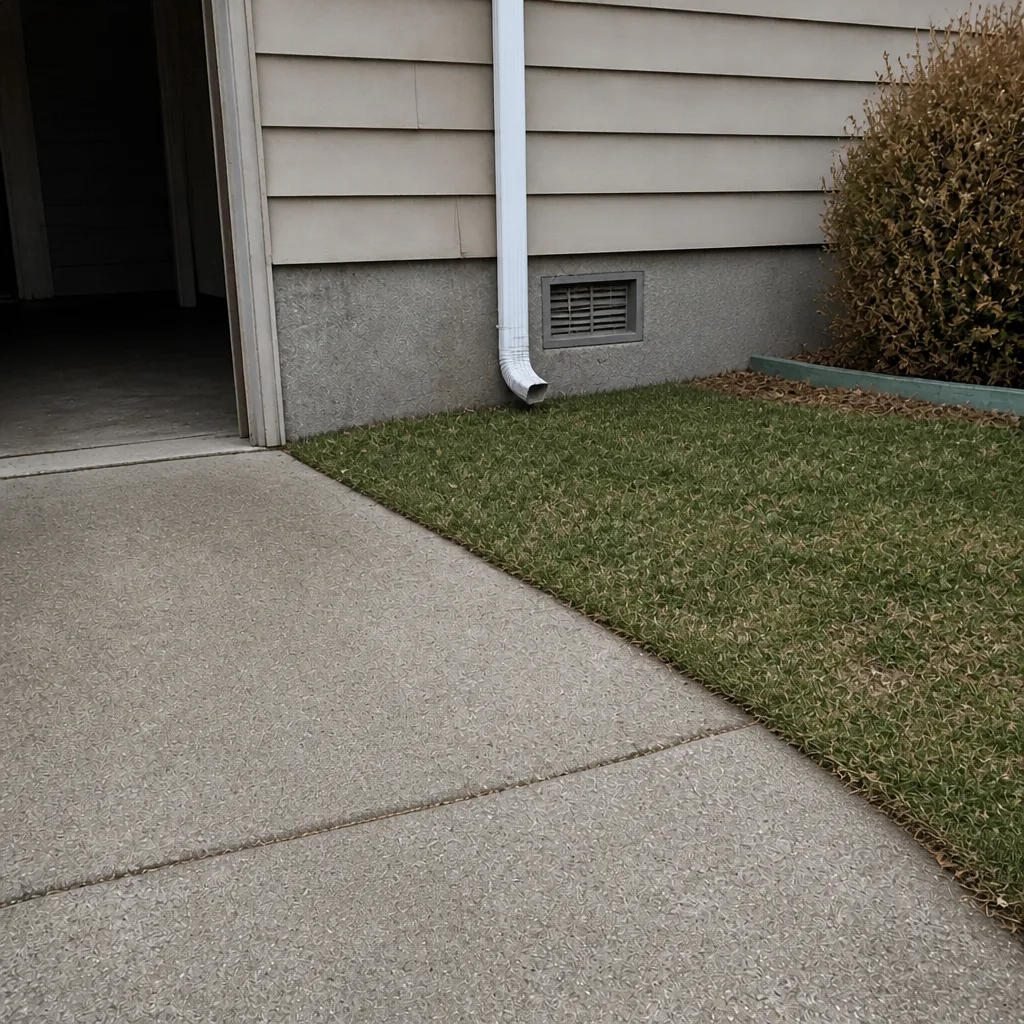 After
When to Call a Professional
Call a professional after any of the following events in Kansas City: a basement or crawlspace flood that reached the air handler or basement ductwork; a tornado or severe storm that produced debris intrusion through a return; a fire or active smoke event that pulled soot into the system; and a long smoke event where the interior odor hasn’t cleared within a week of the outside air going clean. Call after a home purchase if the ducts weren’t recently serviced and you have no record of prior cleaning. Call anytime the “on” switch feels uncertain and you’d rather not risk it.
Millbrook Air Duct Cleaning offers free estimates in Kansas City. Call (855) 473-1004. We answer 24/7. Fast dispatch from 7am to 7pm, Sunday through Friday.
Frequently Asked Questions
No. Leave the system off until the ducts, air handler, and filter have been inspected. Running it during or after a contamination event pushes moisture, soot, or debris through the entire duct system. Once the assessment clears the system, restart is safe.
Aim for professional inspection within 24 to 72 hours after the event. That window is when moisture problems are still small, before microbial growth gets a foothold. If a tornado, flood, or smoke event affected your ducts, call (855) 473-1004 for a free estimate. We answer 24/7. Fast dispatch from 7am to 7pm, Sunday through Friday.
Often yes, if the ducts were damaged by a covered event. Getting a professional inspection with documentation (photos, written findings, before-and-after shots) makes the difference between the claim being approved as a structural or contents item and getting missed. Call (855) 473-1004 to schedule an inspection. We answer 24/7. Fast dispatch from 7am to 7pm, Sunday through Friday.
A professional inspection is the only reliable way. During the inspection we check for saturated liner, delamination, and microbial growth that survives cleaning. If the liner is compromised, replacement makes more sense than repeated cleaning. Call (855) 473-1004 for a free estimate. We answer 24/7. Fast dispatch from 7am to 7pm, Sunday through Friday.
Because smoke penetrates the fibrous liner on the interior of many duct runs, not just the metal. Standard cleaning addresses surface debris; liner treatment is what actually resolves the odor. Homes with Honeywell or Aprilaire filtration systems tend to hold up better but still need the liner addressed when the smell lingers.
We use Rotobrush and Nikro systems, purpose-built professional duct cleaning equipment, along with Abatement Technologies negative-air containment so contaminants are captured during cleaning instead of recirculated. If you have a Honeywell or Aprilaire air quality system, our technicians know how to clean around it. Call (855) 473-1004 for a free estimate. We answer 24/7. Fast dispatch from 7am to 7pm, Sunday through Friday.
The Bottom Line
Kansas City emergency prep rarely includes the duct system, but that’s where tornadoes, floods, ice storms, and smoke events leave the longest-lasting damage. The three moves that matter: shut the system down during the event, get the ducts inspected within 24 to 72 hours, and document everything for insurance before any cleaning starts. If an inspection finds damage, Millbrook Air Duct Cleaning offers cleaning and duct repair under one company, so the fix happens in one visit. Our technicians have up to 10 years of experience and use professional-grade equipment, not improvised tools. Call (855) 473-1004 for a free estimate. We answer 24/7. Fast dispatch from 7am to 7pm, Sunday through Friday.
Written by the team at Millbrook Air Duct Cleaning.