
Last updated November 14, 2026
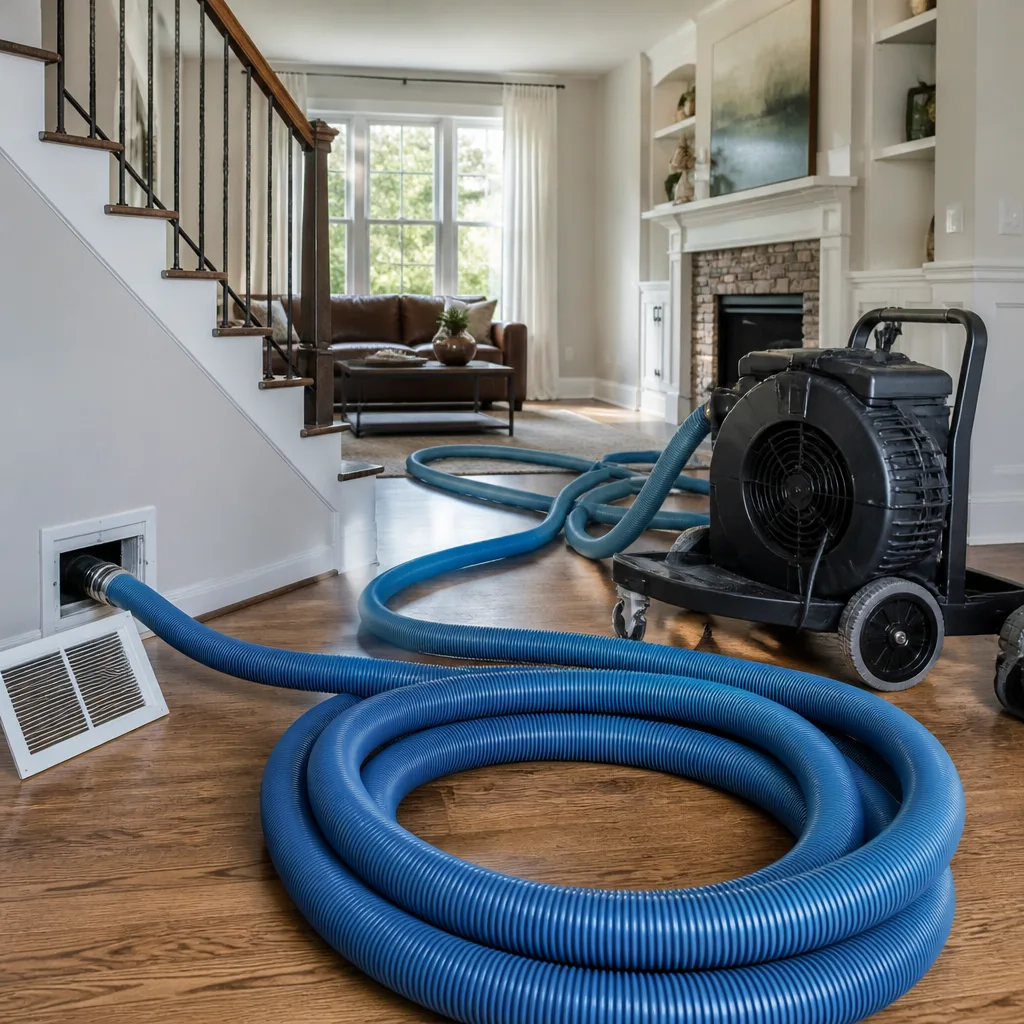 Whole-home duct cleaning
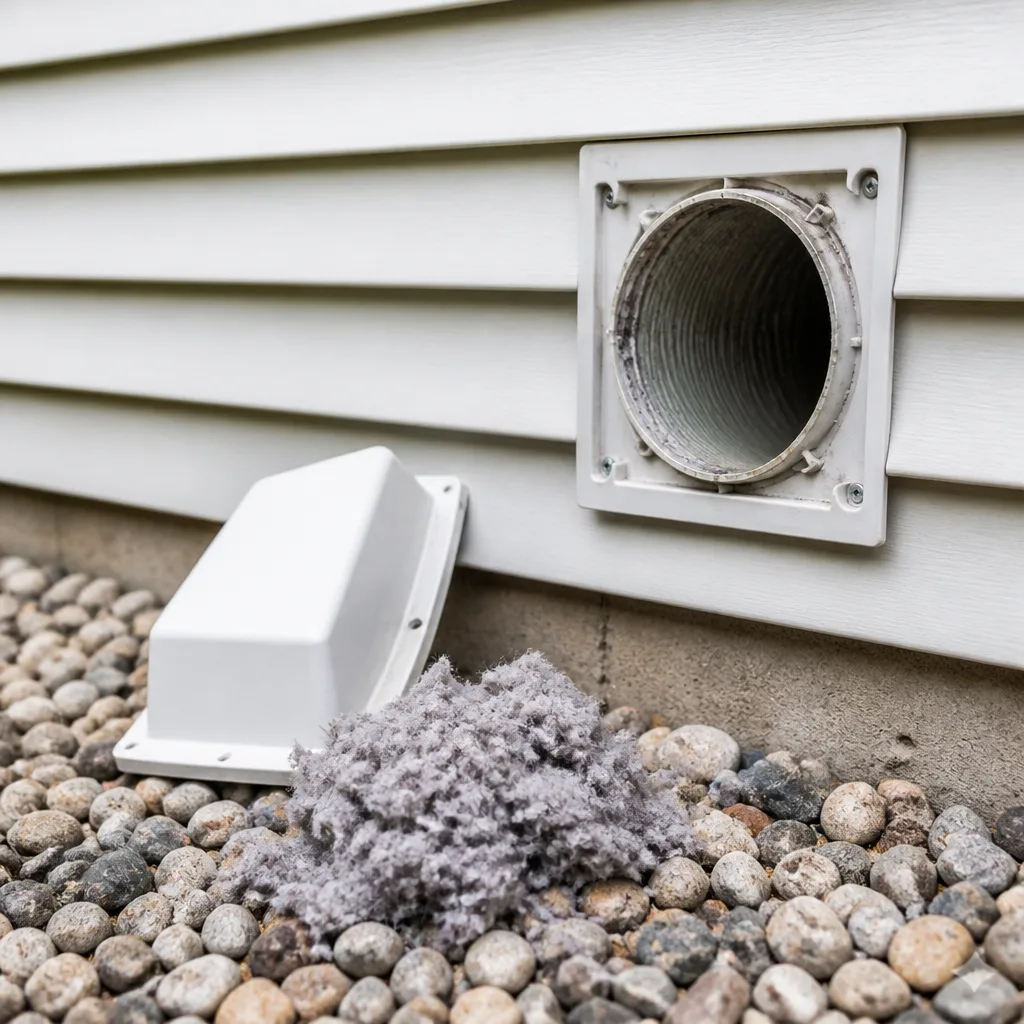 Dryer vent cleaning
 Camera inspection
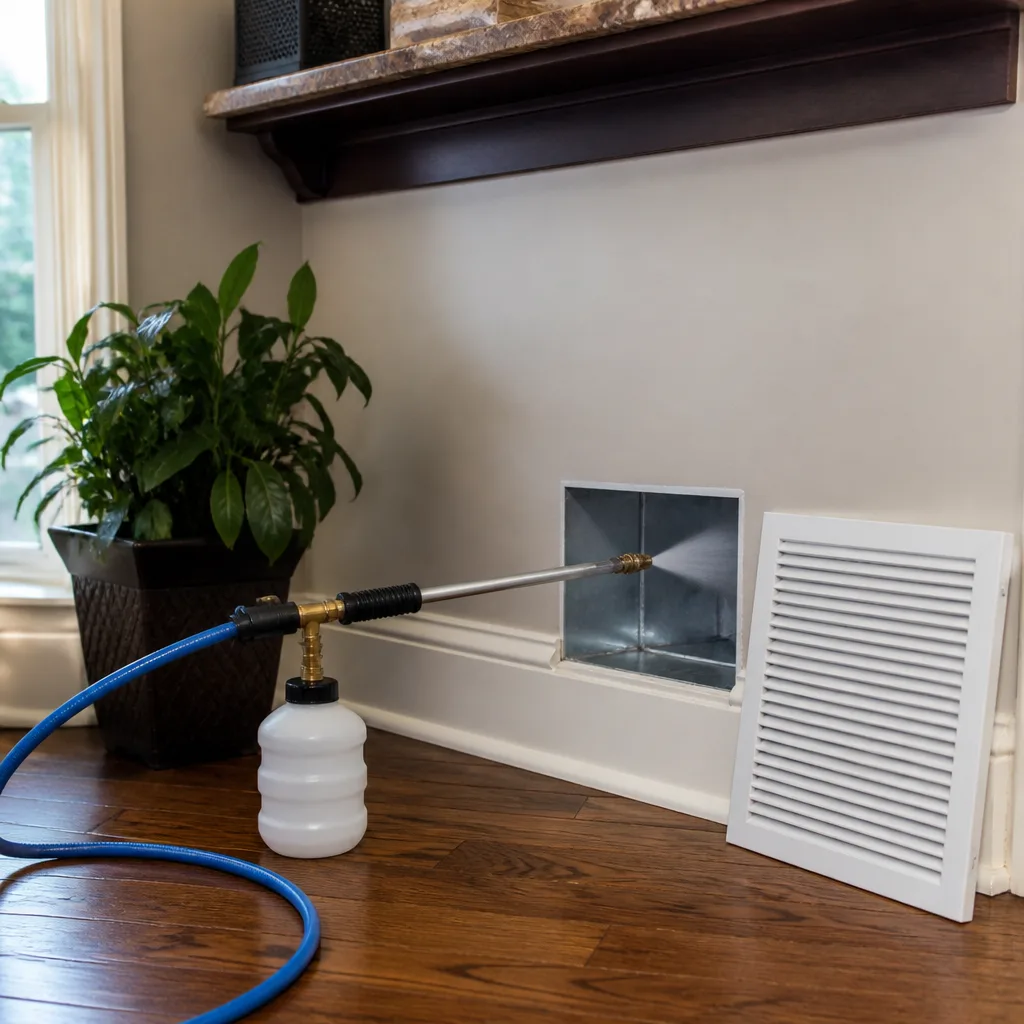 Sanitizing & deodorizing
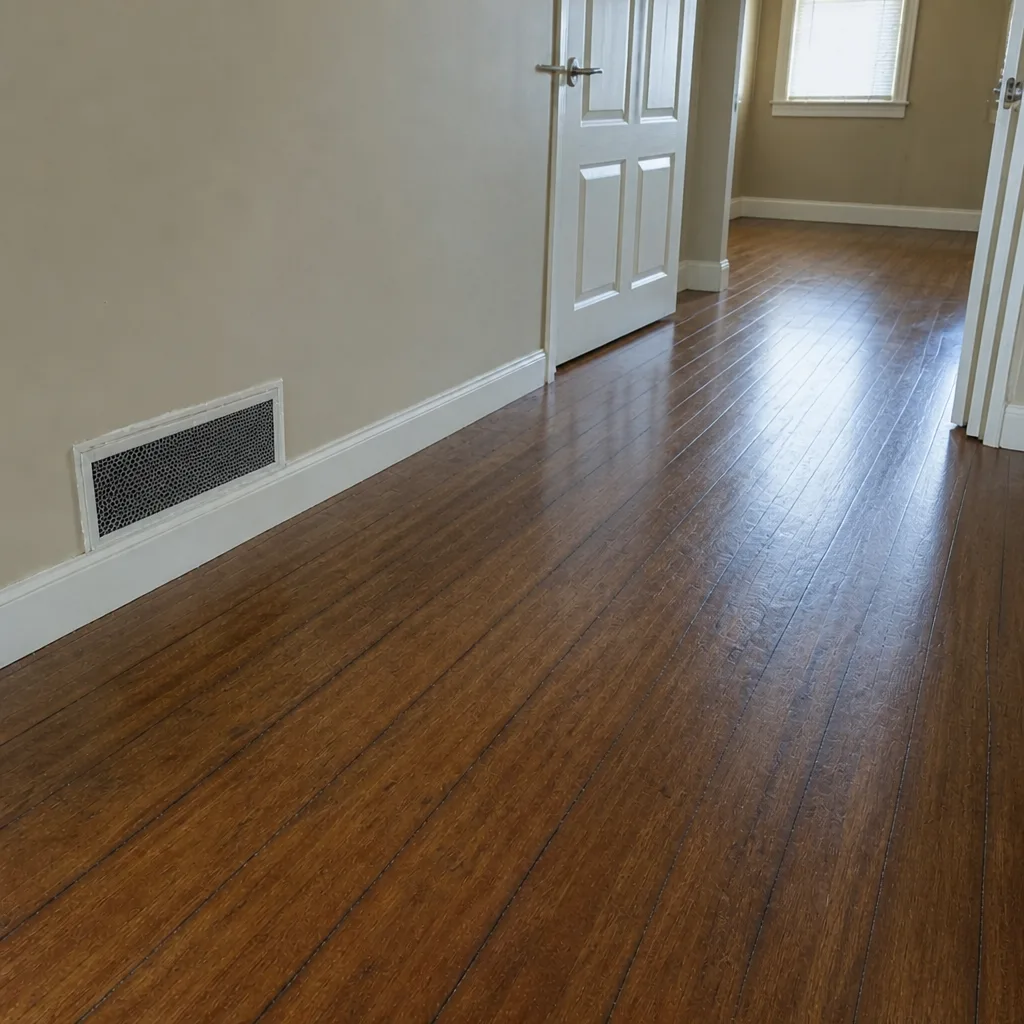
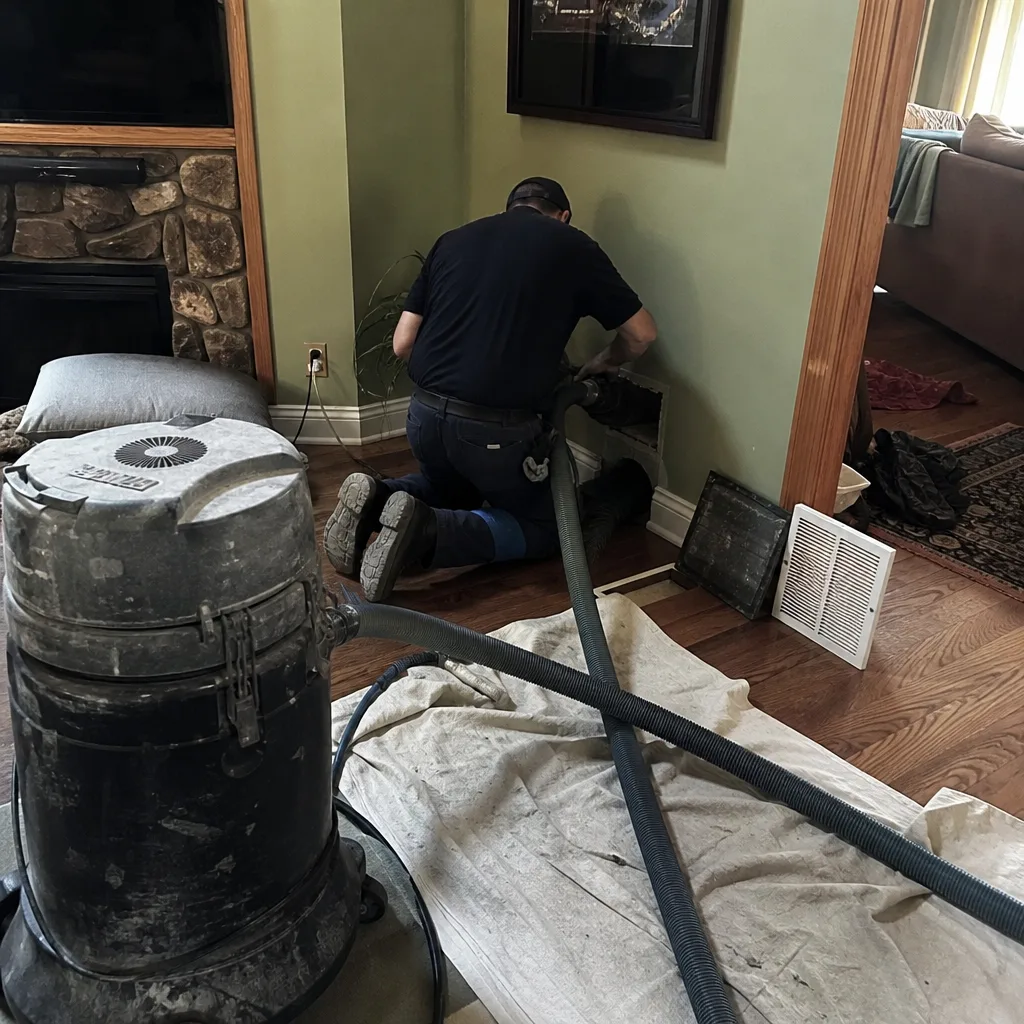
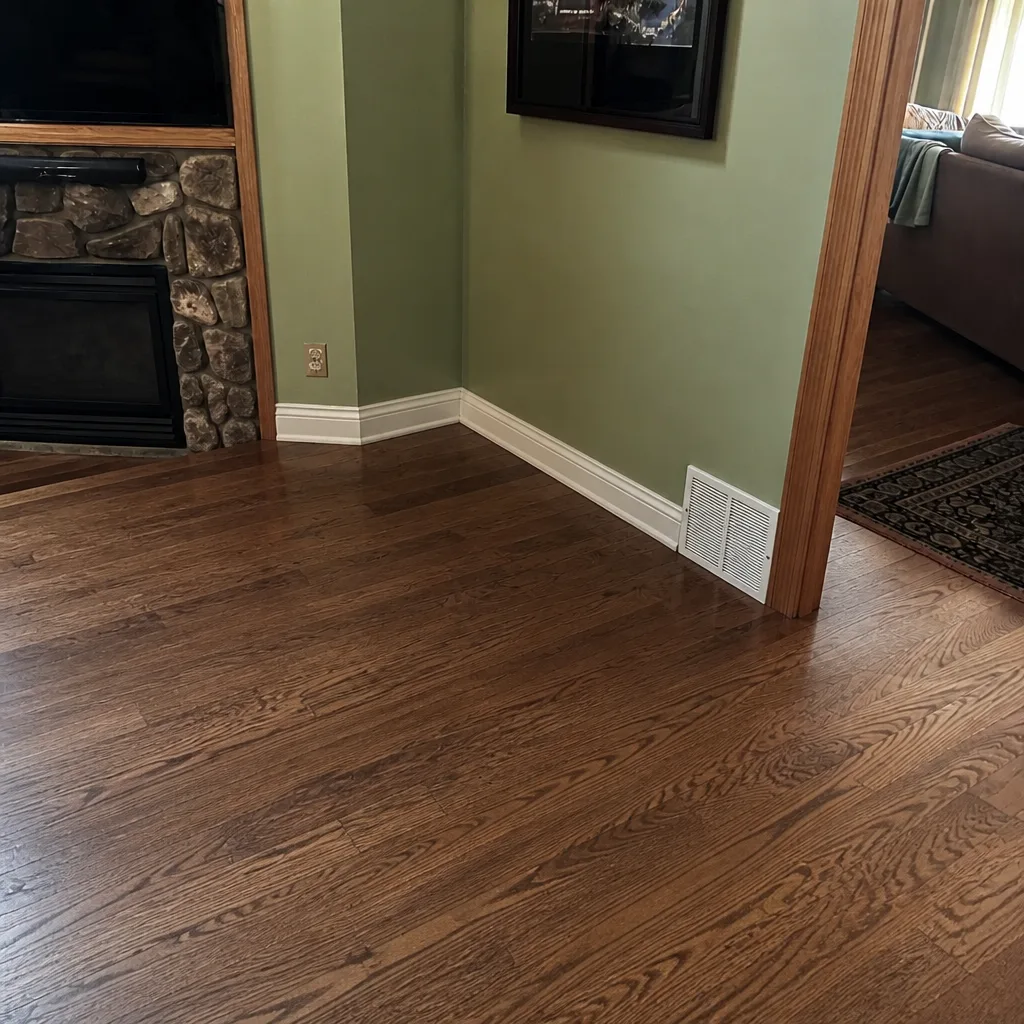
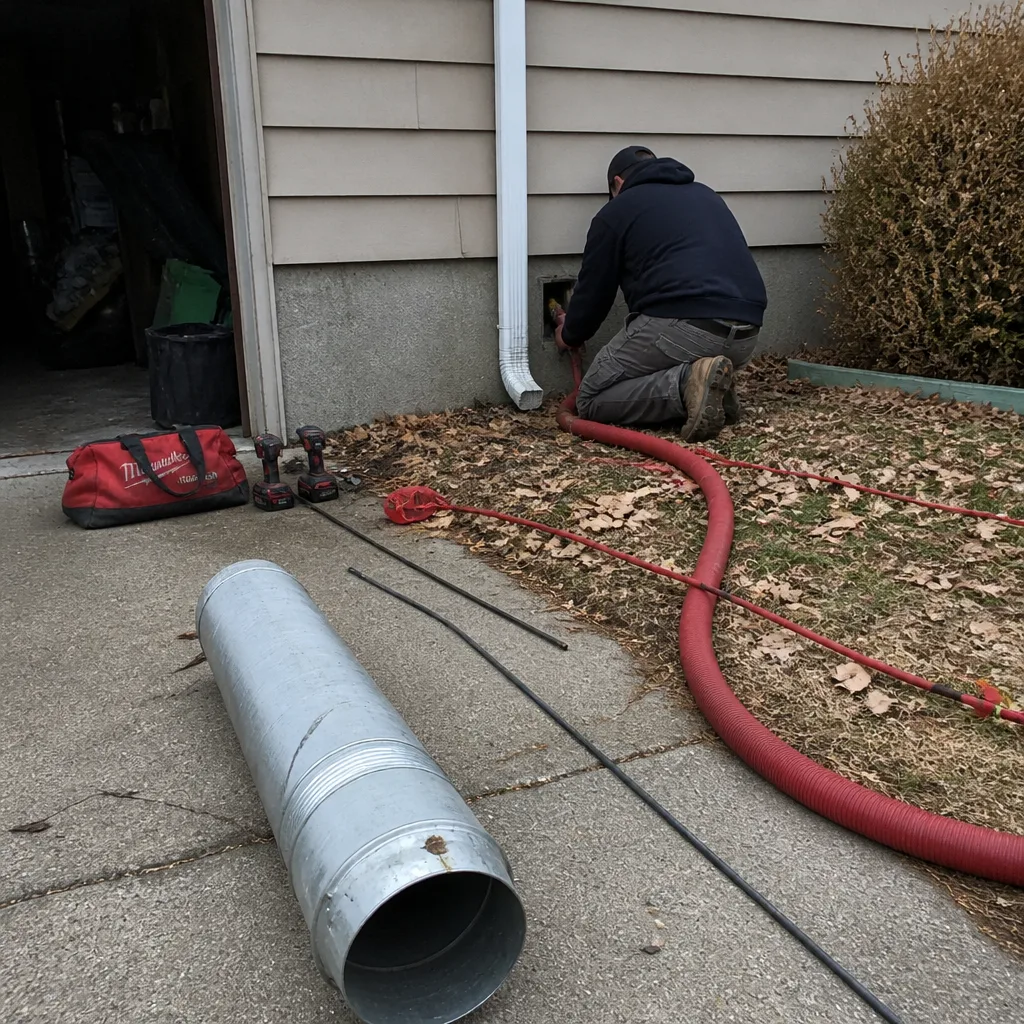
Whole-system duct and dryer vent check with before-and-after photos - you see exactly what came out of your vents
That "$99 whole-house special" is a bait ad - the real number appears once they are in your hallway, or the "clean" is a shop-vac at the register. We photograph the inside of your ducts before and after instead.
Air Duct Cleaning Permits, Codes & Inspections in Kansas City, KS: What You Need to Know
Here’s the part most homeowners miss: the cleaning itself almost never needs a permit. The repair that follows the cleaning often does. When a technician finds a disconnected supply trunk in a crawlspace or a crushed run behind a finished ceiling and patches it on the spot, that patch is mechanical work, and in Wyandotte County mechanical work has rules. That difference matters the moment you list the house, file a moisture claim, or a buyer’s inspector crawls under the floor with a flashlight. This guide walks through where the regulatory lines actually fall in Kansas City, what cleaning versus modification really means, and how to protect yourself with paperwork before anyone touches your ducts.
Quick Answer
Air duct cleaning by itself is routine maintenance and does not require a permit in Kansas City, KS. Duct repair, replacement, or modification that changes the mechanical system, such as reconnecting a trunk line, replacing flex runs, or adding or removing ductwork, generally falls under Wyandotte County mechanical permit rules and should be documented. Cleaning companies that blur that line to avoid permits are the ones to avoid. Ask for a written scope of work that separates cleaning from any repair.
Styles & brands we work with
- Whole-home duct cleaning
- Dryer vent cleaning
- Camera inspection
- Sanitizing & deodorizing
Table of Contents
- Cleaning vs. Modification: Where the Permit Line Falls
- Wyandotte County Mechanical Permit Thresholds
- IRC and IMC References That Apply to Duct Work
- Insulation and Sealing on Supply Ducts in Unconditioned Space
- What a Home Inspection Report Flags as a Duct Deficiency
- How to Request a Scope-of-Work Letter
- Contractors Who Blur the Line
- Keeping Records That Protect You at Resale
Cleaning vs. Modification: Where the Permit Line Falls
Think of your duct system in two layers. The first is the surface: dust, debris, pet hair, construction grit, and whatever has settled on the interior walls of the runs over the years. Removing that layer is cleaning, and cleaning doesn’t require a permit anywhere in Kansas City. The second layer is the system itself: the physical ducts, joints, hangers, boots, dampers, and connections that move air from the furnace or air handler to each room. Changing that layer is mechanical work.
The confusion starts because a good cleaning often reveals problems in the second layer. Dust arrives through leaks. A return that’s pulling air from a crawlspace delivers soil, insulation fibers, and moisture along with it. When our technicians run a camera through a supply trunk and find a gap at a collar or a run that’s come loose from its boot, that finding is part of the cleaning inspection, but fixing it is a separate category of work.
- Cleaning: removing debris with negative-air equipment and agitation tools; no permit needed; no change to the system.
- Routine maintenance: re-securing an existing connection with mastic or approved tape at a joint that was already there; typically considered maintenance, but document it.
- Modification: replacing a run of flex duct, adding or removing a supply or return, changing duct size or routing, or repairing a trunk that has separated. This is the category that usually needs a mechanical permit and an inspection.
- Replacement: replacing an entire duct system or a significant portion of it always needs permits and inspection.
For homeowners in Kansas City’s older neighborhoods, where original ductwork sometimes predates modern materials by decades, the line between maintenance and modification comes up constantly. If you’re booking air duct cleaning and the company mentions repair, ask which category each item falls into before the work begins.
Wyandotte County Mechanical Permit Thresholds
Kansas City, KS sits inside Wyandotte County, and mechanical work in the county is permitted through the local code authority. We don’t state specific section numbers or fee schedules here because those are set locally and updated, so the reliable answer is always to call the Wyandotte County building department before work begins. What we can explain is how the threshold generally works in practice, so you know what questions to ask.
Permits exist so that the work is inspected. That inspection is what protects you, not the paper itself. A duct repair that went in without a permit may be perfectly fine, or it may not, and nobody with authority has looked at it. When you sell the house, an inspector will flag unpermitted mechanical work as a concern, and your buyer’s agent will treat it as leverage. A permit turns that unknown into a record.
What typically falls on each side
- Likely permitted: duct system replacement, new supply or return runs, major rerouting, repair of a disconnected trunk, work that involves cutting into framing or moving equipment.
- Likely not permitted: cleaning, sanitizing, replacing a filter, sealing an existing joint as maintenance, adjusting a damper.
- Gray area: replacing a short section of flex duct that was damaged by pests or a settling foundation. This is where we tell Kansas City customers to call the county directly rather than trust a contractor’s opinion.
How a typical permitting sequence goes
- Contractor scopes the repair and determines whether a permit is required.
- Permit application is filed with Wyandotte County, listing the scope of mechanical work.
- Work is performed to the applicable code, with materials specified in the application.
- Inspection is scheduled and completed; the inspector verifies the work against the scope.
- Final approval is issued and kept with the home’s records.
If a contractor tells you a repair doesn’t need a permit, that may be correct, but the right move is to confirm with the county rather than take the contractor’s word. If they tell you permits are “a hassle” and they’ll skip it, that’s a warning sign, and it usually points to a company without a mechanical license, insurance, or both.
IRC and IMC References That Apply to Duct Work
The International Residential Code and the International Mechanical Code are the model codes most local jurisdictions, including Wyandotte County, draw from. We won’t quote specific section numbers here because local adoption varies and the current adopted edition is what matters, but the general principles are consistent and worth understanding.
The IMC addresses duct construction and installation: materials, joining methods, support intervals, and sealing. If you’re reading a contractor’s proposal and it involves any duct repair, the governing code for that job is whatever the county has adopted, and the proposal should reflect it.
- Sealing materials: ducts must be sealed with approved materials at joints and connections, not just pushed together. Mastic and listed foil tapes are what inspectors look for. Consumer-grade cloth tape is not approved for duct sealing and will fail.
- Support: flexible duct must be supported so it doesn’t sag, and sagging runs trap debris and reduce airflow. Inspectors spot sagging quickly.
- Connections: duct must be mechanically fastened and sealed at every connection point, including where it meets the boot and the plenum.
- Penetrations: where duct passes through walls or floors, the code cares about sealing and fire-blocking, and inspectors check those points specifically.
For Kansas City homeowners, the practical takeaway is this: if a repair is being done, it should be inspected against a code. If it wasn’t, you have no way to know whether the materials and methods will last. That’s not a scare tactic, it’s just the reality of how mechanical work is verified.
Insulation and Sealing on Supply Ducts in Unconditioned Space
Kansas City’s climate gives us hot, humid summers and cold winters, which means ductwork in unconditioned spaces sees a wide temperature swing. Supply ducts running through an attic or crawlspace are the worst offenders. In summer, cold air inside a poorly insulated duct meets hot, humid attic air outside, and condensation forms on the duct surface. In winter, warm air leaks out and cold air leaks in at the same joints. The code cares about this for energy reasons and for moisture reasons, and so should you.
Flex duct used in unconditioned spaces typically must meet a minimum insulation R-value, and inspectors check the rating printed on the duct jacket. The specific R-value that applies to your job comes from the adopted code and your plan set, which is why the question belongs to the county, not to a website. What we can tell you is what to look for on the material itself: the R-value is printed on the outer jacket, and if it isn’t legible, the material is suspect for that application.
- Vapor barrier integrity: the outer jacket on insulated flex duct is a vapor barrier. Torn or taped-over jackets lose their function. Inspectors flag this.
- Sealing before insulating: joints should be sealed, then the insulation installed over the sealed joint. Sealing after the fact through insulation doesn’t work.
- Supply runs in crawlspace or attic: both are unconditioned in most Kansas City homes, and both are common locations for the kind of gap we find during cleaning.
- Liners and duct board: interior duct liner can trap debris and moisture if the system has been running wet. Liner replacement is a modification and falls under permit rules.
If our team finds a torn jacket or exposed duct in your crawlspace during cleaning, we’ll tell you. What we won’t do is patch it as a side note to the cleaning without a clear scope of work and, if required, a permit. That’s the discipline that protects you later.
What a Home Inspection Report Flags as a Duct Deficiency
When you sell a house in Kansas City, the buyer’s inspector crawls through the crawlspace and attic with a camera and a flashlight, and duct systems are on the list. Inspectors don’t need a permit file to note a defect, but they do use documentation to separate deferred maintenance from unpermitted work. That difference shows up in the negotiation.
Typical duct deficiencies that appear on Kansas City inspection reports:
- Disconnected or loose flex duct at a boot, plenum, or trunk connection.
- Duct tape (cloth, not foil) used as a seal, which fails over time and leaves an unsealed gap.
- Sagging flex runs that restrict airflow and collect debris.
- Torn or missing insulation jackets on supply ducts in unconditioned space.
- Ductwork supported by hangers that have come loose or fallen.
- Rust or moisture staining on duct surfaces, suggesting condensation or a past leak.
- Returns pulling from crawlspace air without a proper seal.
- Sheet metal duct with separated seams in older homes.
Any of those findings turns into a question in the buyer’s mind, and often a request for a credit or repair. A seller who has a permit and inspection record for prior duct repair can answer the question directly. A seller with no documentation is negotiating from a weaker position, whether the work was actually done well or not. This is the practical reason to keep the record, not just the abstract argument that paperwork is nice to have.
How to Request a Scope-of-Work Letter
A scope-of-work letter is a plain document that separates cleaning from repair. It costs the contractor nothing and it protects you. Any company that refuses to provide one is telling you something about how it handles accountability. Ask for it in writing, before work starts, every time. Here’s how to ask for it in a way that gets a useful answer.
What the letter should contain
- Services included: cleaning, dryer vent cleaning, and any repair items, each listed separately.
- Systems covered: how many supply and return runs, and whether the air handler and plenum are included.
- Repair items, if any: specific description of each repair, the materials to be used, and whether a permit will be obtained.
- Permit status: for each repair item, whether a permit is required and who is pulling it.
- Before and after documentation: confirmation that you’ll receive photos of your own ducts, not stock images.
- Pricing: one flat price per system, agreed before work starts, with the written estimate as the final word.
Ask before the crew arrives, not after. If a company discovers a repair item during cleaning, they should be able to amend the scope letter in writing, separate the repair from the cleaning, and note whether a permit applies. That’s how you avoid a surprise on the invoice and a question at resale. For Kansas City homeowners who plan to sell within a few years, this one habit is worth more than any coupon.
Contractors Who Blur the Line
The reason this guide exists is that the industry has a bait-and-switch reputation, and the permit question is where that reputation gets exercised. A contractor who quotes a very low cleaning price and then “discovers” a repair problem is using the cleaning as a door-opener for unpermitted modification work. That work then goes undocumented, and you find out about it years later.
What that pattern looks like:
- No written scope: the estimate is verbal or a coupon, with no itemization of cleaning versus repair.
- Repair “discovered” on arrival: a problem that wasn’t mentioned on the phone and isn’t in the scope, with a price attached on the spot.
- No permit discussion: when you ask about permits for the repair, the answer is vague or dismissive.
- No documentation: no before-and-after photos, no written confirmation of what was done.
- Per-vent pricing: a teaser price per vent with add-ons, rather than a whole-system price agreed in advance.
- No repair capability: a cleaning company that “finds” a problem but can’t repair it, pushing you toward a separate contractor they recommend.
Our approach is the opposite. We quote one flat price per system based on a written estimate. We don’t price per vent. If we find a repair item, we tell you what it is, we can do the repair ourselves with Millbrook Air Duct Cleaning‘s repair service, and we can discuss with you whether a permit is needed for that specific item. You’ll see before-and-after photos of your own ducts, and you’ll know exactly what you paid for. That’s the standard we hold ourselves to, and it’s the standard you should hold any Kansas City duct company to.
Keeping Records That Protect You at Resale
Records are worthless if they’re in a drawer you can’t find when a buyer’s agent asks. Keep them in one place, digital if you can, and keep the permit file together with the cleaning invoice and the scope letter.
What to keep:
- The written estimate and scope-of-work letter from each service.
- The cleaning invoice, showing the flat price and the systems covered.
- Before-and-after photos of your own ducts.
- For any repair work, the permit documentation and final inspection approval.
- Any repair invoice, listing materials and the contractor’s license information.
- Dryer vent cleaning records, since fire-safety documentation is also useful at resale and for insurance.
If you’re considering dryer vent cleaning alongside your duct service, add that to the same file. A complete record is more useful than a partial one, and it’s easier to keep it all in one folder than to reconstruct it later.
Common Mistakes to Avoid
- Assuming the cleaning covers the repair. Cleaning and repair are separate services. A cleaning that “includes” a repair without a written scope is almost always a repair you won’t be able to document.
- Skipping the permit question on a repair. Even if you trust the contractor, call Wyandotte County and confirm the permit status of any duct repair. A five-minute phone call protects you for years.
- Accepting a verbal estimate. Kansas City homeowners who accept a verbal estimate lose the ability to prove what was agreed. Get the scope in writing, every time.
- Choosing the cheapest coupon over a documented scope. The bait-and-switch reputation of this trade exists because coupon pricing attracts exactly the contractors who blur the lines. Pay a fair price for a documented service.
- Throwing away the invoice and photos. By the time you sell, the paperwork is what stands between you and a repair credit at closing. Keep it with the house records.
- Letting a cleaning company patch a problem they can’t permit. If the company doesn’t hold mechanical licensing or won’t pull a permit for a repair, that’s the wrong company for the repair, no matter how well they clean.
- Ignoring the insulation jacket. A cleaning or repair that doesn’t address a torn vapor barrier in the crawlspace leaves you with a moisture problem that will reappear. Flag it in the scope.
See the difference
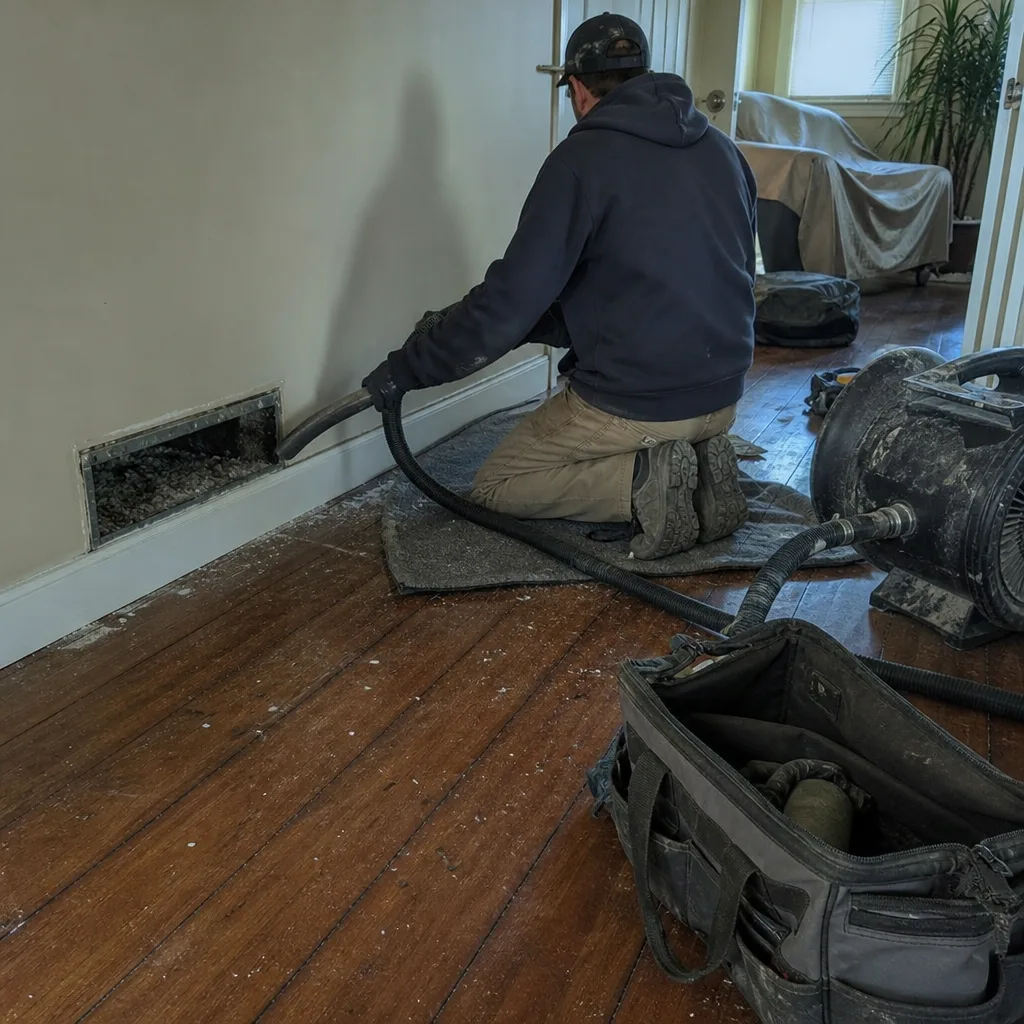 Before
 After
 Before
 After
 Before
 After
When to Call a Professional
Call a professional duct service when you’re buying a home and the inspection report lists duct deficiencies, when you’ve never had the ducts cleaned and suspect years of buildup, or when you notice uneven airflow between rooms or dust returning quickly after cleaning. Call when you smell a musty odor coming from a supply register, when you see a sagging or disconnected duct in the attic or crawlspace, or when a previous repair has no documentation. Allergy sufferers, parents of young children, and recent buyers of older Kansas City homes all have good reason to get a documented assessment before assuming the system is fine. Millbrook Air Duct Cleaning offers free estimates in Kansas City. Call (855) 473-1004. We answer 24/7. Fast dispatch from 7am to 7pm, Sunday through Friday.
Frequently Asked Questions
No. Air duct cleaning is routine maintenance and does not require a permit in Kansas City, KS. Duct repair or modification that changes the mechanical system generally does require a permit through Wyandotte County, and the contractor should tell you which category each item falls into. If you’re unsure, call the county directly before work begins. Call (855) 473-1004 for an estimate that clearly separates cleaning from repair.
Cleaning removes debris from the interior surfaces of your existing ducts without changing the system. Modification changes the physical ductwork, by replacing a run, adding or removing a supply or return, or reconnecting a trunk that has separated. Cleaning needs no permit. Modification typically does, and it should be documented. When you get an estimate, ask which category applies to each line item.
Check the permit records with the Wyandotte County building department, or ask the previous owner for the permit file and final inspection approval. If neither exists, the repair may still be fine, but you can’t prove it. That lack of proof is what an inspector will flag. A documented repair from a prior owner is a strong signal, and its absence is a reason to ask more questions.
It can. Most policies exclude or limit claims tied to unpermitted work, especially moisture or water damage claims where the cause traces to a mechanical defect. That’s the practical reason to insist on documentation for any duct repair. The policy language varies by carrier, so check yours, but the general pattern is consistent: unpermitted work is a weak position when you file a claim.
Inspectors look for disconnected runs, cloth tape used as a seal, sagging flex duct, torn insulation jackets on supply ducts in unconditioned spaces, and moisture staining. Any of those findings becomes a question in the buyer’s mind. A permit and inspection record for prior repair answers the question directly, and a documented cleaning record helps show the system has been maintained.
Only if they offer duct repair as a service, hold the licensing for it, and will pull a permit when required. A cleaning-only company that “finds” a problem and refers you to a separate contractor is using the cleaning as a door-opener. At Millbrook Air Duct Cleaning, we offer duct repair as a named service, so repair items found during cleaning can be addressed in the same visit by the same team, with documentation. Call (855) 473-1004 for a free estimate.
The Bottom Line
Air duct cleaning itself doesn’t need a permit in Kansas City, KS, but duct repair and modification generally do through Wyandotte County, and that distinction is what protects you at resale and on insurance claims. Ask for a written scope of work that separates cleaning from repair. Confirm any permit question with the county, not with the contractor. Keep the invoice, the photos of your own ducts, and the permit file together. When a company quotes one flat price per system, documents the work, and can repair what it finds, the permit question takes care of itself. When it can’t, that’s your answer about the company.
Millbrook Air Duct Cleaning offers three services in Kansas City: air duct cleaning, dryer vent cleaning, and air duct repair. We use professional-grade equipment from Rotobrush, Nikro, Abatement Technologies, Guardsman, Honeywell, and Aprilaire, and our technicians have up to 10 years of experience. We work with negative-air containment so contaminants are captured, not just loosened, and we can clean around Honeywell and Aprilaire whole-home air quality systems without disturbing them. The estimate is free, the price is one flat price per system agreed before work starts, and you’ll see before-and-after photos of your own ducts. Call (855) 473-1004. We answer 24/7. Fast dispatch from 7am to 7pm, Sunday through Friday.
Written by the team at Millbrook Air Duct Cleaning.