
Rotobrush Air Duct Cleaning in Kansas City: A Homeowner’s Guide
Rotobrush is a brand, not a method. That distinction matters more than most homeowners realize, because a rotating brush pushed through ducts without strong negative pressure behind it can loosen debris and send it straight into your living room instead of out of the system. In our experience, the same Rotobrush machine produces very different results depending on the person holding the hose. This guide explains how the equipment actually works and what to ask before you book anyone in Kansas City.
If you’d rather not sort through the technical details yourself, call (855) 473-1004 and we’ll walk you through it.
How does Rotobrush actually clean a duct system?
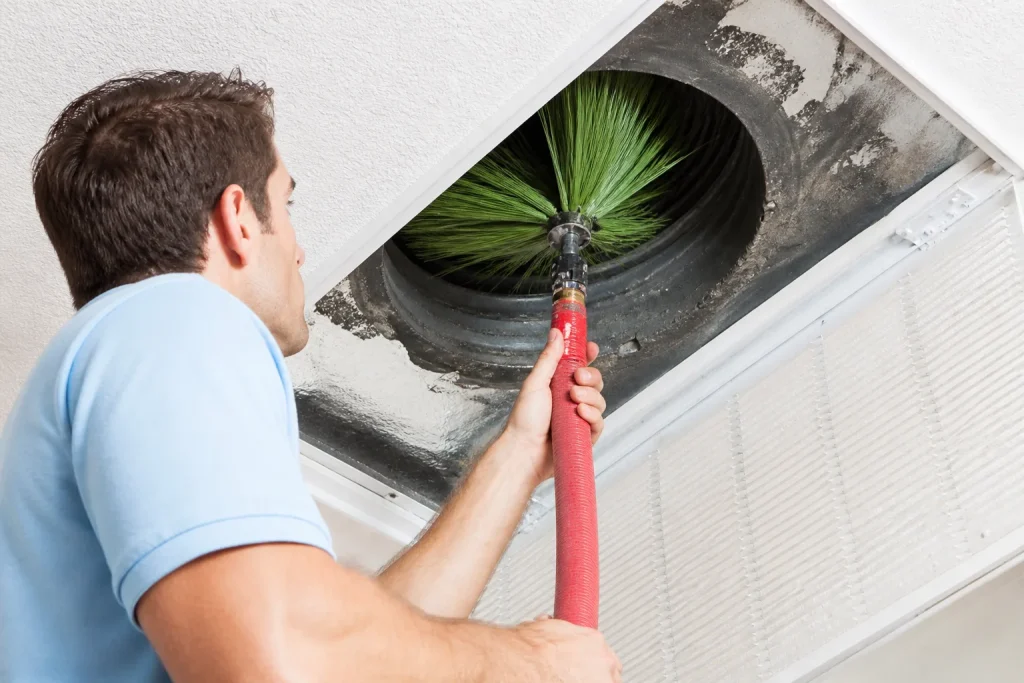
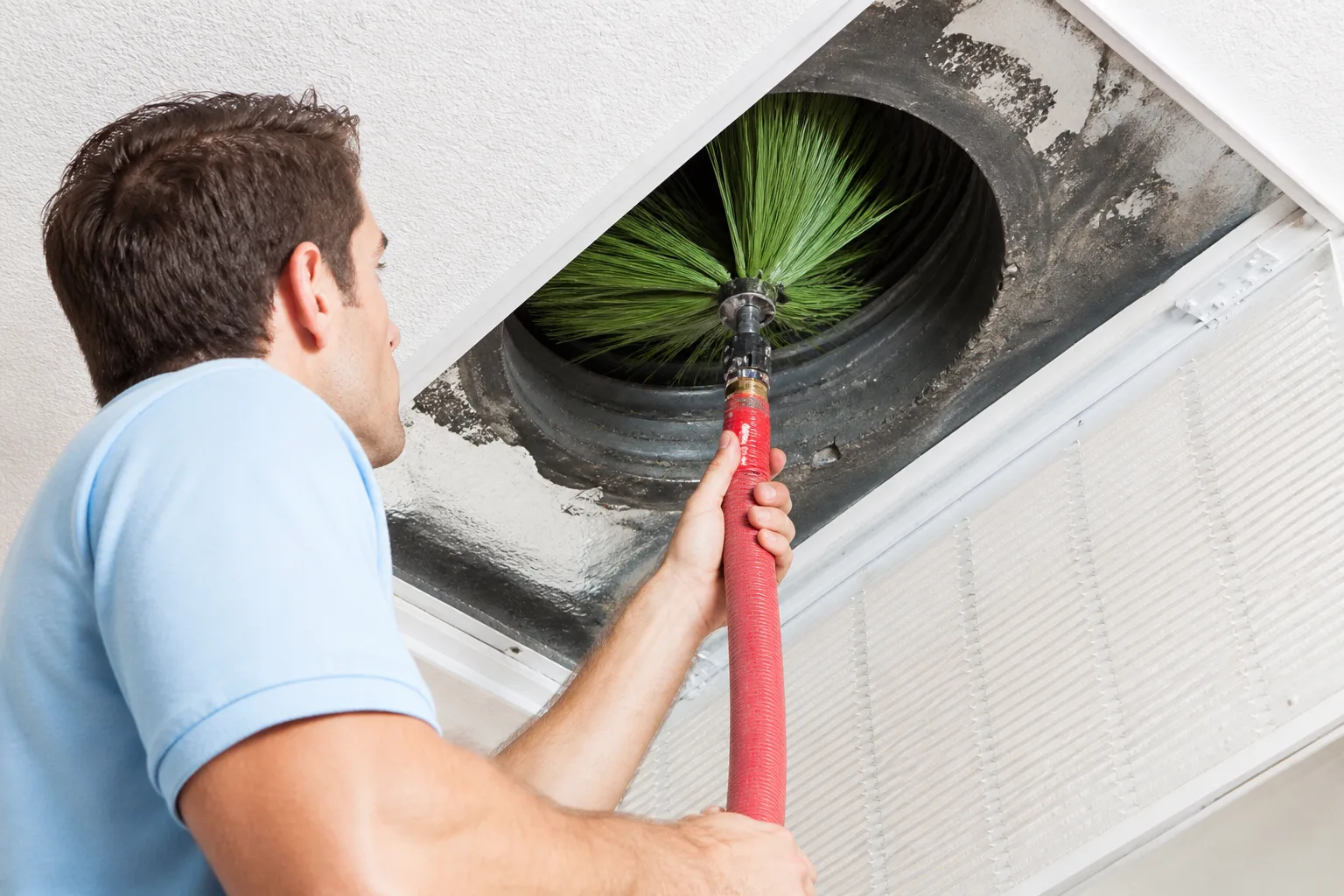
Rotobrush is a contact-cleaning system: a flexible whip or brush head spins inside the duct while a vacuum pulls dislodged debris toward a collection point. The brush scours the duct wall. The vacuum carries the loosened material away. Both halves have to work at the same time, and that’s where jobs go wrong in Kansas City homes.
Here’s the sequence a competent technician follows:
- Access cuts. Small openings are cut into the ductwork at strategic points so the brush can reach each branch line.
- Negative pressure established. A vacuum and containment setup pulls air out of the system so loosened debris travels toward the collection unit, not into your rooms.
- Rotary contact cleaning. The brush runs each run, working from the farthest branch back toward the main trunk.
- Debris collection and inspection. The technician checks the collected material and, ideally, camera-inspects the ducts before and after.
- Access points sealed. Cuts are closed so the system is left airtight.
The critical point: a Rotobrush machine without simultaneous negative pressure is a debris stirrer. If a company advertises Rotobrush and can’t explain their containment setup, ask harder questions. At Millbrook, we pair rotary work with Abatement Technologies negative-air equipment so contaminants are captured, not just loosened and left to settle in your Kansas City home.
Which duct materials can handle rotary brush cleaning?
Not every duct in Kansas City is built the same, and a brush that’s safe in one material can damage another. Brush sizing and speed have to match what the ducts are made of. This is the single most overlooked part of the Rotobrush conversation.
- Sheet metal ducts. The most forgiving surface. Rotary contact cleaning works well here with standard brush heads.
- Flexible duct (flex). Common in newer Kansas City builds and retrofits. The liner is thin and the wire coil can be nicked, so technicians use smaller brush diameters and lower speed to avoid tearing it.
- Fiberboard (duct board). The interior is a fibrous material, and aggressive brushing can fray it. Fiberboard needs a gentler brush and careful pressure, and generally responds better to source removal than heavy contact cleaning.
- Older rigid systems. Often have internal insulation or transitions that need a slower pass and extra care.
A technician who runs the same brush through every home is guessing. We size the brush to the duct, and if the material looks questionable we inspect before committing to rotary cleaning. That’s also why we offer air duct repair as part of the same service: if a leak or a collapsed section turns up, it can be addressed without a second contractor.
What questions should I ask a company advertising Rotobrush in Kansas City?
Ask about the machine, the containment, and the inspection. Those three answers separate a real Rotobrush job from a coupon special. Here’s what to ask:
- What’s the machine’s CFM rating? CFM (cubic feet per minute) measures how much air the vacuum moves. Higher airflow pairs with rotary work to pull loosened debris out. A weak vacuum defeats the brush.
- What brush diameter range do you carry? A company with one brush size can’t safely clean every duct material. Ask whether they adjust for flex and fiberboard.
- Do you camera-inspect before and after? Before shows what’s there. After shows what was removed. Photos and video are proof, and asking for them is fair.
- What’s your negative-pressure setup? Listen for containment and air control, not just “we use a big vacuum.”
- Are you insured and bonded? Clean work and proper coverage go together.
- Is it one flat price per system? Ask for the full price up front, not a per-vent figure that grows once the technician arrives.
We use Rotobrush, Nikro, and Guardsman tooling alongside Abatement Technologies containment, and we’re glad to talk through any of those answers. Call (855) 473-1004 for a free estimate and a straight explanation of what your system needs.
Rotobrush contact cleaning vs. truck-mounted source removal: which does your system actually need?
Rotobrush is a contact system. A truck-mounted vacuum is a source-removal system. For heavy soiling, a truck-mount’s very high airflow can pull massive volumes of debris out fast. Rotary contact cleaning shines when the duct walls have stubborn buildup that a vacuum alone won’t loosen, or when access is tight and a whip-and-brush approach can reach into branch lines.
In practice, the two techniques work together. Many jobs benefit from source removal for the bulk of the debris followed by rotary contact cleaning for the duct walls. Homes with light, recent soiling often don’t need the full treatment. Homes with years of buildup do. A company that offers only one method will always tell you that’s what you need.
We’re honest about the difference because we use both. When we look at a Kansas City system, we’re thinking about what’s actually inside it, not what fits neatly into a package. Our air duct cleaning work focuses on source removal and duct-wall cleaning together, and our technicians have up to 10 years of experience reading how a system is put together. If you’re weighing options, a free estimate with a clear explanation beats a coupon every time.
What should a legitimate Rotobrush job look like from start to finish?
A real Rotobrush job has a clear beginning, middle, and end, and you should be able to see most of it. Here’s what to expect from a properly run service.
- Before the work: a walkthrough, a look at your filter and air handler, and a camera inspection of at least a few key runs. The technician identifies duct materials and access points.
- Setup: drop cloths or protective coverings, containment equipment placed to maintain negative pressure, and access cuts made at planned points.
- The cleaning itself: rotary work run through each branch, with the vacuum running the whole time. This is the part that takes patience.
- After: access points sealed, a final inspection, and photos or video of the ducts before and after. A technician should be happy to show you what was removed.
What you should not see: a technician who can’t explain the containment plan, a brush that’s one size fits all, or a “finished” job with no after-photos. That last one is the easiest tell. If a company can’t show you the work, assume they didn’t do it. We take before-and-after photos of your own ducts, not stock images, because you deserve to see the difference in your Kansas City home.
When should you call a pro instead of waiting?
Some signs mean it’s time to pick up the phone. Others can wait a season. Use this as a rough guide for a Kansas City home:
- Call now: visible dust blowing from registers right after the system starts, musty odors that return after filter changes, or a recent renovation or move-in with unknown duct history.
- Call now: a known leak, a disconnected run, or a duct that’s separated at a joint. Damage like that worsens and should be addressed.
- Maybe wait: a single slightly dusty vent and a system that’s otherwise clean. Have a filter and airflow check done, and reassess.
- Worth a look regardless: whole-home filtration and air-quality systems like Honeywell or Aprilaire. These need cleaning around them, not just through them, and a technician who knows these brands can speak to your setup.
If any of the “call now” signs fit, don’t wait for a coupon. Get an assessment. We answer 24/7, and fast dispatch runs from 7am to 7pm, Sunday through Friday. We’re closed on Saturday, but a call outside dispatch hours is booked into the next opening, Sunday through Friday, 7am to 7pm.
Related services in Kansas City: alongside duct cleaning and duct repair, we offer dryer vent cleaning as a standalone or add-on service, because lint buildup is a fire risk that many duct companies leave out of their core work.
The Bottom Line
Rotobrush is a capable piece of professional equipment, and in the right hands it cleans duct walls in a way shop vacuums can’t. But the brand name on the machine matters far less than the technician’s understanding of brush sizing, duct material limits, and negative-pressure containment. Ask about CFM, brush range, and camera inspection before you book. If the answers are vague, walk away.
If you’re in Kansas City and need help, Millbrook Air Duct Cleaning offers free estimates. We use professional-grade Rotobrush, Nikro, and Abatement Technologies equipment, we quote one flat price per system agreed before work starts, and we show before-and-after photos of your own ducts. One call covers cleaning, repair, and dryer vent service for your entire duct system. Call (855) 473-1004 to get started. We answer 24/7. Fast dispatch from 7am to 7pm, Sunday through Friday.
Frequently Asked Questions
No, not all of them the same way. Sheet metal handles rotary contact cleaning well, but flexible duct and fiberboard need smaller brushes and gentler pressure to avoid liner damage. Ask a Kansas City company whether they size their brushes to the duct material before you book.
Most single-family jobs take a few hours, depending on how many branch runs there are and how much buildup is present. A technician who rushes the rotary work is cutting corners. Ask for a realistic time estimate, and expect the job to run longer if access is tight or duct materials call for slower passes.
Rotobrush is a contact-cleaning system that scours duct walls with a spinning brush while a vacuum pulls debris away. A truck-mounted vacuum is a source-removal system with very high airflow. Heavily soiled ducts often need source removal first, with rotary cleaning for the walls. Some companies use one or the other; ask which one fits your system and why.
Camera inspection and before-and-after photos. Ask to see the ducts before cleaning starts and after it’s finished, and ask what was removed. If a company can’t show you the difference in your own ducts, that’s a red flag in Kansas City or anywhere else. We take before-and-after photos of your ducts every time. Call (855) 473-1004 and we’ll show you what we find.
Written by the team at Millbrook Air Duct Cleaning.
Need Air Duct Cleaning Help?
Call Millbrook Air Duct Cleaning - licensed & insured, with free written estimates in Kansas City.
(855) 473-1004